


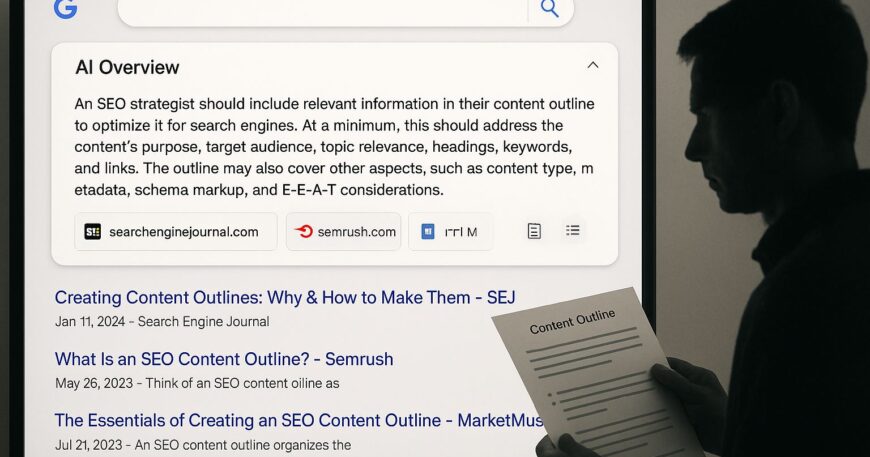
Key Takeaways
- Google AI Overviews can reduce website traffic by 20-60%, forcing SEO strategists to adapt optimization techniques for this new AI-driven search landscape.
- Content that follows E-E-A-T principles and provides comprehensive, structured information has the best chance of being featured in AI Overviews.
- Websites seeing success with AI Overviews focus on query intent rather than just keywords, helping Google understand the contextual value of their content.
- Technical SEO factors like structured data, mobile optimization, and page speed have become even more critical for AI Overview visibility.
- MarketingAid.io offers specialized strategies to help businesses adapt to these Google AI changes while maintaining traffic and conversions.
Google AI Overviews Are Changing How Users Find Your Content
The search landscape is undergoing its most significant transformation since the introduction of mobile-first indexing. Google AI Overviews (previously called SGE) are fundamentally altering how users discover and interact with your content. Instead of the familiar “10 blue links,” many searches now display AI-generated summaries at the top of results, pulling information from multiple sources while potentially eliminating the need to click through to any website.
This shift represents both a massive challenge and opportunity for website owners and SEO professionals. Understanding how AI Overviews work and how to optimize for them has quickly become essential knowledge for anyone serious about maintaining search visibility. The rules for appearing in these AI-powered summaries differ from traditional SEO, with an increased emphasis on structure, comprehensiveness, and demonstrated expertise.
What Google AI Overviews Actually Do
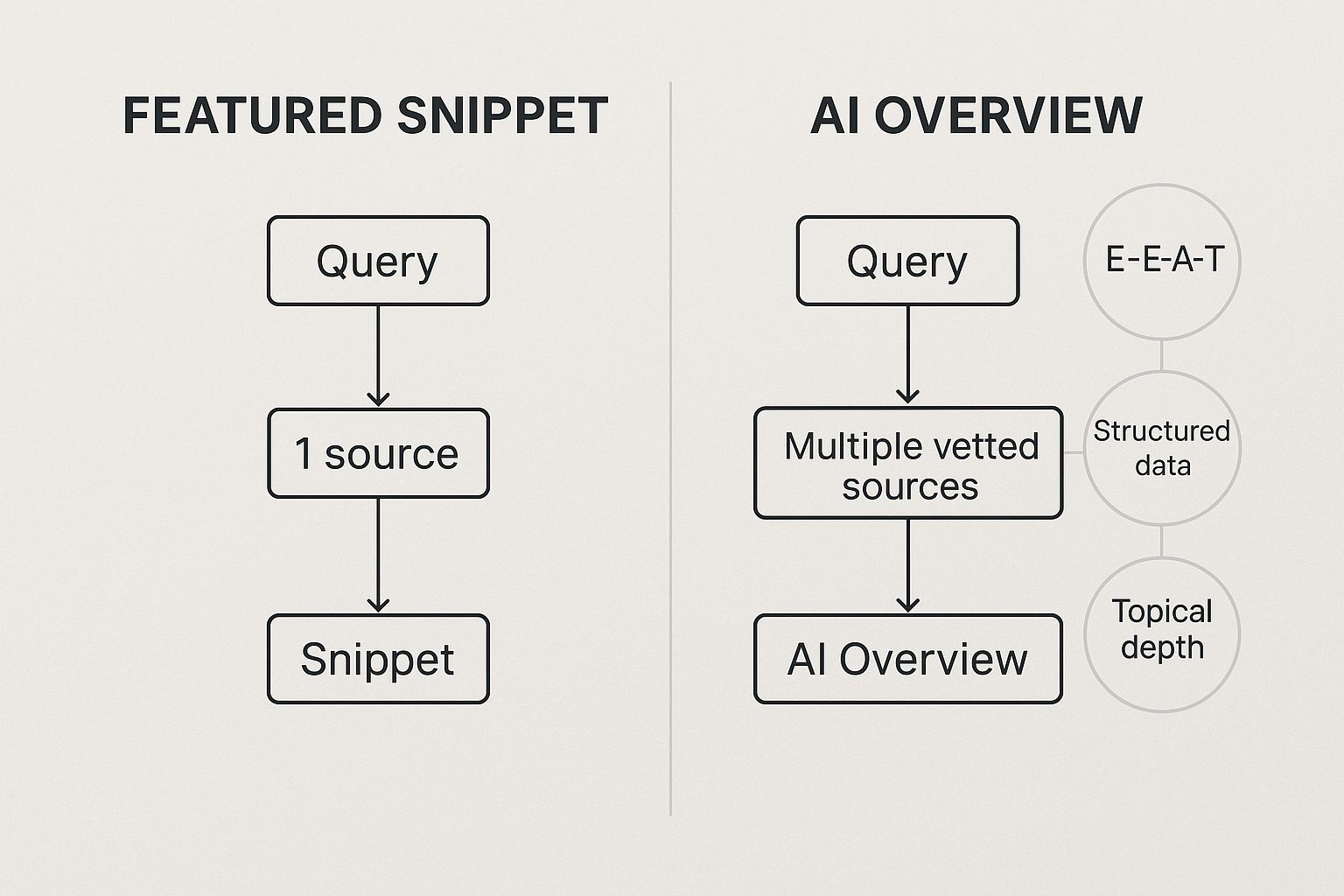
Google AI Overviews serve as intelligent content summarizers that analyze multiple top-ranking sources to create comprehensive answers to user queries. Unlike featured snippets that pull content verbatim from a single source, AI Overviews synthesize information across websites, creating unique summaries while citing original sources. This system aims to provide users with complete answers without requiring multiple clicks or searches.
The technology behind AI Overviews leverages Google’s advanced large language models (LLMs) to understand context, analyze information quality, and generate natural-language summaries. When triggered, these overviews appear in an expandable box at the top of search results, containing a concise answer along with attribution links to sources. Users can expand the overview to see more detailed information and additional sources. For more insights, explore how optimizing AI Overviews can enhance your search experience.
What makes AI Overviews particularly disruptive is their ability to answer complex or nuanced questions that previously required visiting multiple websites. For informational queries, especially, the comprehensive nature of these overviews can significantly reduce the need for users to click through to websites, fundamentally changing the traffic patterns site owners have relied on for years.
The 86% to 15% Traffic Impact Shift
Recent studies paint a sobering picture of AI Overviews’ impact on website traffic. Research from BrightEdge indicates that when AI Overviews appear, they decrease click-through rates to organic results by an average of 34.5%. More alarmingly, for certain query types like simple informational searches, this reduction can reach up to 86%—effectively decimating traffic to websites that previously ranked well for these terms.
The most significantly affected content categories include definitions, straightforward how-to guides, basic informational content, and simple comparison queries. Meanwhile, complex buying decisions, highly specialized information, and personal preference queries still drive clicks at rates closer to traditional search results. This creates a new optimization challenge where certain content types must be completely rethought to remain viable traffic sources.
This dramatic shift is forcing a reevaluation of content strategy. Where once creating simple informational content served as a reliable traffic driver, now such content may generate minimal clicks if featured in an AI Overview. The new optimization paradigm requires creating content that either provides value beyond what can be summarized in an overview or is structured to maximize chances of being cited as a source within these AI-generated summaries.
Why This Matters to Your Website Right Now
Google’s rollout of AI Overviews represents an immediate challenge that demands attention from website owners and SEO professionals. Unlike algorithm updates that might take months to fully implement, AI Overviews are already affecting search results and traffic patterns across numerous industries. MarketingAid analysis shows that information-heavy sectors like health, finance, technology, and education are seeing the most significant impacts, with some sites reporting traffic reductions of 20-60% for queries now triggering AI Overviews. In particular, healthcare workflows are being transformed, showcasing the immediate need for adaptation.
The stakes are particularly high because AI Overviews operate at the top of the conversion funnel, often intercepting users at their initial research phase. This means they can disrupt content marketing funnels by reducing entry points that businesses have carefully crafted over years. For content publishers and affiliate sites especially, this represents an existential challenge that requires immediate adaptation of content strategy and monetization approaches.
Beyond immediate traffic concerns, this shift signals Google’s clear direction toward AI-enhanced search experiences. This isn’t a temporary experiment but rather the beginning of a fundamental transformation in how search functions. Organizations that quickly adapt their content and technical optimization strategies for AI Overviews will gain significant advantages as this technology becomes more prevalent across all search categories.
How Google’s AI Determines What Content to Feature
Understanding the selection criteria for AI Overview sources is crucial for optimization success. Google’s AI doesn’t simply reuse the same ranking factors from traditional search; it employs specialized criteria focused on information quality, authority, and structure. The system evaluates content more holistically, looking for comprehensive coverage, clear organization, and demonstrated expertise that can contribute to a complete overview. For example, transforming healthcare workflows with advanced technology demonstrates the importance of structured and authoritative content.
Google has indicated that AI Overviews prioritize sources that provide exceptional value beyond basic information. This includes unique insights, data-backed assertions, expert analysis, and content that demonstrates deep subject matter knowledge. Sites with established authority in specific niches have a distinct advantage, as Google’s AI tends to favor trusted sources when synthesizing information on complex or sensitive topics.
E-E-A-T Signals Matter More Than Ever
“Experience, expertise, authoritativeness, and trustworthiness have become the cornerstone criteria for content selection in Google’s AI Overviews. Sites demonstrating these qualities consistently see higher representation in AI-generated summaries.”
E-E-A-T Signals Matter More Than Ever
Google’s AI Overview system heavily weights Experience, Expertise, Authoritativeness, and Trustworthiness signals when selecting source content. Sites that demonstrate clear author expertise through detailed author bios, professional credentials, and consistent topic focus are significantly more likely to be featured as sources. This represents an intensification of E-E-A-T principles that have guided quality assessments for years.
First-hand experience has become particularly valuable in the AI Overview ecosystem. Content that demonstrates practical knowledge through detailed explanations, specific examples, and insights that could only come from direct engagement with the subject matter tends to be favored over theoretical or general information. This is especially true for YMYL (Your Money, Your Life) topics where accuracy and reliability are paramount. For instance, transforming healthcare workflows requires precise and reliable information to ensure effective implementation.
Building authoritative backlink profiles continues to serve as a crucial trust signal for AI Overview selection. Sites with high-quality references from recognized authorities in their field enjoy preferential treatment when Google’s AI evaluates potential sources. The system appears to weigh both the quantity and quality of authoritative references, with emphasis on relevance to specific topic areas rather than general domain authority.
Content Structure That Google’s AI Prefers
Google’s AI demonstrates a clear preference for logically structured content with intuitive organization. Material arranged with descriptive headings, sequential information flow, and clear delineation between concepts makes it easier for AI systems to parse meaning and extract relevant information. Sites employing journalistic-style information hierarchies—presenting key points first, followed by supporting details—tend to appear more frequently in AI Overview citations.
Content comprehensiveness has emerged as a critical factor, with Google’s AI favoring sources that address topics thoroughly rather than superficially. This doesn’t necessarily mean longer content wins, but rather content that covers all relevant aspects of a topic without significant gaps. The AI appears particularly skilled at identifying content that answers anticipated follow-up questions, providing complete coverage of a subject. For instance, transforming healthcare workflows with comprehensive solutions is an example of addressing a topic thoroughly.
- Clear, descriptive headings and subheadings that follow logical hierarchy
- Appropriate use of lists, tables, and formatting to enhance readability
- Strategic use of bolding and emphasis on key information
- Concise paragraphs focusing on single concepts or points
- Natural language that flows conversationally rather than keyword-stuffed text
Technical SEO Factors That Influence AI Selection
Technical optimization remains crucial for AI Overview visibility, with several factors directly influencing selection probability. Page speed emerges as a particularly important signal, with faster-loading pages given preference in the AI evaluation process. Mobile optimization is similarly critical, as Google’s AI appears to favor content that provides excellent user experiences across all devices.
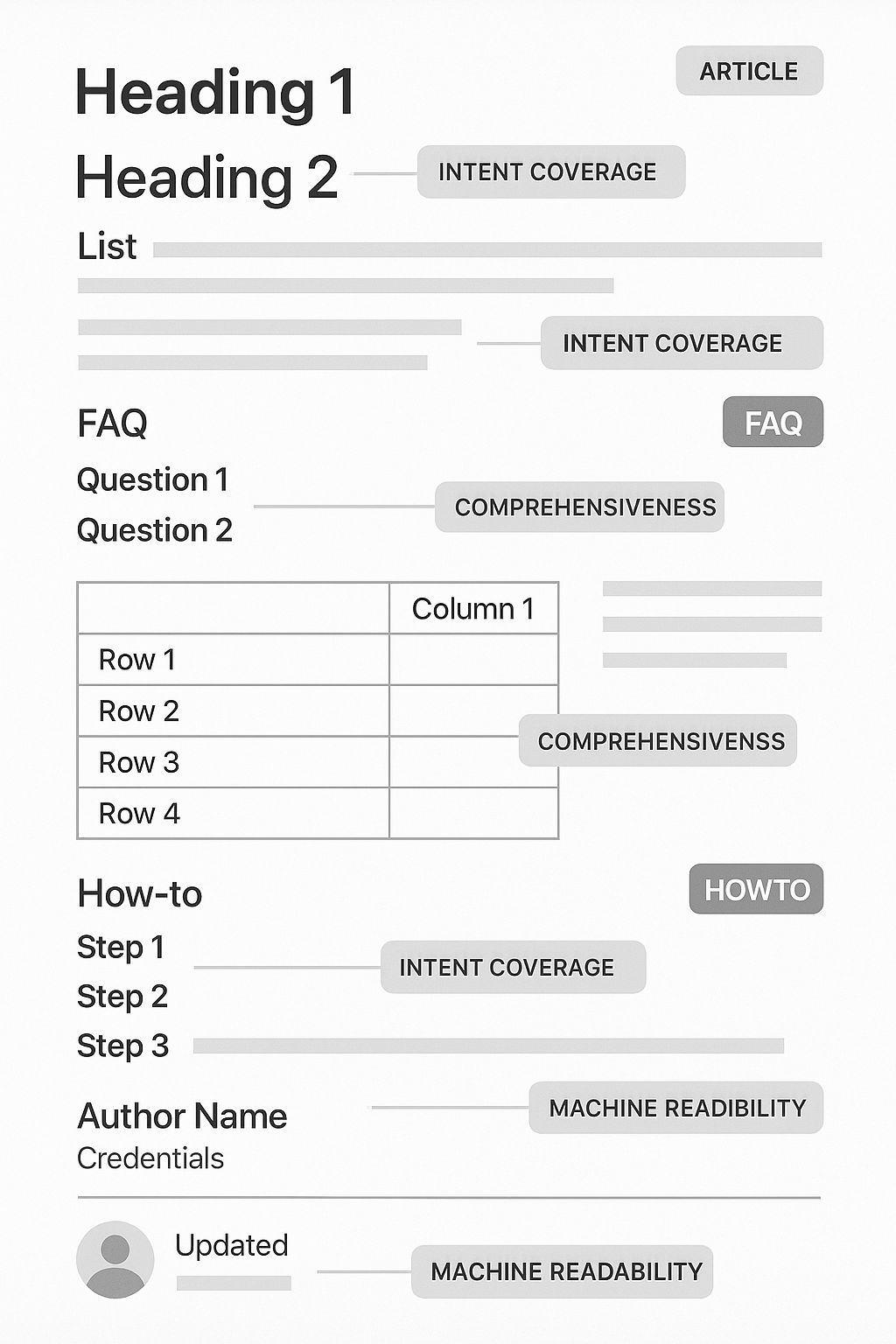
Structured data markup has taken on heightened importance in the AI Overview ecosystem. Sites implementing relevant schema markup help Google’s AI understand content context more efficiently, increasing the likelihood of selection. Key schema types like HowTo, FAQ, Article, and specialized industry schemas provide contextual signals that assist AI in determining content relevance and utility for specific queries.
Site architecture that facilitates comprehensive topical understanding appears advantageous for AI Overview selection. Websites with clear topical clustering, logical internal linking structures, and content hierarchies that demonstrate subject matter depth tend to be favored as authoritative sources. This suggests that holistic site planning focused on thorough topic coverage provides advantages beyond individual page optimization.
5 Content Optimization Strategies for AI Overviews
Succeeding in the AI Overview landscape requires a strategic shift in content creation approaches. The most effective optimization strategy begins with understanding that content must now serve dual purposes: providing value to human visitors while simultaneously offering clear, structured information that AI systems can easily parse and incorporate into overviews. This dual-purpose approach demands rethinking content creation from initial planning through final implementation.
The following strategies represent the most effective approaches based on current understanding of Google’s AI Overview system. While these techniques will evolve as Google refines its technology, they provide a foundation for improving source selection probability while maintaining content quality for direct visitors. Importantly, these approaches enhance content value regardless of AI Overview inclusion, supporting broader SEO and user experience goals.
1. Create Definitive, Comprehensive Resources
Developing authoritative, comprehensive resources on specific topics substantially increases AI Overview selection probability. Rather than producing multiple thin articles targeting keyword variations, focus on creating definitive guides that thoroughly address all relevant aspects of a topic. These comprehensive resources should anticipate and answer common questions while providing context and depth that demonstrates true subject matter expertise.
The most effective comprehensive resources combine factual information with unique insights, practical applications, and contextual understanding that adds value beyond basic facts. This approach aligns with Google’s stated preference for content that demonstrates “substantial value beyond what’s readily available elsewhere.” By providing this added value layer, content becomes more likely to be selected as an AI Overview source while also delivering greater utility to direct visitors. For instance, transforming healthcare workflows can illustrate how practical applications enhance content value.
Update comprehensive resources regularly to maintain relevance and accuracy. Google’s AI appears to favor fresh content when available, particularly for topics where information evolves rapidly. Establishing a systematic review schedule for key content pieces helps maintain their viability as AI Overview sources while supporting other SEO objectives related to content freshness and accuracy.
2. Structure Content With Clear Headers and Lists
Implementing logical content structures with descriptive headers significantly improves AI parsing efficiency and selection probability. Headers should follow natural information hierarchies, moving from general concepts to specific details while using language that clearly indicates content purpose and scope. This structured approach makes it easier for AI to identify relevant sections and understand how information components relate to each other. For more insights, explore how enhancing e-commerce experiences can benefit from structured content.
Strategic use of lists, tables, and other formatting elements enhances both AI and human readability. These structures organize information efficiently while highlighting key points that may be relevant for AI Overview inclusion. Bulleted lists work particularly well for non-sequential items like features or options, while numbered lists effectively communicate processes or ranked information. Tables excel at presenting comparative data or options with multiple attributes.
Content hierarchy should align with user search intent, presenting the most relevant information first before moving to supporting details. This journalistic “inverted pyramid” approach places essential information where both AI and human readers can easily locate it, increasing the probability of selection for relevant queries. For complex topics, consider creating clear sections addressing different aspects or applications of the main subject.
3. Include Visual Elements That Support Text
Strategic incorporation of visual elements substantially enhances content comprehensiveness and clarity for both AI evaluation and human understanding. While Google’s AI currently primarily analyzes text content for Overview creation, images with proper alt text provide contextual signals that support content relevance and thoroughness. Charts, diagrams, and infographics that visualize complex concepts or data demonstrate content depth and utility, potentially increasing selection probability for related queries.
4. Add Structured Data to Help Google Understand Context
Implementing appropriate structured data markup provides Google’s AI with explicit content context, significantly improving understanding and relevance assessment. Key schema types like Article, HowTo, FAQ, and specialized industry schemas (like Recipe, Product, or JobPosting) create machine-readable context layers that facilitate more accurate content evaluation for AI Overview purposes.
Beyond basic implementation, focus on comprehensive schema property completion rather than minimum requirements. Detailed property values like author information, dates, ratings, steps, and other contextual elements provide richer signals for AI evaluation. This comprehensive approach to structured data enhances content understanding while potentially improving representation in both traditional search features and AI Overviews.
Maintain structured data accuracy and alignment with visible content to build trust with Google’s systems. Mismatches between schema signals and actual content can trigger quality flags that potentially reduce selection probability. Regular audits of structured data implementation help ensure continued alignment with best practices and content reality, supporting long-term AI Overview visibility.
5. Focus on Query Intent Rather Than Just Keywords
Aligning content with underlying query intent has become significantly more important than keyword density in the AI Overview ecosystem. Google’s AI demonstrates sophisticated understanding of search intent categories, evaluating content relevance based on how effectively it addresses the fundamental user need rather than keyword matching alone. Content should be created to satisfy specific intent types—informational, transactional, navigational, or commercial investigation—with appropriate depth and format.
For informational queries, especially, content should anticipate and address the complete information journey rather than just the initial question. By mapping content structure to natural inquiry progression, you increase the probability of selection as an authoritative source. This approach requires understanding both immediate questions and likely follow-up inquiries, then structuring content to provide comprehensive coverage that satisfies complete information needs. For instance, enhancing eCommerce experiences can be achieved by addressing user queries holistically.
Real Traffic Impact: The 20-60% Decline Challenge
The implementation of AI Overviews has created unprecedented traffic challenges across numerous industries, with documented traffic reductions ranging from 20% to over 60% for affected queries. This impact varies significantly by industry, query type, and site authority, creating a complex adaptation landscape. Information-heavy sectors like health, finance, education, and general reference have experienced the most dramatic effects, particularly for basic informational queries where AI Overviews can completely satisfy user intent.
This traffic disruption represents a fundamental restructuring of the search ecosystem rather than a temporary fluctuation. Sites heavily dependent on informational content for traffic acquisition face strategic challenges requiring substantial adaptation of both content approaches and business models. The severity of impact correlates strongly with content type, with basic factual information, simple how-to content, and straightforward definitions experiencing the greatest traffic reductions when AI Overviews appear.
Sites Losing Visibility to AI Overviews
The implementation of AI Overviews has created unprecedented traffic challenges across numerous industries, with documented traffic reductions ranging from 20% to over 60% for affected queries. This impact varies significantly by industry, query type, and site authority, creating a complex adaptation landscape. Information-heavy sectors like health, finance, education, and general reference have experienced the most dramatic effects, particularly for basic informational queries where AI Overviews can completely satisfy user intent.
This traffic disruption represents a fundamental restructuring of the search ecosystem rather than a temporary fluctuation. Sites heavily dependent on informational content for traffic acquisition face strategic challenges requiring substantial adaptation of both content approaches and business models. The severity of impact correlates strongly with content type, with basic factual information, simple how-to content, and straightforward definitions experiencing the greatest traffic reductions when AI Overviews appear.
Success Stories of Adaptation
Despite widespread traffic challenges, several organizations have successfully adapted to the AI Overview landscape by fundamentally rethinking their content approaches. These success stories typically involve shifting from basic informational content to more specialized, experience-based material that offers value beyond what AI Overviews can summarize. Sites focusing on proprietary data, unique methodologies, or specialized expertise have maintained stronger performance than those relying on general information.
One prominent adaptation strategy involves restructuring content to support rather than compete with AI Overviews. Organizations implementing this approach create comprehensive resources specifically designed to be cited as authoritative sources, focusing on selection as an attributed reference rather than direct clicks. This citation-focused strategy has proven effective for maintaining brand visibility and authority positioning even when direct traffic decreases.
The most successful adaptation examples come from organizations that view AI Overviews as an opportunity to elevate content quality rather than a threat to traffic. By focusing on creating genuinely superior resources that demonstrate clear expertise advantage over competitors, these sites have maintained strong selection rates as AI Overview sources while simultaneously improving performance for queries that don’t trigger overviews.
When Lower Traffic Can Actually Mean Better Results
The traffic reduction paradox of AI Overviews presents an important strategic consideration: in some cases, lower traffic volumes can coincide with improved business outcomes. This occurs because AI Overviews often filter out low-intent visitors while allowing higher-intent traffic to reach websites. Sites tracking comprehensive conversion metrics rather than just traffic volume have noted that while overall visitor numbers decreased, conversion rates, time-on-site, and pages-per-session often improved as traffic quality increased.
This quality-over-quantity dynamic is particularly evident for commercial sites where informational content serves primarily as a top-of-funnel acquisition strategy. When AI Overviews satisfy basic information needs, the visitors who do click through often have more specific requirements or higher purchase intent, resulting in more efficient conversion pathways despite reduced overall traffic. This shift necessitates recalibration of traffic expectations and success metrics to account for changed visitor quality profiles.
Measuring Success Beyond Traditional Metrics
The AI Overview era demands a fundamental reassessment of SEO success metrics beyond traditional traffic measurements. Organizations successfully adapting to this new landscape are implementing expanded measurement frameworks that consider both direct traffic impact and indirect benefits of AI Overview inclusion. This evolved approach recognizes that appearances in AI Overviews provide brand visibility and authority signaling even without clicks, creating value that traditional analytics may not capture.
New KPIs to Track in an AI-First World
Adapting to AI Overviews requires implementing new key performance indicators that accurately measure success in this changed environment. Citation frequency—how often your content appears as a source in AI Overviews—has emerged as a critical new metric requiring systematic tracking. Organizations leading in AI adaptation are developing methodologies to monitor citation rates across key queries, evaluating performance trends over time.
Brand impression metrics have gained importance as indirect visibility through AI Overviews impacts brand awareness even without clicks. Forward-thinking organizations now track branded search volume trends, direct site visits, and brand mention frequency as complementary metrics to traditional traffic measurements. These indicators help quantify the awareness and authority benefits that can result from consistent AI Overview citations.
Traffic quality metrics have become more valuable than raw visitor counts in evaluating AI Overview impact. Engagement measurements like bounce rate, time-on-site, pages-per-session, and conversion rates provide critical context for understanding how traffic composition has changed. Sites successfully adapting to AI Overviews typically see improvements in these quality indicators even when overall traffic decreases, reflecting higher-intent visitor profiles.
Tools to Monitor Your AI Overview Performance
Several specialized tools and methodologies have emerged to help monitor performance within the AI Overview ecosystem. Search Console now provides limited visibility into performance within AI-generated results, though the data remains less granular than traditional search reporting. This native data should be supplemented with specialized monitoring approaches for comprehensive performance understanding.
Manual query monitoring using consistent testing protocols has become a crucial supplementary methodology. This approach involves regularly checking performance for priority queries across different devices, locations, and user profiles to identify AI Overview triggering patterns and citation frequencies. While labor-intensive, this process provides insights not available through automated tools and helps identify optimization opportunities.
Action Plan: What to Do Starting Today
Implementing a structured response to AI Overviews requires both immediate tactical adjustments and longer-term strategic shifts. The most effective approach begins with a comprehensive content audit focused specifically on AI Overview potential, followed by prioritized optimization of high-opportunity content areas. This phased implementation allows for resource efficiency while addressing the most significant impact areas first.
Content Audit to Find AI Overview Opportunities
Begin with a specialized content audit focused on identifying both vulnerability and opportunity within the AI Overview landscape. Prioritize assessment of informational content currently driving significant traffic, as these areas typically face the greatest disruption risk. Systematically evaluate each content area against AI Overview selection criteria, including comprehensiveness, structure, authority signals, and query intent alignment.
Categorize content based on both current performance and AI Overview potential to create a prioritized optimization roadmap. High-traffic pages addressing queries likely to trigger AI Overviews deserve immediate attention, while lower-traffic areas can be addressed in later optimization phases. This prioritization ensures resources focus on protecting the most valuable traffic sources while methodically improving overall site positioning for AI selection.
Technical Updates to Improve AI Visibility
Implement technical optimizations that enhance content visibility and understanding for Google’s AI systems. Structured data implementation should be prioritized, with focus on schema types most relevant to your content categories. Ensure comprehensive property completion rather than minimal implementation, as detailed schema signals provide stronger contextual understanding for AI evaluation.
Address core technical performance factors that influence AI Overview selection, including page speed, mobile optimization, and crawlability. Evidence suggests Google’s AI favors technically excellent pages that provide optimal user experiences. Regular technical audits focusing specifically on these factors help maintain competitive positioning as Google continues refining its AI Overview selection criteria.
Setting Realistic Expectations With Stakeholders
Proactive stakeholder communication regarding AI Overview impact is essential for managing organizational expectations and securing necessary resources for adaptation. Present realistic traffic projections based on query analysis and observed impact patterns, helping leadership understand the changed landscape. Emphasize that this represents a fundamental shift in search behavior rather than a temporary fluctuation, requiring strategic adaptation rather than merely tactical responses.
Future-Proofing Your SEO Strategy
The emergence of AI Overviews signals a broader transition toward AI-integrated search experiences that will continue evolving in coming years. Organizations that view current adaptations as part of a longer strategic shift rather than a one-time response will maintain competitive advantages as Google introduces additional AI features. This forward-looking perspective requires regular evaluation of emerging AI technologies, testing of new content approaches, and maintaining flexibility in optimization strategies.
What Google’s Patents Tell Us About AI Search Direction
Google’s patent filings provide valuable insights into potential future directions for AI-enhanced search. Recent patents focus heavily on entity understanding, relationship mapping, and user intent prediction, suggesting continued evolution toward more sophisticated information synthesis capabilities. These technologies would likely extend AI Overview functionality beyond current limitations, potentially addressing more complex query types and offering more personalized information synthesis.
Patents related to multimodal AI capabilities indicate probable expansion beyond text-only analysis to include images, video, and interactive elements in future AI Overview iterations. This suggests organizations should begin incorporating rich media optimization into their AI adaptation strategies, ensuring visual elements follow best practices for machine understanding while enhancing user experience.
Balancing Traditional SEO With AI Optimization
The most sustainable approach to AI Overview adaptation balances specialized AI optimization with continued excellence in traditional SEO fundamentals. While AI-specific techniques deserve focused attention, they should build upon rather than replace core optimization practices that maintain visibility in standard search results. This balanced strategy provides resilience against both algorithm adjustments and further AI feature introductions.
Content diversification serves as a key risk management strategy, reducing vulnerability to AI Overview impacts. Organizations should maintain a balanced content portfolio spanning different intent types, formats, and depth levels rather than focusing exclusively on either basic informational content or highly specialized material. This diversity ensures continued traffic generation regardless of which query types trigger AI features in future updates.
The principles underlying AI Overview optimization align closely with long-standing quality guidelines, suggesting that genuinely valuable content will maintain performance advantages regardless of how search features evolve. By focusing on creating exceptional resources that demonstrate clear expertise advantage, sites position themselves favorably for both current and future search experiences.
- Prioritize comprehensive coverage of topics within your expertise area
- Implement structured content organization with clear information hierarchies
- Support claims with verifiable data and authoritative references
- Demonstrate practical expertise through specific examples and unique insights
- Maintain technical excellence in page performance and structured data implementation
Ultimately, successful adaptation to Google’s AI Overviews requires viewing this change not as a threat but as an opportunity to elevate content quality and demonstrate genuine expertise advantage. Organizations that embrace this perspective position themselves for sustained visibility regardless of how search interfaces evolve. MarketingAid specializes in helping businesses navigate these complex changes while maintaining visibility and traffic in the evolving search landscape.
Frequently Asked Questions
As organizations adapt to Google’s AI Overviews, several common questions arise regarding implementation, measurement, and strategic approaches. The following answers address the most frequently asked questions based on current understanding of Google’s systems and observed performance patterns.
Will Google AI Overviews completely replace traditional search results?
No, Google AI Overviews will not completely replace traditional search results for the foreseeable future. Google has indicated that AI Overviews serve as an enhancement rather than a replacement for the traditional search experience. Many query types remain better served by standard results, particularly those involving subjective preferences, complex purchasing decisions, or highly specialized information needs. The current implementation shows AI Overviews appearing alongside traditional results, with Google’s systems determining when an overview adds value to specific queries. For more insights, you can explore how to optimize AI Overviews effectively.
How do I know if my site is appearing in AI Overviews?
Currently, Google provides limited official reporting on AI Overview appearances through Search Console, though the data lacks the granularity of traditional search performance metrics. The most reliable approach combines this limited data with systematic manual monitoring of key queries. Implement a regular testing protocol that checks priority search terms across different devices and locations, documenting when AI Overviews appear and which sites are cited as sources. This combined approach provides the most comprehensive understanding of your site’s performance within the AI Overview ecosystem.
Can I opt out of having my content used in AI Overviews?
Google currently provides no official mechanism for sites to opt out of inclusion in AI Overviews while remaining in standard search results. Unlike some AI systems that allow content exclusion through robots.txt directives, Google treats AI Overview source selection as an extension of traditional search indexing permissions.
If your site allows Google to index your content for standard search results, that same content may be selected as a source for AI Overviews. The only definitive way to prevent inclusion would be blocking Google’s crawlers entirely, which would remove your site from all search results—an impractical approach for most organizations. This policy aligns with Google’s longstanding position that inclusion in search features comes with search indexing permission.
Rather than seeking exclusion, most organizations benefit more from optimizing content to maximize the value of AI Overview appearances. By improving your chances of selection as an authoritative source and creating content that encourages clicks even when summarized, you can transform this feature from a potential threat to a visibility opportunity. This adaptation approach typically yields better outcomes than attempting to opt out of an increasingly important search feature.
For organizations with specific content concerns, the most effective approach involves structuring sensitive information in ways that make it less suitable for AI summarization. Content requiring significant context, presented through formats like video or interactive tools, or protected behind authentication walls, is less likely to be selected for AI Overviews while remaining available for traditional search discovery.
Do AI Overviews affect mobile and desktop searches differently?
Yes, current implementation patterns show significant differences in AI Overview triggering frequencies between mobile and desktop searches. Mobile searches typically display AI Overviews more frequently, likely due to interface considerations and Google’s understanding that mobile users often prefer immediate answers without extensive site exploration. This differential impact requires device-specific monitoring of key queries to understand the complete performance picture, as overall traffic impact may vary substantially depending on your audience’s device distribution.
How often does Google update the content it uses in AI Overviews?
Google has not disclosed specific refresh schedules for AI Overview sources, but monitoring suggests updates occur more frequently than traditional algorithm updates but less often than standard index refreshes. Source selection appears to update on rolling schedules rather than fixed intervals, with some content areas refreshing more frequently than others based on information volatility. Topics with rapidly changing information (like current events or technology) show more frequent source updates than more stable subjects.
This variable refresh pattern means content improvements may not immediately influence AI Overview selection, requiring patience when implementing optimization changes. However, major content revisions addressing significant quality factors typically show impact within 2-4 weeks in most subject areas. Maintaining consistent monitoring after implementing changes helps identify when updates have been recognized and incorporated into AI Overview source selection.
Google’s emphasis on information freshness suggests that regular content updates signal continued relevance and accuracy, potentially influencing selection frequency. Implementing systematic content review schedules helps maintain optimal positioning for AI Overview consideration, particularly for topics where information evolves over time. This maintenance approach aligns with broader SEO best practices while supporting specific AI Overview optimization goals.
For time-sensitive topics, especially, demonstrating information currency through explicit date signals (both visible dates and structured data) helps Google’s systems understand content freshness. This practice supports both AI Overview selection and traditional search performance, making it a valuable component of comprehensive optimization strategies.
Be the source AI Overviews cite
Structure content, add the right schema, and track citations. See how with Catalyst Pro.

