
Key Takeaways
- Content hubs establish topical authority by organizing related content in a structured, interconnected format that both users and search engines can easily navigate.
- The hub and spoke model creates a hierarchy of pillar pages supported by cluster content, signaling expertise on specific topics to search engines.
- Strategic internal linking between related content pieces strengthens topical relevance signals and distributes link equity throughout your site.
- Content hubs dramatically improve SEO performance by demonstrating E-E-A-T principles (Experience, Expertise, Authoritativeness, and Trustworthiness).
- Building topical authority through content hubs takes consistent effort, but typically shows meaningful results within 4-6 months when executed correctly.
Random blog posts scattered across your site aren’t going to cut it anymore. In today’s competitive SEO landscape, building topical authority through strategically organized content hubs has become essential for brands looking to dominate search results. TopRank Marketing has found that well-structured content hubs not only improve search visibility but also establish your brand as the go-to resource in your niche.
A content hub is essentially a central library for topic-specific content — an organized collection of resources that demonstrates your expertise on a particular subject. Rather than publishing disconnected pieces, content hubs create meaningful relationships between content assets that signal topical authority to both users and search engines.
Article-at-a-Glance
This comprehensive guide will walk you through building an effective topical authority strategy using content hubs. We’ll explore the hub and spoke model, step-by-step implementation, performance measurement, and real-world examples of successful content hubs. By the end, you’ll have actionable insights to create content ecosystems that dominate search results and position your brand as an industry authority.
With Google’s increasing sophistication in understanding content relationships, isolated content pieces simply can’t compete with coherent content ecosystems. The brands winning organic search today are those with comprehensive coverage of topics relevant to their audience and business.
What Content Hubs Actually Do (And Why They Matter)
Content hubs serve as centralized knowledge centers where visitors can find everything they need to know about a specific topic. Unlike traditional blogs organized chronologically, content hubs are structured thematically, creating clear pathways through related subject matter. This organization signals to search engines that your site offers comprehensive coverage on particular topics, enhancing e-commerce experiences for users.
The power of content hubs lies in their ability to demonstrate topical authority. When Google evaluates content, it’s not just analyzing individual pages in isolation — it’s assessing how thoroughly you cover topic ecosystems. A well-structured content hub tells search engines: “This site is an authoritative source on this subject.”
“While a single piece of content does little to bolster your authority within your industry, creating an entire library of focused topical content demonstrates your knowledge and expertise to your customer base.” – Adobe Business
Beyond SEO benefits, content hubs dramatically improve user experience by providing clear navigation paths through complex topics. Visitors can easily move from high-level concepts to specific details without hunting through your site, reducing bounce rates and increasing time on site — both signals that further reinforce your authority in search algorithms.
The Hub and Spoke Model: Your Blueprint for Topical Authority

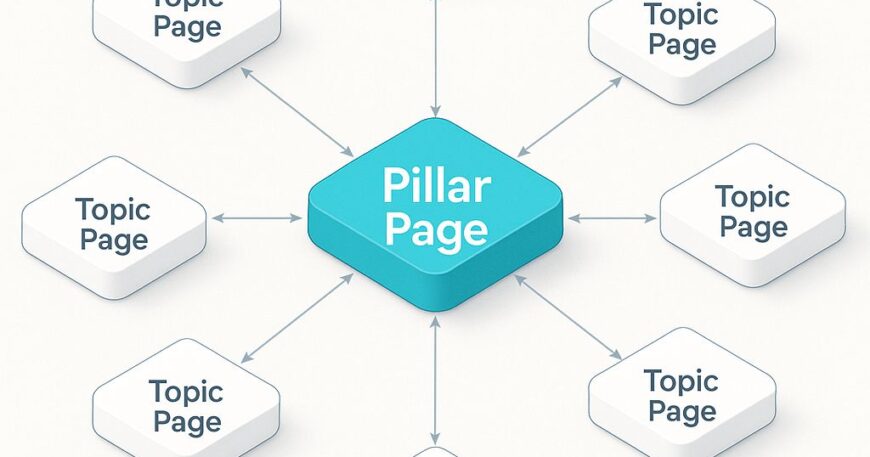
The hub and spoke model provides an intuitive structure for organizing content to build topical authority. At the center sits your “hub” or pillar content — comprehensive, high-level content addressing the main topic. Radiating outward are your “spokes” — more specific content pieces that explore subtopics in greater detail, similar to how enhancing e-commerce experiences can involve addressing various customer needs.
Think of this model as a wheel, where the hub connects everything while the spokes provide support and stability. Your pillar content offers a broad overview while linking to more specialized content that satisfies deeper information needs. This structure creates natural internal linking opportunities that strengthen your site’s topical relevance signals.
What makes this model particularly powerful is how it mirrors the way people actually search for information. Users often begin with general queries before narrowing down to specific questions as they learn more about a topic. A well-designed content hub anticipates and guides this journey, providing answers at each stage of the discovery process, similar to how transforming healthcare workflows can streamline patient inquiries and improve service delivery.
Core Pillar Pages vs. Supporting Content
Pillar pages serve as the foundation of your topical authority strategy. These comprehensive guides typically target broader, higher-volume keywords and provide a complete overview of a subject. Effective pillar content is typically longer (2,000+ words), answers fundamental questions, and links to more specialized resources within your hub.
Supporting content (or “cluster content”) explores specific aspects of your main topic in greater detail. These more focused pieces target long-tail keywords with higher conversion potential and address specific pain points or questions. While your pillar content might explain “What is content marketing?”, your supporting content might cover “How to measure content marketing ROI” or “B2B content marketing examples.”
The relationship between these content types creates a hierarchy that both users and search engines can easily understand. Your pillar page provides context for your supporting content, while your supporting content adds depth and specificity to your overall topical coverage. Together, they demonstrate comprehensive expertise that isolated blog posts simply cannot achieve.
How to Structure Internal Links for Maximum Impact
Strategic internal linking is the glue that holds your content hub together. While pillar pages should link to all relevant supporting content, your cluster content should also link back to the pillar page and to other related cluster content when appropriate. This creates a web of connections that helps both users and search engines understand the relationships between your content pieces. For a deeper dive into this strategy, consider exploring why creating a content hub will improve your site’s SEO.
When implementing internal links, use descriptive anchor text that includes relevant keywords without appearing forced or repetitive. Varied anchor text signals to search engines that your content naturally covers multiple aspects of a topic. Avoid generic phrases like “click here” in favor of more descriptive text that provides context about the linked content. For instance, when discussing enhancing eCommerce experiences, ensure the anchor text accurately reflects the topic.
Place your most important internal links higher in the content where they’re more likely to be clicked and crawled. While footer links have some value, links within the main content body carry more weight for both user experience and SEO purposes. Consider creating a “related resources” section at the end of each piece to highlight additional content without disrupting the main narrative.
URL Architecture That Signals Authority to Google
Your URL structure provides important signals about content relationships and topic hierarchies. Consider implementing a URL pattern that reflects your hub and spoke organization, such as:
- Pillar page: yourdomain.com/topic/
- Supporting content: yourdomain.com/topic/subtopic
This structure creates clear parent-child relationships between your content pieces that search engines can easily interpret. It also makes your site’s organization intuitive for users, improving navigation and reducing friction. Just ensure your URL structure remains consistent across your site to avoid confusing both users and search algorithms.
5 Steps to Build Your First Content Hub
Creating an effective content hub requires strategic planning and execution. Follow these steps to build a topical authority powerhouse that attracts both visitors and search engines.
1. Identify High-Value Topic Clusters That Match Your Expertise
Begin by identifying topics where you have genuine expertise and that align with your business goals. The ideal content hub topic should sit at the intersection of your knowledge, your audience’s needs, and your commercial objectives. Look for topics with sufficient search volume and complexity to justify multiple content pieces.
Competitive analysis is crucial at this stage. Identify gaps in existing content where you can provide superior value or unique insights. Tools like Ahrefs, Semrush, or Moz can help you analyze what competitors are ranking for and where opportunities exist. Remember that the goal isn’t just to mimic competitors but to identify where you can genuinely add value to the conversation. For instance, enhancing eCommerce experiences can be a unique value proposition in a crowded market.
Consider creating a topic matrix that evaluates potential hub topics based on factors like search volume, competition level, business relevance, and your existing expertise. This helps prioritize which content hubs to develop first based on potential return on investment.
2. Map Your Keyword Universe With Semantic Connections
Once you’ve selected your primary hub topic, expand it into a comprehensive keyword universe. Go beyond basic keyword research by identifying semantically related terms, questions, and subtopics that form a complete picture of your subject area. Tools like AnswerThePublic, AlsoAsked, and Google’s “People Also Ask” boxes can reveal the questions your audience is asking.
Organize keywords into logical groupings that will form the basis of your individual content pieces. Your pillar content should target broader, higher-volume keywords, while supporting content addresses more specific long-tail variations. Look for natural clusters that indicate distinct subtopics within your main subject area. For more insights, explore topical authority strategies that can enhance your content organization.
“It’s important to think strategically about the topics or themes you want to focus on with your content hub. You want to be confident that people searching for information have a high likelihood of being relevant to your business.”
Create a visual mind map or spreadsheet that shows the relationships between different keyword clusters. This serves as your content hub blueprint, helping you visualize how various pieces will fit together to create a comprehensive resource on your chosen topic.
3. Create Your Pillar Content Strategy
Your pillar content sets the foundation for your entire hub, so invest appropriate resources in making it exceptional. Aim to create the definitive resource on your topic, covering all essential aspects while still maintaining readability and engagement. Effective pillar content typically ranges from 2,000-5,000 words, depending on topic complexity. For more inspiration, consider enhancing ecommerce experiences as a guide to crafting comprehensive content strategies.
Structure your pillar content with clear headings, table of contents, and visual elements that make it easily scannable. Consider incorporating multiple content formats within your pillar page—such as videos, infographics, or interactive elements—to enhance engagement and cater to different learning preferences.
Ensure your pillar content includes strategic internal linking opportunities for future supporting content. You can even publish your pillar page with placeholder links that will connect to supporting content as it’s developed. This forward-thinking approach allows you to establish your hub structure from day one.
4. Develop Supporting Content That Adds Unique Value
Supporting content should dive deeper into specific aspects of your main topic, answering more focused questions and targeting long-tail keywords. Each piece should provide substantial value on its own while fitting into the larger narrative of your content hub. Avoid creating thin content simply to target keywords—every piece should offer meaningful insights. For example, enhancing your e-commerce experiences can be a specific aspect that adds unique value to your content strategy.
Plan your supporting content production calendar based on priority and resources. You don’t need to publish all supporting content simultaneously, but having a consistent publishing schedule helps build momentum. Begin with the most strategically valuable subtopics—those with high search volume, clear commercial intent, or significant information gaps.
As you develop supporting content, maintain consistent quality standards and topical focus. Each piece should reinforce your authority on the main subject while addressing specific user needs. Remember to implement strategic internal linking back to your pillar content and between related supporting pieces.
5. Establish Content Governance and Update Protocols
Creating your content hub is only the beginning—maintaining its relevance requires ongoing governance. Establish clear protocols for reviewing and updating content to ensure it remains accurate and valuable over time. This includes identifying content owners, setting review schedules, and creating processes for incorporating new information as your industry evolves.
Document your content hub’s structure and interlinking strategy to maintain consistency as your team evolves. This documentation should include guidelines for internal linking patterns, URL structure, and content formatting. Having these standards in place ensures that future content additions maintain the architectural integrity of your hub.
Consider implementing a content audit schedule to regularly evaluate performance and identify improvement opportunities. These audits should assess metrics like organic traffic, conversion rates, and engagement to determine which content pieces need refreshing or expansion. A quarterly audit schedule strikes a good balance between maintenance effort and keeping content fresh.
How Content Hubs Boost Your SEO Results
Content hubs deliver powerful SEO benefits that isolated content simply cannot achieve. By creating interconnected content ecosystems around specific topics, you signal to search engines that your site offers comprehensive, authoritative information—exactly what Google aims to deliver to searchers. For more insights, explore this guide on improving your site’s SEO with content hubs.
The structured nature of content hubs also helps search engines understand your site’s information hierarchy and topical focus. This clarity makes it easier for Google to determine when your content is relevant for specific queries, potentially improving rankings across multiple keywords related to your hub topic.
Beyond technical SEO benefits, content hubs naturally generate more internal links, which help distribute page authority throughout your site. This network effect strengthens your entire domain, not just individual pages, creating cumulative SEO momentum that builds over time. For more insights, check out why creating a content hub will improve your site’s SEO.
The E-E-A-T Advantage: Demonstrating Expertise Through Structure
Content hubs directly address Google’s E-E-A-T guidelines (Experience, Expertise, Authoritativeness, and Trustworthiness). By creating comprehensive coverage of topics relevant to your business, you demonstrate subject matter expertise that signals credibility to both users and search engines.
The organizational structure of content hubs reinforces your authoritativeness by showing deliberate, thoughtful coverage of topics rather than random, disconnected content. This structured approach communicates that you’re a serious authority with organized knowledge—not just publishing occasional blog posts on trending topics.
For industries where trust is particularly crucial (health, finance, legal), content hubs provide an opportunity to showcase credentials, cite reliable sources, and demonstrate thorough understanding of complex topics. These trust signals are increasingly important ranking factors as Google continues refining its ability to evaluate content quality. For a deeper understanding of how content hubs can improve your site’s SEO, consider reading this guide on creating a content hub.
Why Google Rewards Comprehensive Topic Coverage
Google’s algorithms increasingly favor sites that demonstrate comprehensive knowledge of topics rather than those optimizing for individual keywords. This shift reflects Google’s mission to deliver the most helpful content to searchers—which typically means content from genuine subject matter experts. For instance, transforming healthcare workflows with comprehensive insights can showcase expertise and authority in the healthcare domain.
Content hubs align perfectly with this objective by creating topical depth that signals expertise. When your site comprehensively covers all aspects of a subject through interconnected content, it naturally contains the semantic variations and related concepts that Google’s algorithms use to evaluate topical relevance.
“This is how sites with low DA or DR can rank amongst established players—they’ve reassured Google that the content will meet and exceed search intent.”
The strategic organization of content hubs also tends to improve user engagement metrics like time on site and pages per session. These behavioral signals further reinforce to Google that your content satisfies user needs, creating a positive feedback loop for rankings. Discover how enhancing e-commerce experiences can also contribute to improved user engagement and satisfaction.
Reduced Cannibalization and Improved Keyword Targeting
Without a structured content strategy, websites often create multiple pieces targeting the same keywords—a problem known as keyword cannibalization. This fragmentation confuses search engines and dilutes your ranking potential across multiple pages. For more insights, you can explore the benefits of creating a content hub.
Content hubs solve this problem by establishing clear topic boundaries between content pieces. Your pillar content targets broader keywords, while supporting content focuses on specific long-tail variations. This deliberate separation prevents cannibalization while ensuring comprehensive keyword coverage.
The clear topical organization also makes it easier to identify content gaps in your keyword coverage. As you build your hub, you’ll naturally discover additional subtopics and questions that require dedicated content, allowing you to methodically expand your topical authority over time.

Content Hub Measurement: Tracking Your Topical Authority Progress
Measuring the success of your content hub requires looking beyond traditional single-page metrics to evaluate performance as an interconnected ecosystem. While individual page rankings matter, the true measure of topical authority is your site’s overall visibility for a range of related keywords.
Track your keyword rankings across the entire topic cluster, not just for your pillar content. Successful content hubs typically show gradual improvements across a wide range of related terms as Google recognizes your site’s comprehensive coverage. Tools like Semrush’s Position Tracking or Ahrefs’ Rank Tracker can monitor these patterns over time.
Pay particular attention to how users navigate through your content hub. Metrics like internal link click-through rates, content hub exit rates, and user paths can reveal how effectively your hub structure guides visitors through related content. These insights help optimize both content and structure for better engagement.
Key Performance Indicators For Content Hubs
Effective content hub measurement requires tracking both visibility metrics and engagement indicators. Key visibility metrics include organic traffic growth, ranking positions for target keywords, and the total number of keywords driving traffic to your hub. These metrics demonstrate how well search engines recognize your topical authority.
Engagement metrics reveal how users interact with your content ecosystem. Track metrics like pages per session, average session duration, and return visitor rate specifically for users who enter through your content hub. Strong engagement indicates your content successfully answers user questions and encourages deeper exploration of your expertise.
Conversion metrics complete the picture by connecting your content hub to business outcomes. Depending on your goals, these might include email signups, content downloads, demo requests, or direct purchases. Effective content hubs don’t just attract traffic—they guide qualified visitors toward meaningful business actions.
Timeline Expectations: When Will You See Results?
Building topical authority through content hubs is a marathon, not a sprint. Initial improvements in rankings and traffic typically begin appearing 3-4 months after launching your hub structure, with more significant results becoming visible around the 6-month mark.
Several factors influence how quickly you’ll see results, including your site’s existing authority, competition level for your target topics, and the quality/frequency of your content production. New sites typically require more time to establish credibility, while established domains may see faster results from implementing hub structures.
|
Timeline |
Typical Results |
Focus Areas |
|---|---|---|
|
1-3 months |
Minimal ranking changes, improved crawling |
Content production, structural implementation |
|
4-6 months |
Improved rankings for long-tail terms, increased traffic |
Content expansion, internal linking optimization |
|
7-12 months |
Significant traffic growth, ranking improvements for competitive terms |
Content refinement, conversion optimization |
|
12+ months |
Established topical authority, diminishing returns on new content |
Content maintenance, expansion to new topic clusters |
Consistency is key to building successful content hubs. Rather than creating sporadic content, establish a sustainable publishing cadence that gradually expands your topical coverage. This steady approach signals to search engines that you’re consistently developing expertise in your field.
3 Content Hub Examples That Drive Massive Traffic
Examining successful content hubs provides valuable insights into effective implementation strategies. These examples demonstrate how different organizations have adapted the content hub model to build topical authority in their respective industries. For instance, some companies have focused on enhancing e-commerce experiences to drive traffic and engagement.
B2B SaaS Example: HubSpot’s Inbound Marketing Hub
HubSpot’s inbound marketing hub represents one of the most successful implementations of topical authority building. Their comprehensive resource center includes pillar pages on core inbound marketing concepts, supported by hundreds of specialized articles addressing specific tactics, tools, and challenges. This approach is similar to how Catalyst Pro enhances ecommerce experiences by providing targeted solutions and insights.
What makes HubSpot’s approach particularly effective is their seamless integration of different content formats—including blog posts, videos, templates, and tools—all organized around clear topical clusters. Their hub structure makes it easy for users to progress from fundamental concepts to advanced tactics while naturally encountering HubSpot’s product offerings along the journey.
The results speak for themselves: HubSpot ranks for over 170,000 keywords in the marketing space, with their content hub serving as both a powerful lead generation tool and the foundation of their thought leadership position. Their approach demonstrates how content hubs can simultaneously serve SEO, educational, and commercial objectives.
E-commerce Example: REI’s Expert Advice Section
REI’s Expert Advice section offers a masterclass in building topical authority for e-commerce. Rather than creating product-focused content, REI developed comprehensive hubs around outdoor activities like hiking, camping, and climbing—topics directly relevant to their product offerings but focused on solving user problems. For more insights on this strategy, you can explore topical authority in content marketing.
Each activity hub contains pillar content explaining fundamental concepts (e.g., “Backpacking for Beginners”) supported by specialized guides addressing specific aspects like gear selection, technique tutorials, and destination planning. This structure naturally creates opportunities to recommend relevant products within educational content.
REI’s approach has established them as an authoritative information source in the outdoor recreation space, driving both organic traffic and sales. Their content hubs rank for competitive terms like “hiking basics” and “camping checklist” that attract users early in the buying journey, allowing REI to build relationships before purchase decisions occur.
Media Example: The Wirecutter’s Product Review System
The Wirecutter (now owned by The New York Times) built its entire business model around structured content hubs focused on product categories. Each hub centers on a comprehensive “best of” guide that serves as pillar content, supported by individual product reviews, comparison articles, and buying guides that explore specific considerations.
What distinguishes The Wirecutter’s approach is their commitment to depth over breadth. Rather than covering every product category superficially, they build exceptionally thorough hubs around selected categories, establishing unmatched authority in those spaces. This depth-focused strategy has enabled them to outrank even established retailers for valuable commercial terms.
The Wirecutter’s content hub structure also excels at addressing different stages of the buyer’s journey, from early research to final purchase decisions. This comprehensive coverage ensures they capture traffic regardless of where users are in their decision process, maximizing their affiliate revenue opportunities.
Common Content Hub Pitfalls and How to Avoid Them
While content hubs can dramatically improve your SEO performance, implementation missteps can limit their effectiveness. Understanding common pitfalls helps you avoid costly mistakes and maximize the impact of your topical authority strategy.
Many organizations invest significant resources in content production without sufficient attention to structural elements like information architecture and internal linking. Remember that content quality and structural organization are equally important—even exceptional content will underperform if users and search engines can’t understand how pieces relate to each other.
Creating Orphaned Content
One of the most common content hub mistakes is creating “orphaned” content that lacks sufficient connections to your broader topic ecosystem. This typically happens when new content is published without updating existing hub pieces to link to it, leaving the new content isolated from your established topical clusters.
Prevent this problem by implementing a content publication checklist that includes identifying and updating related content with appropriate internal links. This should be a standard step in your content workflow, ensuring every new piece strengthens your overall hub structure rather than existing in isolation.
Hub Bloat: When Your Content Hub Gets Too Big
Content hubs can become victims of their own success when they grow too large without sufficient organization. As you add more content, users may struggle to find relevant information, and the core topical focus can become diluted. This “hub bloat” undermines both user experience and SEO benefits.
Combat hub bloat by implementing tiered navigation structures that organize content into logical subcategories. Consider creating “sub-pillar” pages that serve as intermediate navigation points between your main pillar and highly specialized content. Regularly audit your hub structure to ensure it remains intuitive as it expands, much like how financial platforms enhance their user experience.
Maintaining Freshness Without Starting Over
Content hubs require regular maintenance to remain effective, but completely overhauling established content can risk losing existing rankings and authority. The challenge lies in keeping content fresh and accurate while preserving the structural elements and signals that contribute to your current performance. For example, enhancing eCommerce experiences can be part of maintaining an effective content hub.
Your Next Steps: Turning Theory Into Practice
Building topical authority through content hubs requires commitment and strategic planning, but the competitive advantages make it worth the investment. Begin by auditing your existing content to identify potential hub topics where you already have content that could be reorganized into more effective structures.
Start small by developing a single, focused content hub rather than attempting to restructure your entire site at once. This allows you to refine your approach based on performance data before scaling to additional topic areas. Choose a topic that balances strategic business value with achievable competition levels for your current domain authority.
Frequently Asked Questions
As you implement your content hub strategy, these answers to common questions will help you navigate challenges and optimize your approach for maximum impact.
How many articles should a content hub contain?
There’s no one-size-fits-all answer to how many articles a content hub should contain, as the appropriate size depends on topic complexity and competitive landscape. Most effective content hubs include at least 8-12 pieces: one comprehensive pillar page plus supporting content addressing key subtopics.
“When choosing resources for your content hub, make long-form, high-performing content the foundational element of each hub. Then, build on these hubs with high-quality pillar pieces that dive deeper into particular elements of each core topic.”
Focus on comprehensive topic coverage rather than arbitrary article counts. Your content hub should address all significant questions and subtopics relevant to your audience, which might require 20+ pieces for complex subjects or as few as 5-6 for narrower topics. Quality and relevance always outweigh quantity.
Can I convert existing blog content into a content hub?
Yes, existing blog content often provides an excellent foundation for content hubs. Begin by conducting a content audit to identify thematic clusters in your current content. You’ll likely discover groups of related articles that can be reorganized into hub-and-spoke structures with relatively minor modifications.
The conversion process typically involves creating a new pillar page that provides comprehensive topic coverage, then updating existing related articles with internal links connecting them to this pillar and to each other. You may need to revise some content to eliminate redundancies and fill coverage gaps, but this approach leverages your existing content assets rather than starting from scratch.
How does a content hub differ from a blog?
While blogs typically organize content chronologically (with newest content appearing first), content hubs organize information thematically around topics and subtopics. This fundamental difference in structure makes content hubs more effective for building topical authority and helping users find related information regardless of when it was published.
Should I build multiple content hubs simultaneously?
For most organizations, focusing on one content hub at a time yields better results than dividing resources across multiple hubs. Building an effective hub requires significant content development, internal linking, and performance optimization—efforts that become diluted when spread across multiple topic areas simultaneously.
How frequently should content hub articles be updated?
Implement a regular content review schedule based on your industry’s pace of change. Fast-evolving industries like technology might require quarterly updates, while more stable fields might need only annual reviews. Pillar content typically requires more frequent updates than supporting content since it serves as the foundation of your hub.
Prioritize updates based on performance data, with special attention to high-traffic pages and content showing declining engagement or rankings. Consider implementing a freshness rotation where you systematically review and update a portion of your hub content each month, ensuring your entire hub stays current without overwhelming your content team.
Building topical authority through strategic content hubs represents one of the most effective approaches to contemporary SEO. By creating interconnected content ecosystems that demonstrate your expertise on subjects relevant to your audience, you establish credibility with both search engines and users. TopRank Marketing’s SEO services can help you develop and implement a content hub strategy that establishes your brand as the definitive resource in your industry.
Build content hubs that rank—and convert
Plan pillars, map clusters, automate internal linking, and track hub KPIs in one place. See how Catalyst Pro makes topical authority repeatable. Visit Catalyst Pro for free.

