

Key Points
- Digital PR supports tangible business growth by generating high-quality backlinks that significantly boost search rankings and domain authority.
- Digital PR, unlike traditional PR, offers a quantifiable ROI with metrics such as referral traffic, conversion rates, and brand sentiment analysis.
- Businesses that are having trouble with low website traffic, weak brand recognition, or negative search results can benefit the most from strategic digital PR campaigns.
- Digital PR establishes a protective barrier during potential brand crises by creating positive content that ranks well for your brand name.
- Nav43’s digital marketing specialists can assist you in developing effective digital PR strategies that are tailored to your specific business objectives and target audience.
The True Influence of Digital PR on Business Expansion
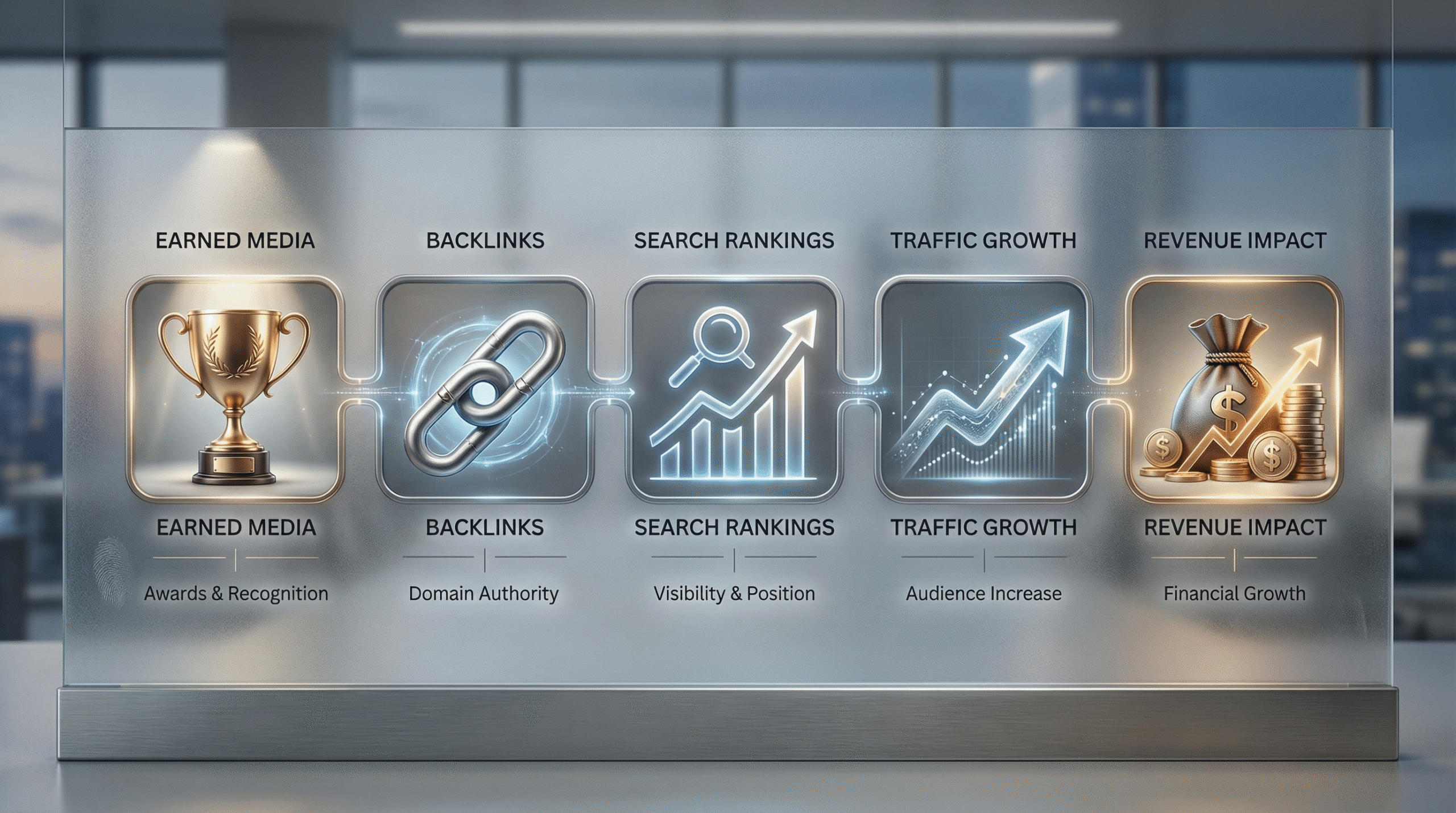
Digital PR is more than just another marketing buzzword—it’s a strategic approach that changes how your business is perceived online. When properly executed, it creates multiple touchpoints where potential customers can interact with your brand in authoritative contexts. The impact is far more than just brand awareness, leading to quantifiable improvements in search visibility, website traffic, and, ultimately, revenue.
The strength of digital PR lies in its capacity to generate cumulative returns. Unlike paid advertising, which ceases to function the moment you stop paying, successful digital PR campaigns continue to generate value long after they have been implemented. A single strategic media placement can provide traffic, backlinks, and brand recognition for many years. This cumulative effect makes digital PR one of the most profitable marketing activities available to businesses today.
What You Really Get from Digital PR (No Buzzwords Allowed)
Let’s bypass the business babble and get straight to what digital PR can really do for you. Essentially, digital PR is all about building meaningful relationships between your business and your desired customers through third-party endorsements. These endorsements can take many forms—media coverage, influencer mentions, guest articles, podcast interviews—but they all have the same goal: to enhance your business’s credibility and visibility in places your potential customers already frequent.
The most instant benefit is top-notch backlinks from reputable websites. These aren’t just any links—they’re contextual recommendations from publications that Google and other search engines already have faith in. A single backlink from a major industry publication can outweigh dozens of lower-quality links in terms of SEO value. Beyond links, digital PR campaigns generate social proof that makes conversion easier at every stage of your marketing funnel.
One of the biggest benefits of digital PR is that it gives you the power to control your brand’s story online. Instead of crossing your fingers and hoping that people will stumble upon positive information about your business, you can take the initiative and place it where it will have the most impact. This means that when potential customers are researching your company, they’ll find engaging, positive content that answers their questions and presents your brand as the solution.
“Digital PR sits at the intersection of content marketing, SEO, and traditional public relations. It delivers the storytelling power of PR with the measurable results of digital marketing.”
How Digital PR Differs from Traditional Marketing
Traditional marketing follows a straightforward “pay-to-play” model—you purchase ad space and control the message completely. Digital PR, however, works through earned media, where third parties choose to feature your brand based on newsworthiness, relevance, and value to their audience. This fundamental difference creates both challenges and opportunities that savvy businesses can leverage for competitive advantage.
Instead of straightforward advertising, digital PR necessitates the development of genuinely intriguing stories, data, or viewpoints that journalists and content creators want to spread. The payoff for this additional work is massive: earned media is significantly more trusted by consumers than paid advertising. Nielsen research indicates that 92% of consumers trust earned media, compared to just 36% for traditional ads. This trust directly results in increased conversion rates and customer loyalty, as highlighted in Rand Fishkin’s transparency model.
Digital PR also works hand-in-hand with your other marketing channels in ways traditional marketing cannot. The backlinks generated boost SEO performance, the content opens up social media sharing opportunities, and the brand mentions fortify email marketing credibility. This interconnected approach creates a marketing flywheel effect where each channel bolsters the others, maximizing your overall marketing ROI. For more insights, explore the benefits of digital PR.
5 Tangible Advantages of Digital PR
There are countless perks to digital PR, but five in particular tend to be especially beneficial for most businesses. All of these advantages can be quantified, monitored, and enhanced over time, giving you the opportunity to continually fine-tune your digital PR approach for the greatest possible effect.
Improved Search Engine Rankings
Digital PR isn’t just linked to improved search engine rankings; it directly causes them. Google has repeatedly stated that backlinks are one of the top three factors it uses to rank websites, along with the quality of the content and RankBrain, which is Google’s AI system. Digital PR creates exactly the kind of backlinks that have a big impact on search engine rankings. These are editorial links from websites that are relevant and authoritative. For more insights on how digital PR strategies can drive revenue, check out this comparison of SEMrush vs. Catalyst Pro.
What makes these links so valuable is their relevance to the context and the fact that they are editorial. When a journalist or editor decides to link to your website in their content, search engines view this as a strong sign of your expertise and authority. A strategic digital PR campaign targeting publications in your industry can significantly improve rankings for your most valuable keywords in 3-6 months.
Compared to other methods, digital PR often yields more stable ranking improvements. Algorithm updates often penalize manipulative link-building tactics, but editorial links earned through legitimate PR efforts usually retain their value through algorithm changes. This establishes a sustainable competitive advantage that becomes increasingly difficult for competitors to overcome as your PR efforts persist.
High-Quality Backlinks from Respected Websites
Not every backlink is of the same value. One backlink from a website with a domain authority of 90 can be more beneficial for SEO than hundreds of backlinks from low-quality websites. Digital PR focuses on gaining these valuable links by creating content and narratives that are appealing to top-level publishers and media outlets in specific industries.
Getting Your Brand Known by Your Target Market
By placing your brand in front of existing audiences, digital PR massively extends your brand’s reach. When your business is featured in platforms and publications your target customers already consume and trust, you get to skip the hard first step of getting known. This borrowed trust creates immediate recognition that would otherwise take direct marketing years or months to establish. For more insights, explore the benefits of digital PR.
It’s hard to overstate the power of digital PR’s amplification effect. When a trusted industry outlet highlights your brand, that content often gets shared across social media, mentioned in newsletters, and cited by other content creators. This organic amplification creates multiple touchpoints with your audience without any additional effort on your part. Each mention strengthens your brand’s presence in the minds of potential customers.
With Digital PR, you can present your brand the way you want it to be seen. Through careful planning and content creation, you can make sure your business is seen in a way that emphasizes your unique selling points and main principles. This specific positioning helps draw in perfect customers who resonate with your brand’s mission and strategy, much like building trust with transparency.
Shielding Your Business During a Crisis
By actively engaging in digital PR, you’re creating a safety net for your business that can be a lifesaver during times of crisis. By regularly producing positive content that ranks well for your business name and key terms, you’re building a strong base that can weather any storm. This positive content doesn’t go away when things get tough—it continues to work as a counterweight to any negative press. For a deeper understanding of how to maintain a strong presence, consider exploring Ahrefs for content and Catalyst Pro for omnipresence.
Another benefit of digital PR is that it builds relationships with media contacts before a crisis occurs. These relationships can be extremely beneficial when you need to share your perspective on a developing situation quickly. Journalists are more likely to include your perspective if they already know and trust your brand through previous positive interactions.
When your business is faced with a reputation crisis, the search engine benefits of digital PR can provide a layer of protection. If potential customers look up your brand during or after a crisis, the positive content you’ve previously placed can help ensure they don’t just see negative information. This can help manage search results and significantly reduce the business impact of temporary issues.
Building Trust with Potential Clients
In this modern age, consumers are becoming more and more doubtful of direct marketing claims, but they still have faith in third-party endorsements. Digital PR takes advantage of this trust gap by placing your brand’s message within content created by sources that your audience already trusts. This third-party validation overcomes doubt in ways that even the most refined direct marketing cannot, much like the Rand Fishkin transparency model does.
By pre-addressing customer concerns, the trust built through digital PR significantly reduces sales cycles. When potential customers have already seen positive mentions of your brand from trusted sources, they enter your sales process with fewer objections and more confidence in what you can do. This pre-established trust makes it easier to convert at every stage of the funnel.
In addition to gaining the trust of individual customers, digital PR can also help you establish credibility in your industry, which can improve all of your marketing efforts. When you regularly appear in industry publications, your company and its leaders are seen as thought leaders, not just vendors. This perceived authority allows you to set higher prices and differentiate yourself from your competitors, who will find it difficult to match you without a strong digital PR strategy of their own.
What Return on Investment Can I Expect from Digital PR?
Figuring out the return on investment for digital PR isn’t as simple as looking at traditional metrics. Instead, you need to look at the overall impact it has on your business. Unlike other marketing channels, where it’s easy to calculate ROI, digital PR offers value in multiple ways. Some of these are immediately measurable, while others offer long-term strategic benefits.

When Can I Expect to See Results?
While digital PR can yield both immediate results and long-term benefits, it’s important to manage expectations when it comes to the timeline for results. You can usually expect to see your brand featured in smaller publications about 4-6 weeks after your campaign begins. This gives your campaign a boost and validates your efforts. These early successes can drive referral traffic to your website and improve your search engine optimization (SEO), albeit on a smaller scale.
For companies that are implementing strategic digital PR, the most significant results—such as major media placements, measurable search ranking improvements, and substantial brand awareness lifts—usually appear in months 3-6 of consistent efforts. This timeline is a reflection of the relationship-building nature of media outreach and the time it takes for search engines to fully value new authoritative backlinks. By month 6, there should be noticeable improvements across all key performance indicators.
Because of the snowball effect of digital PR, results tend to increase over time rather than stagnating. As your backlink profile gets stronger, your domain authority goes up, making each subsequent placement more powerful. Likewise, as your brand recognition improves, journalists are more likely to feature your company. This creates a virtuous cycle that improves campaign efficiency in months 6-12 and beyond. For a deeper understanding of how to enhance your domain authority, explore the evolution of tools that can aid in this process.
Understanding the Cost Structure
The cost of investing in digital PR can vary greatly depending on the size of the campaign, the media outlets you’re targeting, and whether you’re managing it in-house or through an agency. If you’re handling digital PR internally, the main costs will include the time spent by team members (usually 15-20 hours a week for a full program), subscriptions to PR software (which can range from $200-500 a month), and the cost of creating content that’s worth pitching.
Typically, a digital PR agency will charge you between $3,000 and $15,000 per month, depending on the aggressiveness of the campaign, the target publications, and the guarantees of deliverables. While this might seem like a large investment, it’s important to compare this to the equivalent cost of paid advertising needed to generate similar visibility and credibility. Often, you’ll find that digital PR is the more cost-effective approach for sustainable growth.
|
Investment Level in Digital PR |
Typical Cost per Month |
Deliverables Expected |
|---|---|---|
|
Entry-Level |
$3,000-5,000 |
4-6 placements every month, mainly in industry publications |
|
Mid-Level |
$5,000-8,000 |
6-10 placements that include some national media, creation of custom content |
|
Enterprise |
$8,000-15,000+ |
10+ placements that include top-tier media, management of comprehensive campaigns |
Metrics That Really Count
Measuring the success of digital PR involves tracking both immediate outputs and outcomes for the business over the long term. The most direct metrics include the quantity of placements, scores for publication authority, estimated reach, and metrics for the quality of backlinks (including domain authority, relevance, and link positioning). These immediate indicators help evaluate the effectiveness of campaign execution.
In addition to these performance metrics, businesses need to keep an eye on impact metrics that link directly to business objectives. These encompass organic search traffic increase (particularly for targeted keywords), referral traffic from placements, brand search volume growth, and social media mention increase. For e-commerce businesses, attribution modeling can frequently link digital PR efforts directly to revenue by monitoring customer journeys that incorporate interaction with PR-created content.
One of the most valuable things you can gain from digital PR are the comparative metrics that show you how much you are beating your competition. Share of voice analysis shows how your brand’s media presence compares to your competitors over time. Similarly, branded search comparison shows whether your digital PR efforts are helping your brand close the gap with or extend the lead over your key competitors in terms of consumer interest and awareness.
How to Know if Your Business Needs Digital PR Immediately
There are specific circumstances in which your business will benefit from implementing digital PR sooner rather than later. Being able to identify these circumstances will help you decide if digital PR is worth investing in right now or if it can be put on hold until you have other marketing basics in place. For many businesses that have hit a growth plateau or are feeling the pressure of competition, strategic digital PR can provide the boost needed to take them to the next level. If you’re considering tools to enhance your digital PR efforts, you might want to explore SEMrush vs. Catalyst Pro to determine which actually drives revenue.
Website Traffic Has Plateaued
If you’ve been consistently producing content and optimizing your on-page SEO, but your website traffic isn’t increasing, it’s a clear sign that your website needs more authority. Digital PR can provide this by generating high-quality backlinks that boost your domain authority. These authoritative backlinks tell search engine algorithms that your website is worth ranking higher, helping you break through the traffic plateaus that content alone can’t. For a deeper dive into effective strategies, check out SEMrush vs Catalyst Pro to see which platform can drive revenue and enhance your digital PR efforts.
When you’re dealing with stagnant traffic, the cumulative effect becomes especially beneficial. Each high-quality backlink not only boosts the rankings of the specific page it links to, but also increases the ranking potential of your entire domain. This boost to your entire domain helps all of your content perform better, creating multiple sources of traffic growth from a single PR campaign. If your business has been experiencing flat traffic for 3+ months despite ongoing content efforts, you should prioritize digital PR right away.
Low Brand Awareness
If your sales team is constantly running into prospects who have never heard of your company, despite being in your target market, digital PR is the perfect solution. By getting your brand into the publications and platforms your ideal customers already consume, you create multiple touchpoints that build awareness before any direct marketing even begins. This pre-awareness significantly improves all marketing performance metrics by reducing the “stranger danger” that new brands typically face. For a deeper understanding of how this strategy works, you might find Rand Fishkin’s audience-first approach insightful.
When it comes to standing out in a competitive market, digital PR is an invaluable tool. Instead of trying to outspend your competitors on advertising, digital PR embeds your message in content that your audience already knows and trusts. This strategy is more memorable and less intrusive than traditional advertising, making it a cost-effective way to build brand recognition even when you’re up against well-established competitors.
Are Your Competitors Getting All the Press?
If your competitors are constantly popping up in industry news and your business isn’t, they’re gaining a significant edge over you. Their constant visibility in the media makes them look like industry leaders, and that’s what customers will think of when they’re deciding who to buy from. This gap in perception grows over time, as their frequent mentions in the media make them look like the dominant player in the market.
Strategic use of Digital PR can help your business compete with other companies in your industry. By sharing unique insights, proprietary information, or controversial opinions on industry trends, you can quickly establish your business as a thought leader. This prevents competitors from controlling the conversation and positions your business as a forward-thinking alternative. For instance, leveraging Sparktoro insights can enhance your strategic approach to digital PR.
Bad Online Reviews
If there’s bad press about your company online, digital PR is the best way to handle it. You can create positive content that will rank high when people search for your company, pushing the bad press down where fewer people will see it. This is a good strategy because most people don’t look past the first page of search results, so where your company ranks is important for managing your reputation.
One major benefit of using digital PR for managing your reputation is that it creates content that is truly valuable, as opposed to using sneaky SEO tactics. While technical SEO strategies may alter your rankings temporarily, search engines are getting better and better at spotting and penalizing efforts to manipulate reputation. Digital PR creates genuine, positive content that deserves to be ranked highly, offering long-term protection against reputation issues.
Recognizing When Digital PR Isn’t Right for Your Business
Even though digital PR can be a game-changer for many businesses, it’s not always the best fit for every company or for every stage of a company’s growth. Knowing when to focus on other aspects of your marketing strategy can help you avoid wasting valuable resources and experiencing unnecessary frustration. By understanding when digital PR might not be the best fit, you can make smarter decisions about when to implement it and when to concentrate your efforts elsewhere.
Companies with Unclear Messaging
For companies that haven’t yet clearly defined their unique selling proposition, key messaging pillars, and brand voice, digital PR efforts will likely underperform. Without these fundamentals, media pitches lack the compelling angles journalists need, resulting in low placement rates and inconsistent brand representation. The amplification power of PR works against you when your message isn’t cohesive, potentially spreading confusion rather than building recognition. For guidance on building trust and transparency, consider exploring Rand Fishkin’s transparency model.
Before embarking on major digital PR campaigns, businesses should first focus on developing their messaging and ensuring internal consistency. Laying this foundation guarantees that every media opportunity is used to its fullest potential by consistently emphasizing what sets you apart. Once your messaging is firmly established, digital PR becomes much more successful at creating the right brand associations with your target audience.
Expecting Results Too Soon
It’s important to understand that digital PR is a long-term strategy, not a quick fix. If you’re looking for an immediate boost in traffic or sales, you might want to consider paid advertising. The value of PR comes from building relationships, and those relationships get stronger over time. Each successful placement makes the next one easier. But if you’re not willing to commit to at least six months of consistent effort, you might not see the results you’re hoping for. For more insights on building effective PR strategies, you might find Rand Fishkin’s transparency model helpful.
Because digital PR is a long-term strategy, it is not suitable for short-term campaigns or businesses that are looking for quick fixes. The investment in building relationships and developing authority pays off hugely for companies that have long-term growth plans, but it is of limited value for those that are focused only on immediate results. Being honest about your timeline expectations will help you to determine whether digital PR is in line with your current business priorities.
Unsatisfactory Product-Market Fit
While Digital PR is an effective tool for promoting your business’s narrative, it can’t rectify inherent product issues. If your company is still striving to achieve product-market fit, it would be more beneficial to allocate resources to product development and obtaining direct customer feedback rather than trying to raise broad awareness. PR is most effective when you’re confident in what you’re offering and prepared for the heightened scrutiny and attention that comes with it. Driving traffic and awareness to a product that’s not performing well often speeds up failure rather than resolving it.
It is crucial to understand that digital PR is a potent tool for business growth once the product-market fit has been determined and customer satisfaction levels are high. It is important to get the sequence right – first, make sure the product is perfect, and then let the world know about it. This strategy ensures that increased visibility results in business growth rather than missed opportunities. For insights on enhancing your digital PR strategy, explore the audience-first approach that can drive substantial growth.
Deciding Between In-House and Agency Digital PR
Whether to develop digital PR in-house or to partner with a dedicated agency is a decision that has a big effect on both outcomes and resource distribution. There isn’t a one-size-fits-all answer—what’s best depends on your unique business circumstances, current abilities, and growth goals. Being aware of the pros and cons can help you make a decision that’s in line with what your business needs.
Comparing Costs
When you’re doing digital PR in-house, you’re usually looking at hiring at least one full-time specialist. You can expect to pay them somewhere between $60,000 and $85,000 a year. On top of that, you’ve got to pay for subscriptions to media databases, monitoring tools, and resources for creating content. And don’t forget about the costs of management oversight, benefits, and operations. Even for a pretty modest program, you’re probably looking at an annual investment of over $100,000. That’s a fixed cost, so it’s more economical for bigger companies. But for smaller businesses, it might be too much.
Working with an agency allows for a more flexible pricing structure, usually between $3,000 and $15,000 per month depending on the size of the campaign and what is promised in return. This way, fixed costs become variable expenses that can be changed depending on the results and the needs of the business. For many small to medium-sized businesses, working with an agency gives them access to specialized knowledge and existing relationships with the media, which would cost a lot more to develop in-house. If you’re considering agency options, you might want to explore The VaynerMedia Playbook for SMBs for additional insights.
What You Need to Succeed
Getting digital PR right in-house isn’t just about hiring the right people. You also need buy-in from the top, the ability to create engaging content, experts in your field who are willing to be the face of your PR efforts, and the ability to work well with your existing marketing team. It’s important to be honest about whether you can really offer the level of support that your PR team will need to succeed. If you can’t, even the most talented PR person will struggle to get you the results you want.
Working with agencies offers turnkey solutions that help to reduce the pressure on your internal resources while also maximizing results. They have established relationships with media outlets, the ability to create content, and strategic expertise that can help to reduce the amount of work your team has to do. This comprehensive support makes working with an agency particularly valuable for companies that don’t have existing PR infrastructure or those with limited marketing bandwidth. While you will still need to collaborate with the agency, it will require significantly fewer resources than managing PR in-house.
How to Choose a Digital PR Agency
When it comes to choosing a digital PR agency, the right choice can make or break your campaign. Don’t just look at their general marketing skills, look for specific expertise in digital PR. Ask them to show you recent case studies that are relevant to your industry. Ask for sample reports on coverage and backlinks, and examples of how they’ve made a difference to their clients’ business metrics. They should be able to show you how they measure success and provide transparent reports on what they’re doing and what results they’re getting.
When assessing agencies, don’t just look at their general PR skills. Instead, focus on their media relationships in your specific industry. Digital PR success largely hinges on having existing relationships with relevant journalists and publications. Ask potential partners about the specific media contacts they already have in your space and how they plan to use those relationships for your campaigns. The best agencies blend technical SEO knowledge with traditional PR skills. They understand both the content that gets coverage and how to maximize its impact on search.
Making the Most of Your Digital PR Investment
Once you’ve decided to invest in digital PR, the way you carry out your strategy can make a big difference in your results. The gap between a mediocre campaign and an outstanding one often lies in the nitty-gritty of carrying out PR activities that align with your overall business goals. Here are some strategies that can help you get the most bang for your buck from your digital PR investment.
Linking PR to Business Objectives
Top-performing digital PR campaigns are designed to directly support specific business goals rather than simply chasing coverage. Begin by determining which business metrics are most important—lead generation, sales growth in specific areas, recruitment for important roles, investor interest, or competitive differentiation. Then, create PR strategies that directly impact these priorities, making sure that each placement contributes to significant business results. For more insights, explore the benefits of digital PR.
Instead of focusing on domain authority or prestige, you should focus on targeting specific publications based on audience relevance. A placement in a niche industry publication often delivers more business value than coverage in broader outlets with less relevant audiences. By creating clear connection points between PR activities and business performance indicators, you can demonstrate concrete value beyond vanity metrics like impression counts.
As your business goals change, make sure to reassess the alignment of your digital PR strategy. This will ensure that your PR efforts are always supporting your most important business goals, rather than working independently. The best digital PR strategies stay aligned with business goals through quarterly strategy reviews and regular performance analysis.
Developing Content That Makes Headlines
When it comes to succeeding in digital PR, it’s all about crafting content that is so newsworthy, journalists can’t ignore it, and it still aligns with your company’s story. Don’t bother with generic company announcements; they hardly ever get picked up. Instead, concentrate on putting together original research, data analysis, expert commentary on industry trends, or controversial perspectives that are truly useful to the readers of the publications.
There are a few types of digital PR content that tend to be successful: proprietary data studies that reveal new insights, thought leadership that challenges industry norms, practical resources that solve common problems, or unique stories that tie into larger cultural trends. These types of content consistently generate media interest because they offer the newness, relevance, and value to the audience that journalists are looking for.
Create a separate content calendar for PR initiatives, which should complement your regular content marketing but be distinct. PR-focused content needs different angles, formats, and distribution strategies to be successful. By creating dedicated resources for media outreach, you can significantly improve placement rates and build a reputation as a valuable source for journalists in your industry.
Using Data and Industry Insights to Your Advantage
Stories that are based on data consistently perform better than those based on opinion when it comes to earning media coverage and backlinks. Journalists are under more and more pressure to back up their articles with credible data, which creates opportunities for businesses that can provide original research or insightful analysis of existing information. If you regularly produce content that is focused on data, it will position your brand as an authoritative resource in your industry and generate consistent opportunities for coverage.
You don’t need a huge research budget to do this. You can generate media interest by creatively analyzing publicly available data, conducting targeted surveys of your customers, or compiling industry statistics into easy-to-understand formats. The key is to provide context and insights that turn raw data into meaningful stories journalists can use for their articles.
By aligning the release of these data with industry happenings, seasonal patterns, or current events, you add a layer of relevance that boosts placement rates. This strategic timing shows a savvy understanding of the media landscape that journalists value, making it more likely that they’ll share your content. The marriage of original data and strategic timing creates a golden opportunity for publications that are always on the hunt for credible, timely content. For more insights on data distribution, explore Rand Fishkin’s SparkToro data.
Forming Connections with Journalists
To ensure lasting success in digital PR, it’s crucial to form authentic relationships with significant journalists in your field. Instead of sending out broad pitches to large lists, take the time to get to know the specific interests, preferences, and needs of individual reporters who cover topics that are relevant to your business. Before reaching out, take a look at their recent articles, social media activity, and stated preferences to ensure that every interaction you have with them is valuable from their point of view.
Start building relationships before you need coverage right away by providing useful resources without clear expectations. Thoughtfully comment on their articles, share their work with your audience, connect them with other valuable sources, or provide background information on industry trends. These first-value interactions make you a helpful resource rather than just another company looking for promotion.
When you’ve established these connections, reporters start to see your business as a trusted source in your field, and they’ll start to reach out to you for comments and insights. This is the highest level of success in digital PR – going from always reaching out to becoming a trusted source of information. These connections give you a competitive edge that your competitors can’t easily copy.
What’s Next: Putting a Digital PR Plan into Action
Turning the theory of digital PR into a practical plan of action calls for a structured method that gradually builds pace while steering clear of the usual stumbling blocks. Whether you’re working with an agency or building up your own in-house team, these steps to implementation will guide you on the path to digital PR victory. The trick is to start with the basics before moving onto more daring projects, and understanding which tools actually drive revenue can be a crucial part of this process.
Getting Started with Digital PR
First, assess your current online presence by examining your existing backlinks, mentions in the media, and how visible your brand is in searches. This initial assessment will help you identify your specific weaknesses and opportunities, and it will also give you a benchmark for measuring your future success. You should also compare your current visibility to your main competitors, and take note of the specific publications and topics that they currently dominate in your industry.
Start by creating the basic materials for your media kit: a company backgrounder, bios for your leadership team, key messaging points, and visual assets. These materials will make future pitching efforts more efficient and will ensure that your brand is consistently represented across all placements. You can also create different versions of these materials to fit different types of media opportunities, from quick news mentions to in-depth feature stories.
Start by identifying your first media targets based on how relevant they are to your audience, not just their general authority metrics. This will stop you from wasting time on outlets that aren’t a good fit. Create a tiered media list with a specific plan for approaching each category. Start with 15-20 very relevant publications where you can provide unique value. Then, expand your targeting as you start to see initial success and refine your approach.
Working with Your Current Marketing
Digital PR is most effective when it is fully integrated with your existing marketing system rather than working independently. Make sure there are clear handoff processes between PR placements and other marketing channels so that each earned media win creates multiple touchpoints across your marketing mix. Social media should highlight PR wins, email marketing should share coverage with prospects, and sales teams should use media mentions in conversations with potential customers.
Set up common calendars and regular meetings between PR, content marketing, social media, and sales enablement teams to coordinate activities and maximize the cross-channel impact. This collaboration ensures consistent messaging while taking advantage of each team’s unique skills. The resulting synergy significantly enhances the effect of every successful placement while providing consistent customer experiences across all brand interactions. For more insights on building trust through transparency, explore Rand Fishkin’s transparency model.
Tracking Results and Making Changes
Use a detailed tracking system that measures both PR-specific data and the wider effects on your business. Basic measurements should include the number of placements, the authority of the publication, estimated reach, the quality of backlinks, referral traffic, and changes in SEO ranking. More advanced programs should also measure trends in brand search volume, growth in social media mentions, and lead attribution linked to PR activities. This multi-faceted approach to measurement links tactical PR victories to strategic business results.
Regularly scheduled review cycles are key to analyzing performance data and refining your approach based on clear patterns of success and failure. Quarterly strategy reviews should examine which topics, formats, and publications consistently deliver the strongest results, allowing you to double down on what works while reducing investment in underperforming approaches. This data-driven optimization creates continuously improving returns as your digital PR program matures.
Commonly Asked Questions
When businesses consider digital PR options, they often have questions about how to implement them, what results to expect, and what the best methods are. The answers to these questions offer useful advice for businesses at different stages of their digital PR exploration.
What works best for your business depends greatly on your particular business environment, your brand’s current standing, and your growth goals. The answers provided below address common questions while recognizing that your digital PR strategy should be custom-made to fit your specific circumstances.
What is the typical cost of digital PR?
When working with specialized agencies, digital PR typically costs between $3,000 and $15,000 per month. The cost can vary depending on how aggressive the campaign is, the quality of the target publication, and the guarantees of the deliverables. In-house programs usually require at least one dedicated specialist, who would typically earn between $60,000 and $85,000, as well as investments in media databases, which can cost between $3,000 and $10,000 per year, monitoring tools, and content creation resources. To generate meaningful momentum and establish the media relationships necessary for sustainable results, most successful programs maintain a consistent investment for at least 6-12 months.
When can I expect to see results from digital PR?
Usually, digital PR begins to yield initial placements within 4-6 weeks of the campaign launch, with more significant results appearing in the 3-6 month range of consistent effort. Early successes often include mentions in industry publications and smaller outlets, while placements in major media typically require more relationship building and often appear later in campaigns. SEO benefits follow a similar timeline, with initial ranking improvements visible within 2-3 months but more significant domain authority growth occurring over 6-12 months of sustained activity. The compounding nature of digital PR means results typically accelerate rather than plateau when programs maintain consistent execution.
Is digital PR beneficial during a brand crisis?
Digital PR offers two essential crisis management functions: proactive defense through positive content that counterbalances potential negative coverage, and reactive response capabilities through established media relationships. Businesses with ongoing digital PR initiatives prior to crises occurring have substantial benefits in handling negative situations, including existing journalist relationships, higher domain authority that assists response content rank well, and an established positive narrative that provides context for addressing issues.
But, trying to initiate digital PR only when a crisis hits is a lot less effective. Establishing media relationships and authority takes time that you just don’t have during an active crisis. The best tactic is to put ongoing digital PR in place as a safety net before anything goes wrong. This way, you’re building both the relationships and the positive content foundation that will help to minimize the impact of a crisis when it does hit. For more insights on effective strategies, consider exploring the audience-first approach that has proven successful.
Is digital PR just for big businesses?
Digital PR can be beneficial for businesses of any size, with the strategies and expectations tailored to the resources of the organization. Smaller businesses often see more impact from digital PR because they start from a lower level of authority and visibility, so there’s more room for improvement. While big brands may need to be featured in major media to make a difference, smaller businesses can often see significant growth from targeted industry publications and local media coverage that’s more achievable with limited resources.
What effect does digital PR have on my SEO endeavors?
Digital PR offers three important SEO advantages that cannot be achieved with technical optimization alone. Firstly, it creates high-quality backlinks from relevant, authoritative websites, which is a key ranking factor that directly impacts domain authority. Secondly, it generates co-occurrence signals when your brand is mentioned alongside relevant industry terms in publications that Google already trusts, which strengthens topical authority. Thirdly, it creates brand mentions and search queries that signal increasing relevance to search algorithms. These combined advantages address off-page SEO factors that are often the missing link for businesses that already have strong on-page and technical optimization.
The effect of digital PR on SEO usually goes beyond the specific pages that receive direct links. As the domain authority increases, all the content on your website benefits from improved ranking potential, leading to improvements in site-wide visibility. This broad impact makes digital PR especially valuable for businesses that are looking for a sustainable competitive advantage in search, rather than just temporary improvements in ranking.
Boost your visibility, strengthen your authority, and turn credible media coverage into real business results. Start building a digital PR strategy that actually moves the needle at www.trycatalyst.ai.

