

Key Takeaways
- The 1:10 method allows you to transform a single blog post into multiple marketing assets, saving up to 70% of content creation time while maximizing ROI
- Most marketers use their content only once, missing opportunities to reach audiences across different platforms and learning preferences
- High-performing source content can be strategically repurposed into social media carousels, videos, podcasts, and visual assets without feeling repetitive
- WordStream’s content repurposing framework helps marketers create a systematic approach to content multiplication rather than random, ad-hoc efforts
- Implementing a content repurposing workflow allows you to publish consistently across channels while maintaining quality and brand consistency
Content creation doesn’t have to be a never-ending hamster wheel. In fact, the most successful content marketers don’t create more—they multiply what they already have.
The solution to content overwhelm isn’t producing more pieces; it’s extracting more value from each piece you create. WordStream’s content marketing team found that strategic repurposing can triple content ROI while reducing production time by 60%. The secret lies in viewing each blog post not as a final product but as a content gold mine waiting to be excavated.
When you master the art of repurposing, a single well-researched blog post becomes the foundation for weeks of marketing materials across multiple channels. This approach doesn’t just save time—it creates a coherent brand story that meets your audience wherever they consume content.
“The biggest mistake content marketers make is treating each piece as single-use. In reality, every substantial blog post contains at least 10 smaller ideas that can live independently across your marketing ecosystem.” — Content Marketing Institute
Stop Drowning in Content Creation: The 1:10 Method
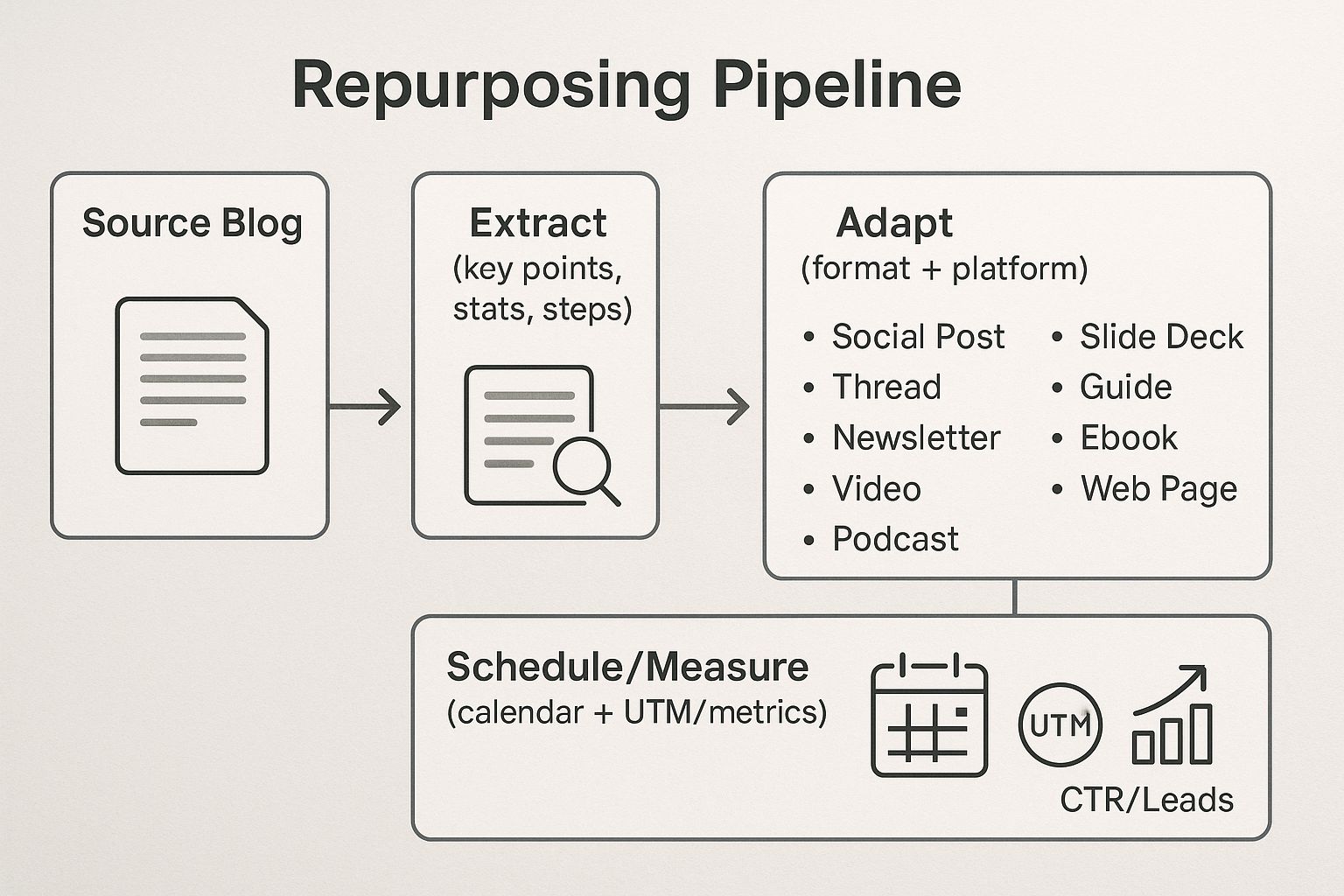
The 1:10 method operates on a simple principle: for every piece of substantive content you create, you should extract at least 10 additional marketing assets. This approach transforms your content strategy from a constant production treadmill into a multiplication engine. Instead of starting from scratch for each platform, you’re strategically adapting core messages to different formats and contexts.
Consider this: the average blog post takes 3-4 hours to research, write, edit, and publish. Creating 10 separate pieces would require 30-40 hours. With the 1:10 method, you can generate those same 10 assets in just 8-10 hours total—a time savings of 75%.
This methodology isn’t about cutting corners—it’s about intelligent resource allocation. By spending more time on one comprehensive piece and then adapting it thoughtfully, you maintain quality while dramatically increasing output. The result? More touchpoints with your audience, consistent messaging across platforms, and a sustainable content calendar that doesn’t burn out your team.
Why Most Marketers Waste 90% of Their Content Potential
Despite its effectiveness, content repurposing remains underutilized. According to a Semrush study, only 29% of marketers have a systematic approach to repurposing content, while 71% either do it randomly or not at all. This oversight represents a massive missed opportunity.
The Single-Use Content Trap
The typical content approach follows a predictable cycle: create a blog post, share it once on social media, and then immediately move on to the next topic. This “publish and forget” mentality treats valuable content as disposable, assuming that once it’s been shared, its utility is exhausted.
In reality, most audience members won’t see your content the first time it’s published. Research shows that people need multiple exposures to information before it registers, and different segments of your audience frequent different platforms. By using content only once, you’re essentially writing for a fraction of your potential audience. For more insights on enhancing user experiences, check out how Catalyst Pro enhances e-commerce- experiences.
The solution isn’t creating more standalone pieces but strategically reintroducing your best insights across multiple formats and touchpoints. This approach respects both your resources and your audience’s diverse content preferences.
Hidden Costs of Starting From Scratch Every Time
The financial and time investments of continuous content creation are substantial but often underestimated. Every new piece requires research, ideation, drafting, editing, design, and promotion. By constantly pursuing “fresh” content, teams spread their resources thin and compromise quality.
Content repurposing eliminates duplicate research efforts and reduces the cognitive load of constant ideation. When you extract multiple assets from a single source, you maintain thematic consistency while adapting presentation to suit different contexts—all without repeating the heavy lifting of initial research and conceptualization.
Your Audience Consumes Content Differently Than You Think
The diversity in how people process information is frequently overlooked in content planning. Some audience members are visual learners who prefer infographics or videos. Others retain information better through audio formats like podcasts. Still others prefer the depth and reference capabilities of written content.
By transforming one comprehensive blog post into multiple format types—visual, audio, interactive, and condensed written forms—you accommodate these different learning styles. This inclusive approach doesn’t just respect audience preferences; it significantly expands your reach without requiring entirely new subject matter. Learn more about enhancing e-commerce experiences to further broaden your audience.
Additionally, platform context matters greatly. A professional scanning LinkedIn during a commute needs different content packaging than someone browsing Instagram during leisure time, even if the core message remains consistent. Effective repurposing acknowledges these contextual differences while maintaining your fundamental insights.
The Content Multiplication Framework
Successful content repurposing isn’t about random recycling—it’s about strategic transformation. The key difference lies in having a systematic approach rather than making ad-hoc decisions about which content to repurpose and how. A proper framework ensures consistency, quality, and alignment with your marketing goals.
Identifying Your “Source” Content
Not all content has equal repurposing potential. The best source materials share specific characteristics that make them ideal multiplication candidates. Look for comprehensive blog posts that contain multiple distinct points, data-driven insights, or step-by-step processes that can stand alone as individual concepts.
Ideal source content typically includes: in-depth guides (1500+ words), data-rich research pieces, expert interviews, case studies with clear results, and evergreen how-to content. These formats naturally contain modular components that can be extracted and repurposed without losing context. Before creating any new content, ask yourself: “Could this become at least 5 different assets?” If not, you may need to enhance the depth or structure of your source material.
Platform-Format Matrix: Matching Assets to Channels
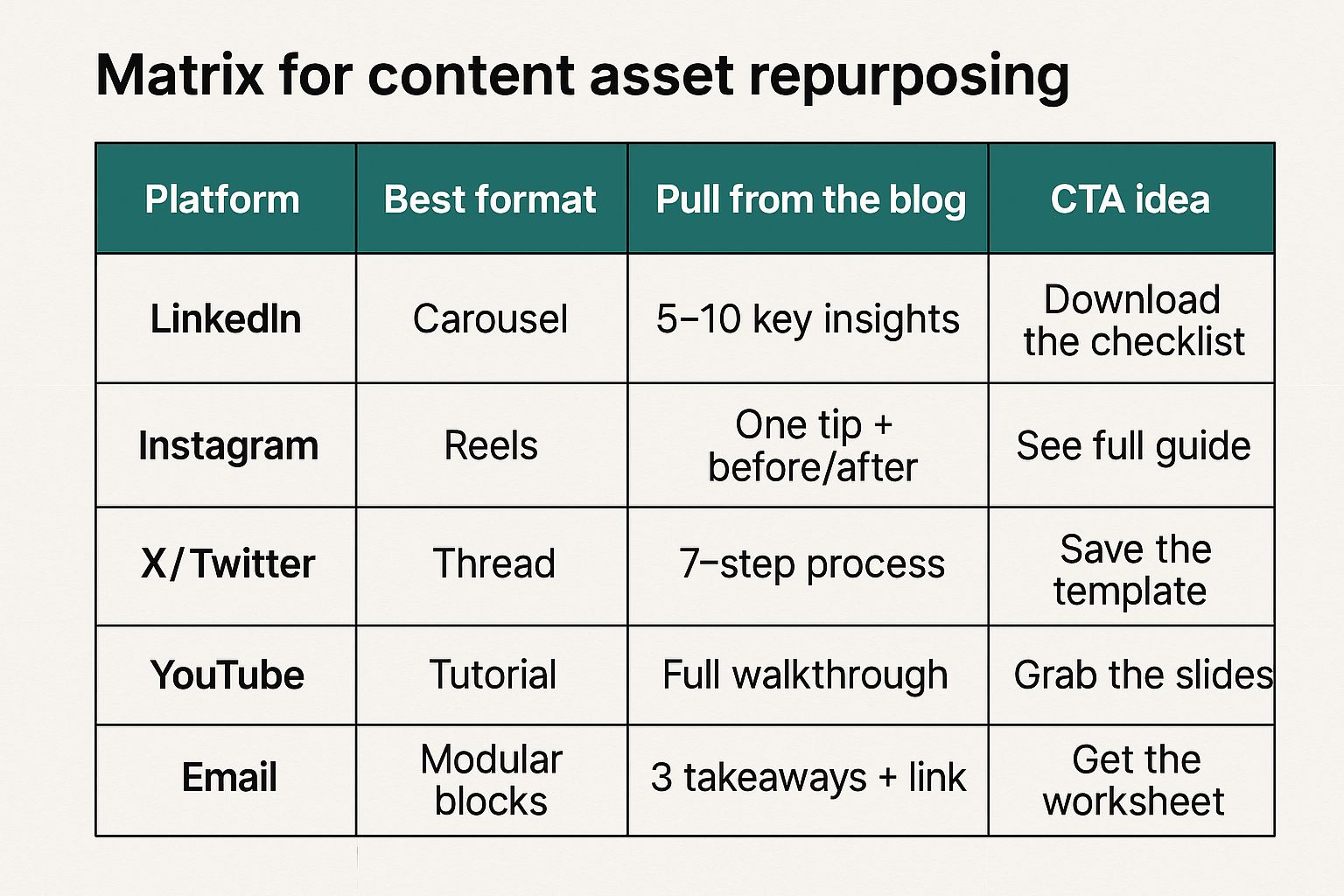
Different platforms demand different content formats. Creating a platform-format matrix helps you strategically map which elements of your source content work best in specific contexts. For instance, statistical insights from a blog post might become Instagram carousel slides, while process steps convert perfectly into a YouTube tutorial.
|
Platform |
Optimal Format |
Content Element to Extract |
|---|---|---|
|
|
Carousel, text post |
Data points, professional insights |
|
|
Carousel, Reels |
Visual steps, before/after |
|
|
Thread, single insights |
Quotable statements, tips |
|
YouTube |
Tutorial, explainer |
Process demonstrations |
|
|
Segmented content blocks |
Personalized takeaways |
Setting Up Your Repurposing Workflow
Efficiency in content repurposing comes from establishing a standardized workflow. This prevents the repurposing process itself from becoming overwhelming. Start by creating templates for your most common repurposed formats, like social media carousels or video scripts. These templates should include placeholders for the specific elements you’ll extract from your source content.
Implement a content calendar that tracks not just publication dates but repurposing pathways. For each source piece, map out which derivative assets will be created, their formats, publication platforms, and deadlines. This visual roadmap prevents overlooking repurposing opportunities and maintains momentum in your content pipeline.
10 Ways to Transform One Blog Post
With your framework in place, it’s time to explore specific transformation strategies that extract maximum value from each blog post. These techniques go beyond simple resharing and instead create genuinely adapted content for different contexts and consumption preferences.
1. Social Media Carousel Posts
Carousels have become engagement powerhouses across LinkedIn, Instagram, and even Twitter (via multiple images). The format is perfect for breaking down complex blog concepts into digestible, swipeable chunks that maintain viewer attention. To create effective carousels, identify sequential points from your blog post—like steps, tips, or related statistics—that can stand alone while building toward a complete narrative.
The ideal carousel extracts 5-10 key insights from your blog post, pairs each with a compelling visual, and bookends the sequence with an attention-grabbing opener and action-oriented final slide. This format typically generates 3-5x more engagement than single-image posts because it rewards curiosity and creates a micro-learning experience.
2. Short-Form Video Scripts
Transform your blog’s key points into scripts for platforms like TikTok, Instagram Reels, or YouTube Shorts. The most effective approach is identifying a single powerful insight or process from your blog that solves a specific problem in under 60 seconds. Structure these scripts with a strong hook (the problem), a clear solution from your blog, and supporting evidence or steps.
The beauty of short-form video is its ability to humanize your brand while delivering quick value. Rather than trying to cover your entire blog post, focus on one compelling section that stands alone as immediately useful information. This narrow focus actually increases sharing potential because it addresses specific pain points with clear solutions, much like how enhancing eCommerce experiences can address customer needs effectively.
3. Podcast Episode Talking Points
Your comprehensive blog posts contain conversation starters perfect for podcast content. Extract the major themes, controversial points, or unique insights to create a podcast episode outline. The beauty of audio content is that you can explore nuances and personal experiences that might feel too subjective for written content. For example, discussing enhancing eCommerce experiences can provide valuable insights for your audience.
A single 2,000-word blog post typically contains enough substance for a 20-30 minute podcast episode when you add context, examples, and conversational elements. This format allows you to reach audiences during commutes, workouts, and other moments when reading isn’t possible, dramatically extending your content’s reach.
4. Email Newsletter Sections
Blog content can be segmented into focused email sections that deliver specific value to different subscriber segments. Instead of simply promoting your blog post via email, extract targeted insights that address distinct audience needs, then pair them with personalized introductions and calls-to-action that acknowledge the reader’s specific context or challenges.
5. Visual Infographics
Data-rich blog posts offer perfect material for shareable infographics that simplify complex information. Look for sections containing statistics, comparisons, processes, or hierarchies that would benefit from visual representation. Effective infographics don’t just illustrate text—they transform it into a visual story that makes relationships and patterns immediately apparent.
These visual assets typically generate 3x more shares than text-only content because they condense significant information into quickly digestible formats. They’re also perfect for Pinterest, which continues to drive substantial traffic for many industries years after publication.
When designing infographics from blog content, focus on a single cohesive message rather than trying to visualize the entire article. This constraint produces clearer, more impactful assets that audiences can process quickly and are more likely to share.
5 More High-Impact Content Transformations
Beyond the standard repurposing approaches, these advanced transformations extract even more value from your blog content while reaching audiences in unexpected and engaging ways. Each of these methods requires slightly more production effort but delivers substantially higher engagement and conversion potential. For instance, you can explore enhancing e-commerce experiences to reach a broader audience.
6. Lead Magnet Checklists and Worksheets
Process-oriented blog posts contain natural frameworks for interactive tools your audience can apply immediately. By transforming a step-by-step section of your blog into a downloadable checklist or fillable worksheet, you convert passive content into an active experience that delivers tangible results. This transformation also creates a valuable lead generation asset that encourages email signups.
The most effective lead magnets extract actionable frameworks from your blog content while adding design elements and space for personalization. For example, a blog post about content planning might become a 30-day content calendar template, while an SEO guide could transform into a keyword research worksheet with built-in prioritization scoring.
7. Webinar or Presentation Slides
Comprehensive blog posts provide ready-made outlines for webinar presentations or slide decks. The hierarchical structure of most blog content—with headings, subheadings, and supporting points—naturally maps to presentation format. By adding visual elements, discussion questions, and interactive components, you transform static content into an engaging live or recorded experience.
8. Quote Graphics for Social Sharing
Every well-written blog post contains quotable insights that can stand alone as shareable social media content. Identify the most powerful, concise statements from your post—particularly surprising statistics, counterintuitive claims, or memorable phrases—and pair them with branded visual templates.
These quote graphics perform especially well when attributed to company leaders or industry experts quoted in your blog. They position your brand as a thought leader while making complex ideas accessible. For maximum impact, create a series of 5-7 quote graphics from each major blog post, scheduling them across multiple platforms over several weeks.
9. Audio Content for Voice Search
As voice search continues growing, transforming your blog content into audio formats becomes increasingly valuable. Create narrated versions of your posts that can serve as podcast episodes, audio blog options, or even responses to voice search queries. This approach makes your content accessible during hands-free moments and helps capture the growing audience that prefers listening to reading.
When adapting written content for audio, make subtle adjustments for the listening experience. Shorten sentences, add verbal transitions, and emphasize key points through vocal inflection. These modifications maintain attention and comprehension in an audio-only environment.
- Add brief audio introductions to establish context
- Break longer blogs into thematic audio segments
- Include verbal calls-to-action for next steps
- Optimize audio file metadata for search discovery
Platforms like Spotify, Apple Podcasts, and Google Podcasts offer distribution channels for this content, while embedding audio players within your blog posts provides an alternative consumption method for existing website visitors.
10. Guest Post Pitches for Authority Sites
Your comprehensive blog posts contain specialized sections that can be expanded into standalone guest articles for industry publications. This approach extends your reach to established audiences while building valuable backlinks to your website. The key is identifying sections of your blog that align with target publications’ audiences while offering a fresh perspective or additional detail.
Effective guest post adaptations maintain the core insights from your original content while tailoring the angle, examples, and vocabulary to the specific publication’s readership. For maximum impact, include original research or exclusive insights not found in your published blog to provide unique value to the host publication.
This strategy creates a virtuous cycle—your blog generates guest post opportunities, which drive new traffic back to your site, which informs future blog content. A single comprehensive blog post can typically yield 2-3 distinct guest post angles for different publications.
Pro Tip: When pitching guest posts based on your blog content, reference the performance metrics of the original piece. Editors are more likely to accept proposals backed by evidence of audience interest and engagement.
Real-World Content Multiplication Success Stories
The true test of any content strategy is real-world results. These case studies demonstrate how organizations of different sizes have implemented systematic repurposing to dramatically expand their content footprint without proportionally increasing their resource investment. For instance, enhancing e-commerce experiences can be a part of a successful content strategy.
How a SaaS Company Generated 250+ Assets From 12 Blog Posts
A B2B software company facing resource constraints but needing consistent content across multiple channels implemented a strategic repurposing workflow. They focused on creating one comprehensive “pillar” blog post monthly (averaging 2,500 words) and systematically transformed each into approximately 20 derivative assets. Their process included dedicated “repurposing days” where their small marketing team would extract and adapt content for different platforms rather than creating new material. Within six months, website traffic increased by 156%, lead generation rose by 89%, and content production time decreased by 40%.
The Solo Creator Who Built an Audience on 5 Core Topics
A finance consultant with limited time for content creation built a following of over 100,000 subscribers across platforms using intensive repurposing of just five cornerstone topics. Rather than constantly chasing new subjects, she developed comprehensive guides on her core expertise areas, then systematically transformed each into dozens of specialized assets targeting specific questions and platforms. This deep rather than broad approach positioned her as the definitive resource in her niche segments, leading to speaking engagements, a book deal, and a 300% increase in client inquiries—all from repurposing rather than constantly creating new content.
Your 3-Step Action Plan to Start This Week
Implementing content repurposing doesn’t require a complete strategy overhaul. Start with a focused approach that builds momentum and demonstrates value quickly. The following three-step process allows you to begin seeing results within your first week of implementation, regardless of your team size or current content inventory.
Content Audit: Finding Your Repurposing Goldmines
Begin with a systematic review of your existing content to identify pieces with the highest repurposing potential. Focus on identifying blogs that contain multiple distinct sections, actionable frameworks, data points, or comprehensive processes. Your ideal candidates typically have evergreen relevance, strong original performance metrics, and modular components that can stand independently. Using analytics, identify your top-performing posts by traffic, engagement, or conversion metrics—these proven performers should be your first repurposing targets.
The 30-Minute Daily Repurposing Habit
Consistency trumps intensity when building a repurposing system. Block 30 minutes daily specifically for content transformation rather than attempting occasional marathon sessions. During each focused session, work on transforming one section of your source content into a specific format for a single platform. For instance, Monday might be dedicated to extracting key points for a LinkedIn carousel, while Tuesday focuses on scripting a short-form video from the same content.
This incremental approach prevents overwhelm while steadily building your repurposed content library. After just five daily sessions, you’ll have transformed one blog post into five distinct assets—without disrupting your existing workflow or requiring additional team resources.
Essential Tools to Automate Your Content Multiplication
Strategic tool selection dramatically increases repurposing efficiency by automating repetitive aspects of the transformation process. Invest in a centralized content management system that stores both original and repurposed assets with clear tagging to track relationships between content pieces. Templates for common repurposing formats (social graphics, video thumbnails, carousel layouts) eliminate design bottlenecks and maintain brand consistency across all derivative content. For more insights, explore this guide on content repurposing.
Consider tools like Canva for visual asset creation, Descript for audio and video editing, and CoSchedule for planning your repurposing calendar. For teams with limited design resources, AI-assisted tools like Repurpose.io can automatically transform blog content into initial drafts of social posts, saving hours of manual reformatting. The goal isn’t eliminating human creativity but automating the technical aspects of transformation so you can focus on strategic adaptation. For more insights on enhancing digital experiences, explore enhancing e-commerce experiences.
The 10X Content ROI Calculator
Understanding the tangible impact of content repurposing requires measuring both resource savings and performance improvements. The following calculation framework helps quantify your return on investment when implementing systematic content multiplication strategies. Discover how financial platforms can enhance your content strategy.
How Much Time You’ll Save Each Month
Calculate your current content creation baseline by tracking hours spent on research, writing, editing, design, and publication for completely new pieces. Compare this with time required for repurposing, which typically reduces research needs by 80% and writing time by 50-60%. For most marketing teams, repurposing a comprehensive blog post into derivative assets takes approximately 25-35% of the time required to create those same assets from scratch.
Using a practical example: Creating 10 new social media posts from scratch might require 10 hours (1 hour each), while repurposing existing blog content into those same 10 posts typically requires just 3-4 hours total. Applied across all content types, this efficiency translates to 15-25 saved hours monthly for small teams and 40+ hours for larger content operations.
Measuring the True Impact of Content Repurposing
Beyond time savings, comprehensive ROI measurement must account for performance improvements across multiple dimensions. Track increases in total audience reach as your content appears on previously underutilized platforms. Monitor engagement rates to confirm that repurposed content maintains or exceeds the performance of your original assets. For most organizations implementing systematic repurposing, total content impressions increase by 3-5x while production costs per impression decrease by 60-70%.
Calculate conversion impact by comparing how different content formats influence your funnel. Many organizations discover that repurposed short-form video converts certain audience segments at 2-3x the rate of the original blog content, while downloadable tools generated from blog insights produce higher-quality leads than either format alone.
The most valuable metric is compounding impact over time. As your repurposed content library grows, track how older transformed assets continue performing months after creation. Unlike constant new creation, systematic repurposing builds a sustainable ecosystem where assets reinforce each other across platforms and continue delivering value long after their initial publication.
Break Free From the Content Hamster Wheel
The traditional approach to content marketing traps creators in a relentless cycle of production without maximizing the value of what’s already created. Content repurposing offers a strategic alternative—one that respects both your team’s resources and your audience’s diverse preferences. By viewing each substantive piece as the starting point rather than the destination, you transform content creation from linear to exponential.
Successful implementation requires shifting from a production mindset to a multiplication mindset. Rather than measuring success by volume of new pieces, focus on maximizing the reach, engagement, and conversion impact of each core idea across your marketing ecosystem. This approach not only conserves resources but often produces superior results as audiences encounter your key messages in formats and contexts optimized for their specific needs and preferences. For example, enhancing e-commerce experiences can be a way to tailor content to specific audience needs.
The organizations achieving the greatest content marketing success aren’t necessarily those creating the most original pieces. They’re the ones extracting maximum value from each insight through strategic transformation and distribution. By implementing the frameworks and techniques outlined in this guide, you position your team to join their ranks—producing more impactful content with less effort through the power of systematic repurposing.
“Don’t create more, multiply better. The best content marketers aren’t starting from scratch each day—they’re building an interconnected ecosystem where each piece reinforces and amplifies others.”
Frequently Asked Questions
As you implement your content repurposing strategy, these frequently asked questions address common concerns and challenges that arise during the process. These practical insights help navigate the nuances of effective content transformation while maintaining quality and relevance.
How do I choose which blog posts are worth repurposing?
Prioritize posts with the highest potential return on repurposing effort. Look for content that demonstrates strong existing performance metrics like page views, time on page, or conversion rates—these proven performers likely contain insights that resonate with your audience. Content containing multiple distinct sections, data points, or processes offers natural segmentation points for repurposing into standalone assets. For instance, enhancing e-commerce experiences can be a valuable topic for repurposing if it shows strong engagement.
Evergreen topics generally yield better repurposing ROI than time-sensitive content, as the derivative assets remain relevant longer. However, even trend-focused content can be repurposed if you extract the underlying principles or frameworks rather than specific time-bound examples. Finally, consider your current marketing priorities and select blog posts aligned with campaigns, product launches, or audience segments you’re currently emphasizing.
For optimal results, score each potential blog post on these criteria: performance history (30%), topic relevance to current goals (25%), modular structure (25%), and evergreen potential (20%). Begin with your highest-scoring candidates to build momentum and demonstrate value quickly.
Won’t repurposed content feel repetitive to my audience?
When executed strategically, repurposed content doesn’t create audience fatigue but rather reinforces key messages through appropriate contextual adaptation. Remember that most followers only see a fraction of your content across any platform—research shows the average social media post reaches just 5-10% of your followers organically. This means the vast majority of your audience likely missed your original content and will experience repurposed versions as entirely new.
Effective repurposing also transforms the presentation, format, and sometimes angle of content rather than simply reposting identical material. By adapting your message to each platform’s unique context and audience expectations, you create distinct experiences that feel fresh even to audience members who encountered the original content. The key is meaningful transformation rather than duplicate distribution.
How much should I modify content for different platforms?
The optimal modification level depends on both platform requirements and audience context. As a general framework, preserve your core insights and key data points across all versions while adapting presentation style, format, length, voice, and supporting examples to match platform expectations. For instance, LinkedIn audiences typically respond to professional language and data-backed insights, while Instagram users engage more with conversational tone and visually-driven storytelling of the same core concepts.
Consider not just the technical limitations of each platform but the contextual mindset of users. Someone browsing Twitter during a break seeks different content packaging than someone watching YouTube during dedicated learning time, even if the fundamental information remains consistent. The most effective repurposing preserves what makes your content valuable while optimizing how that value is delivered for each specific context.
Can I repurpose content that isn’t performing well?
Underperforming content presents a strategic decision point. In some cases, poor performance indicates the core topic or approach doesn’t resonate with your audience, making it a poor candidate for repurposing. However, underperformance often stems from format or distribution issues rather than concept problems. If you believe in the fundamental value of the content but it hasn’t gained traction, repurposing into different formats can actually revitalize these hidden gems.
How far in advance should I plan my repurposing calendar?
Plan repurposing activities at least one month in advance to maintain consistent distribution while preventing last-minute quality compromises. This timeframe allows for thoughtful transformation rather than rushed adaptation. Many successful teams operate on a quarterly repurposing calendar that identifies which cornerstone content will be transformed each month and which specific derivative assets will be created.
Your planning horizon should extend further for major cornerstone content pieces that will spawn numerous derivatives. For these significant investments, map out a 3-month repurposing pathway before even creating the original asset. This forward-looking approach ensures your source content contains all the elements needed for planned transformations and prevents discovering repurposing limitations after publication.
Remember that your repurposing calendar should remain flexible enough to incorporate performance insights and emerging opportunities. Leave approximately 20% of your planned repurposing slots unassigned to accommodate high-performing new content or timely trend-related adaptations.
|
Repurposing Timeframe |
Planning Approach |
Optimal Content Types |
|---|---|---|
|
Weekly (7 days) |
Quick-turn social adaptations |
Quote graphics, single statistics |
|
Monthly (30 days) |
Multi-platform distribution |
Carousels, short videos, newsletter sections |
|
Quarterly (90 days) |
Comprehensive transformation |
Webinars, lead magnets, podcast series |
Content repurposing represents one of the highest-leverage activities available to modern marketers. By transforming the traditional linear content process into a multiplication system, you unlock exponential returns from your best insights while creating sustainable production rhythms that prevent burnout and inconsistency.
The most valuable aspect of systematic repurposing isn’t just efficiency—it’s effectiveness. When audiences encounter your core messages across multiple touchpoints and formats, both comprehension and retention significantly increase. This multiplied exposure builds stronger brand associations and accelerates the journey from awareness to action. For more insights on how to effectively repurpose your content, check out this guide on content repurposing.
WordStream helps marketing teams implement strategic content repurposing systems that maximize ROI while maintaining authentic connections with target audiences. Explore our content marketing resources to discover how your organization can break free from constant creation and build a self-reinforcing content ecosystem.
Repurposing content is a powerful strategy that allows marketers to maximize the value of a single piece of content by transforming it into multiple marketing assets. By doing so, businesses can enhance their reach and engagement across various platforms. For instance, a single blog post can be converted into a video, an infographic, or even a podcast episode. This approach not only saves time but also ensures that the content resonates with different audience preferences. If you’re looking to improve your content strategy, consider enhancing e-commerce experiences to drive more engagement.
Turn one Blog into Ten Assets on Autopilot
Stop rebuilding from scratch. With Catalyst Pro, blueprint your 1:10 workflow, templatize carousels & videos, auto-generate UTMs, and track which repurposed assets drive leads—without spreadsheets. Start free at Catalyst Pro >>

