

Key Takeaways
- Social commerce enables customers to complete their entire purchase journey without leaving their favorite social media platforms, significantly reducing purchase barriers.
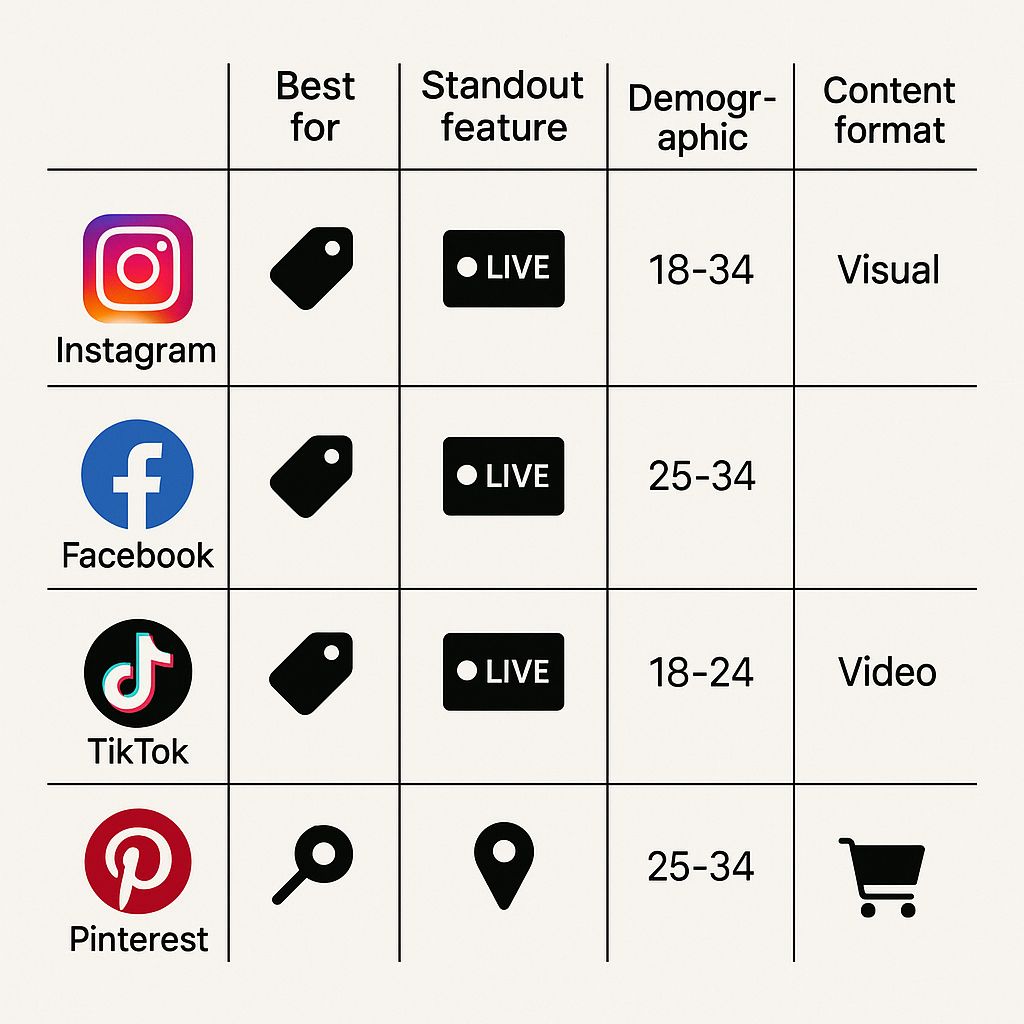
- Major platforms like Instagram, Facebook, TikTok, and Pinterest each offer unique shopping experiences and tools that cater to different audience demographics and product types.
- Shopify’s integration capabilities with social commerce platforms streamline selling processes and inventory management across multiple channels simultaneously.
- Social proof is amplified in social commerce environments, with comments, shares, and user-generated content directly influencing purchase decisions.
- Businesses that leverage platform-specific content strategies like shoppable video and live shopping events see substantially higher conversion rates than traditional e-commerce.
The days of using social media just for brand awareness are long gone. Today’s most successful businesses are closing sales directly where their customers already spend hours daily – on social platforms. With social commerce projected to exceed $1.2 trillion in sales by 2025, selling without leveraging these platforms means leaving significant revenue on the table. Shopify’s powerful integration tools make connecting your product catalog to multiple social channels seamless, allowing you to transform casual scrollers into buyers with just a few taps.
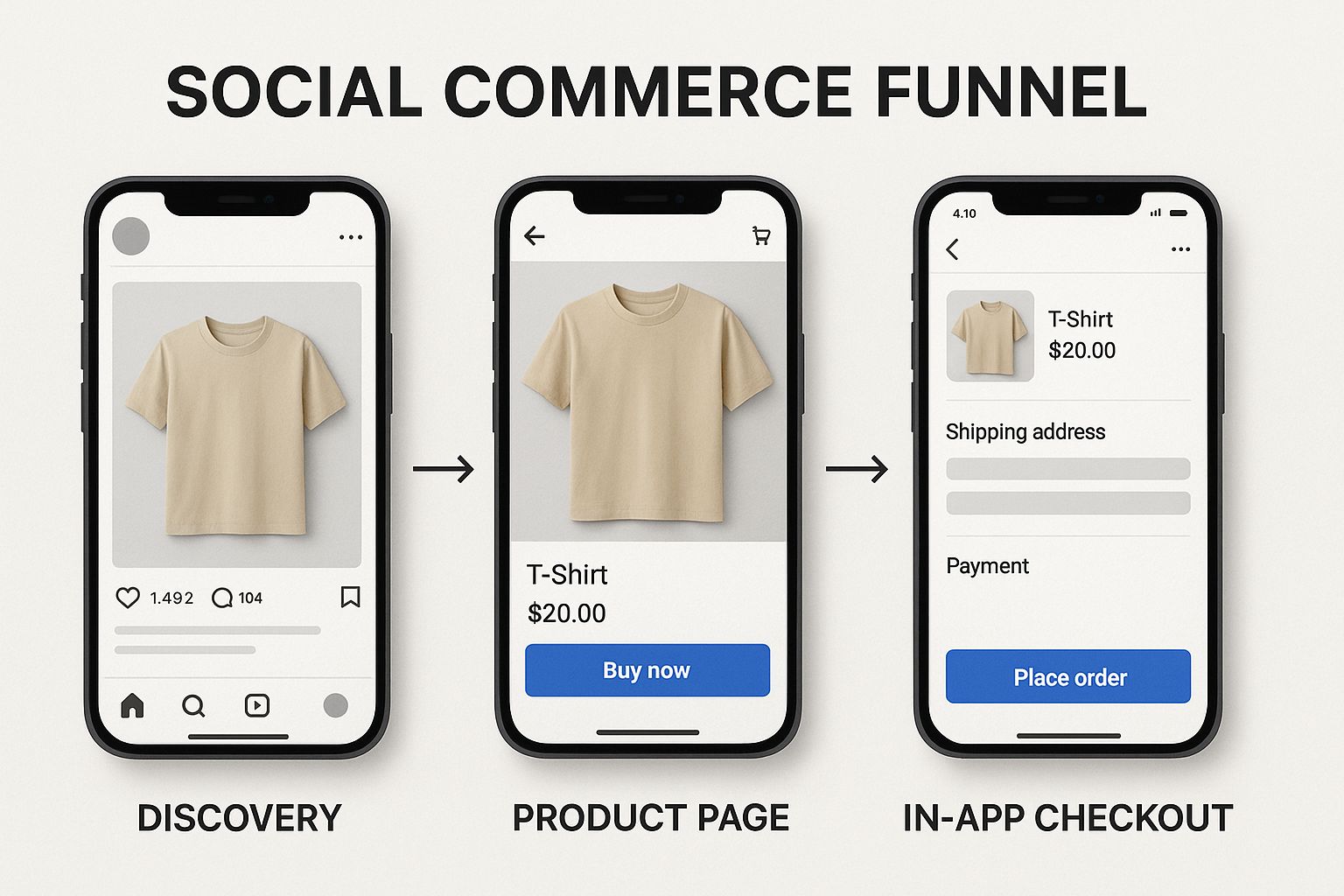
Social commerce has rapidly evolved from a nice-to-have into a must-have sales channel. Unlike traditional e-commerce that requires customers to visit separate websites, social commerce keeps the entire shopping journey – from discovery to checkout – within the social platform itself. This frictionless experience is why conversion rates on social commerce often outperform traditional online stores by 3-4 times.
What Makes Social Commerce Different From Regular Online Selling
Social commerce fundamentally changes the online shopping experience by eliminating the traditional multi-step purchase journey. Rather than discovering products on social media, then navigating to a separate website to complete a purchase, customers can now see something they like and buy it immediately without disrupting their social experience. This seamless integration of shopping into social activity creates a more natural, conversation-like purchase environment that mimics real-world shopping with friends.
The Complete Shopping Experience Without Leaving the App
The magic of social commerce lies in its ability to compress the entire shopping journey into a single platform experience. When a customer spots a product they’re interested in while scrolling through their feed, they can view detailed information, read reviews, select variants, and complete their purchase – all without ever leaving the app they’re already using. This elimination of redirects and new tabs reduces the cognitive load on shoppers and significantly decreases cart abandonment. For businesses integrated with Shopify, inventory updates automatically sync across all your social commerce channels, ensuring you never oversell products regardless of where the purchase occurs.
How Social Commerce Eliminates Traditional Purchase Barriers
Traditional e-commerce has always battled with friction points – every additional click, page load, or form field reduces conversion rates. Social commerce strategically removes these barriers by storing payment information, simplifying checkout flows, and maintaining the context of the social environment. When a customer sees a product being used by someone they follow or trust, they can immediately act on that inspiration without losing the emotional connection that prompted their interest. This contextual shopping experience more closely resembles how humans naturally make purchase decisions – based on social influence, immediate desire, and minimal resistance.
The psychological aspect is equally important – traditional websites often feel like commercial spaces where customers maintain their buying defenses. But on social platforms, users are already in a discovery mindset, more receptive to new products when presented by trusted sources or within engaging content. This receptivity translates to higher conversion rates when the buying mechanism is seamlessly integrated.
Top Social Commerce Platforms in 2025
Each major social platform has developed unique commerce capabilities that align with their specific user experience and audience behavior. Understanding these distinctions helps determine which platforms deserve your primary focus based on your product category and target demographic. While maintaining presence across multiple platforms is ideal, your resources should be concentrated where your potential customers are most likely to purchase.
- Instagram: Highest conversion rates for fashion, beauty and lifestyle products
- Facebook: Strong performer for established brands with loyal customer bases
- TikTok: Rapidly growing platform with exceptional results for viral-potential products
- Pinterest: Specialized strength in home décor, DIY, and design-focused items
- Twitter: Emerging commerce features best suited for digital products and services
Instagram Shopping: Product Tags and In-App Checkout
Instagram has evolved into one of the most sophisticated social commerce platforms available today. Its visual-first approach creates the perfect environment for product discovery, while its shopping features have matured to support the complete purchase journey. Product tags allow businesses to highlight items in both feed posts and Stories, creating natural shopping moments as users browse content. The Shop tab provides a dedicated browsing experience for users in shopping mode, while Instagram Checkout removes friction by allowing purchases without leaving the app. When connected to your Shopify store, product information, pricing, and availability sync automatically, making management effortless across channels.
Facebook Shops: Creating Your Digital Storefront
Facebook Shops offers perhaps the most comprehensive social commerce solution with its ability to create a full-featured storefront that appears across both Facebook and Instagram. Business owners can organize products into collections, customize the appearance to match their brand aesthetic, and leverage Facebook’s unparalleled targeting capabilities for promotion. The platform’s massive user base spanning diverse demographics makes it particularly valuable for businesses with broad appeal. When connected to Shopify, your Facebook Shop inventory updates automatically with your main store, eliminating the need for manual synchronization.
What sets Facebook Shops apart is its integration with Facebook’s advertising ecosystem. Campaigns can direct users straight to shoppable products, with performance tracking that shows the complete customer journey. This closed-loop system allows for precise optimization of your marketing spend based on actual purchase data rather than just engagement metrics.
TikTok Shop: Selling Through Short-Form Video
TikTok Shop has rapidly emerged as a commerce powerhouse, particularly for products that demonstrate well visually or have viral potential. The platform combines entertainment with shopping in a uniquely engaging way, allowing creators to tag products in videos and livestreams with direct purchase capabilities. TikTok’s algorithm excels at distributing content to interested audiences regardless of follower count, creating unprecedented discovery opportunities for new brands. Businesses that can create authentic, trend-relevant content often see explosive growth through TikTok’s highly engaged user base.
The platform particularly excels with Generation Z and younger Millennials, with impulse purchase rates significantly higher than other platforms. Products that align with current TikTok trends or can be demonstrated in creative, entertaining ways perform exceptionally well. Shopify merchants can connect their product catalog directly to TikTok Shop, enabling seamless inventory management across channels.
Pinterest Shopping Pins: Visual Discovery to Purchase
Pinterest occupies a unique position in the social commerce landscape as a platform explicitly focused on visual discovery and planning. Users come to Pinterest with higher purchase intent than most social platforms, often actively researching products for specific projects or occasions. Shopping pins enable businesses to tag products within inspirational imagery, creating a natural path from idea to purchase. The platform’s search functionality also means products can be discovered months after posting, providing longer content lifespan than ephemeral platforms.
Pinterest users typically have higher average order values than other social platforms, with particularly strong performance in home décor, fashion, beauty, and DIY categories. The planning-oriented nature of the platform means users are often making more considered purchases rather than impulse buys, resulting in lower return rates. Shopify’s Pinterest integration allows for automatic product pin creation from your catalog, significantly reducing the workload of maintaining this channel.
5 Benefits That Make Social Commerce Worth Your Time
While expanding to new sales channels always requires investment, social commerce offers several unique advantages that can dramatically improve your overall business performance. Beyond simply adding another revenue stream, these platforms can transform your customer acquisition strategy, provide valuable data, and create more personalized shopping experiences that translate to higher customer lifetime value. For more insights, explore how enhancing e-commerce experiences can benefit your business.
1. Massive Built-In Audience Ready to Buy
The most obvious benefit of social commerce is immediate access to billions of potential customers already active on these platforms. Unlike launching a new website, where building traffic is a significant challenge, social platforms offer built-in discovery mechanisms that can put your products in front of relevant audiences quickly. Users are already conditioned to discover new brands and products through these channels, creating a receptive environment for your offerings. The social algorithms are increasingly sophisticated at matching products with interested users, creating efficient customer acquisition opportunities that would be difficult to replicate through other channels.
This pre-existing audience becomes particularly valuable when combined with the platforms’ targeting capabilities. Your products can appear specifically to users who match your ideal customer profile based on their interests, behaviors, and demographic information. This precision targeting reduces marketing waste and increases conversion rates compared to broader marketing approaches.
2. Reduced Friction Means Higher Conversion Rates
The streamlined purchase process in social commerce environments typically results in conversion rates 2-3 times higher than redirecting customers to external websites. By eliminating the need to navigate to a separate site, create new accounts, or re-enter payment information, social commerce removes major abandonment triggers from the purchase journey. This frictionless experience is particularly important on mobile devices, where users are less tolerant of complicated checkout processes. Shopify’s one-click checkout technology works seamlessly with social commerce platforms, further reducing purchase friction.
3. Social Proof Drives Purchase Decisions
Social commerce naturally incorporates powerful social proof elements that influence buying decisions. When customers see products being used, recommended, or discussed by real people in their network or by trusted influencers, their purchase confidence increases dramatically. Comments, likes, shares, and user-generated content all serve as authentic endorsements that traditional e-commerce struggles to replicate. This social validation is particularly effective for new customer acquisition, helping overcome the trust barrier that often prevents first-time purchases. To explore more about this, you can check out some social commerce examples.
The comment sections on product posts serve as public review forums, allowing prospective customers to ask questions and see responses from both the brand and other users. This transparent interaction builds confidence and addresses objections in real-time, often converting hesitant browsers into buyers. Successful brands actively monitor these conversations, using them as opportunities to demonstrate responsive customer service and product expertise.
4. Detailed Analytics Show What’s Working
Social commerce platforms provide rich, actionable analytics that go far beyond traditional e-commerce metrics. You can see exactly which content drives purchases, which products resonate with specific audience segments, and how customers move through the buying journey. This granular data allows for precise optimization of your product offerings, content strategy, and promotional approaches. When connected with Shopify’s analytics, you gain a complete view of customer behavior across all touchpoints, enabling truly data-driven decision-making.
The real-time nature of social analytics also allows for agile response to market trends. You can quickly identify which products are gaining traction, adjust inventory accordingly, and capitalize on emerging opportunities faster than competitors relying solely on traditional retail channels. This responsiveness is particularly valuable in fast-moving categories where consumer preferences can shift rapidly.
5. Personalized Shopping Experiences Boost Sales
Social platforms excel at delivering personalized content based on user behavior, and this personalization extends to shopping experiences. As algorithms learn individual preferences, they surface products more likely to appeal to specific users, creating essentially custom storefronts for each potential customer. This targeting precision typically results in higher conversion rates and average order values compared to one-size-fits-all approaches. The integration between social commerce and Shopify allows this personalization to continue throughout the customer lifecycle, creating more relevant post-purchase recommendations and communications.
How to Choose the Right Platform for Your Business
While maintaining presence across multiple social commerce channels is ultimately ideal, most businesses should prioritize one or two platforms initially to focus resources for maximum impact. The right platform choice depends on your specific product category, target audience, and content creation capabilities. Strategic platform selection can dramatically accelerate your social commerce success by aligning with where your potential customers are most receptive to purchasing.
Match Your Products with Platform Demographics
Each social platform attracts a distinct user demographic with specific shopping behaviors and product interests. Instagram tends to excel for visually appealing products targeting millennials and Gen Z, with particularly strong performance in fashion, beauty, and lifestyle categories. Facebook’s broader demographic reach makes it effective for products with wide appeal, especially among users 30 and older. TikTok skews youngest with exceptional traction for trending, innovative, or demonstration-worthy products that can be showcased in short videos. Pinterest users are predominantly women with higher household incomes, making it ideal for home décor, fashion, and premium products.
Beyond demographics, consider the purchase intent typical on each platform. Pinterest users often have higher purchase intent as they’re actively searching for ideas, while TikTok browsing is more discovery-oriented but can create powerful impulse purchase moments. Matching your products to platforms where users are most receptive to your category creates the shortest path to revenue growth.
Consider Your Content Creation Capabilities
Your team’s content creation strengths should influence platform selection, as each requires different formats and publishing cadences. Instagram and Pinterest demand high-quality visual assets, while TikTok success requires authentic, trend-aware video content that may need frequent posting. Facebook can accommodate a wider range of content types but typically requires more investment in paid promotion for visibility. Be realistic about your team’s bandwidth and skills – it’s better to excel on one platform than perform mediocrely across several. Shopify’s content management tools can help streamline creation and publishing across your selected platforms.
Setting Up Your First Social Commerce Store
Launching your social commerce presence requires thoughtful preparation to ensure a smooth customer experience from day one. While each platform has specific setup requirements, certain fundamental elements are universal to social selling success. Proper configuration of these core components creates the foundation for scalable growth across all your social commerce channels.
Product Catalog Creation
Your product catalog serves as the backbone of social commerce operations. When building your catalog, prioritize high-quality, multi-angle product images that display clearly even at small sizes on mobile devices. Write concise but detailed product descriptions focusing on benefits rather than just features. Include all relevant variants (sizes, colors, etc.) with accurate inventory counts. Shopify makes this process straightforward by allowing you to create a single product catalog that syncs automatically across all connected social platforms, ensuring consistency and reducing management overhead.
Strategic product categorization is equally important, as it determines how customers navigate your social storefronts. Create intuitive collections that match how your target audience thinks about your products rather than internal organizational structures. This customer-centric organization improves discovery and increases the likelihood of multiple-item purchases.
Payment Processing Options
The payment options you offer can significantly impact conversion rates on social commerce platforms. While some platforms handle payment processing directly, others integrate with your existing payment gateway through Shopify. Offering multiple payment methods, including digital wallets like Apple Pay and Google Pay, reduces checkout friction and accommodates customer preferences. The rise of “buy now, pay later” options has proven particularly effective in social commerce environments, with services like Shop Pay Installments increasing conversion rates by up to 50% for higher-priced items.
Shipping and Return Policies That Build Trust
Clear, customer-friendly shipping and return policies are crucial for building trust in social commerce environments where buyers may be discovering your brand for the first time. Transparently displayed shipping costs, delivery timeframes, and simple return procedures significantly impact purchase confidence. Consider offering free shipping thresholds to increase average order value – Shopify data shows that 67% of social commerce shoppers add items to reach free shipping minimums. Your return policy should be easily accessible and written in straightforward language, ideally offering at least a 30-day window for returns to build customer confidence.
Content Strategies That Drive Social Commerce Sales
Successful social commerce requires content specifically designed to facilitate the transition from engagement to purchase. Unlike general social media marketing, every piece of content should have a clear path to product discovery and checkout. The most effective social commerce content combines entertainment or education value with shopping functionality, creating experiences that don’t feel overtly transactional while still driving sales.
User-Generated Content: Let Customers Sell For You
Customer-created content consistently outperforms brand-created assets in social commerce environments, delivering conversion rates 4-6 times higher in many categories. Encourage customers to share photos and videos using your products by creating branded hashtags, running submission contests, and directly requesting content from satisfied buyers. Repurpose this authentic material in your shoppable posts, tagging the relevant products for immediate purchase. Shopify’s UGC apps can help streamline the collection and rights management process, making it easier to incorporate customer content into your social commerce strategy at scale.
The power of UGC lies in its authenticity – potential customers trust peers more than polished brand messaging. Seeing real people using and enjoying products creates confidence and FOMO (fear of missing out) that drives purchase decisions. The most effective UGC highlights the product in actual use scenarios rather than just showcasing the item itself, helping shoppers envision ownership.
Live Shopping Events That Create Urgency
Live shopping streams have emerged as conversion powerhouses in social commerce, combining entertainment, education, and limited-time offers to drive immediate purchasing. These real-time events allow you to demonstrate products, answer questions instantly, and create scarcity with time-limited promotions. Successful live shopping events typically combine product demonstrations with special offers or exclusive items available only during the stream. The interactive nature builds connection while the limited-time aspect creates the urgency to buy now rather than later.
To maximize live shopping results, promote the event in advance to build an audience, prepare a structured but natural-feeling format, and ensure seamless product tagging that makes purchasing frictionless. Having a team member dedicated to answering viewer questions in the comments while the host focuses on presentation significantly increases conversion rates. Shopify’s live shopping integrations allow inventory to update in real-time during these events, preventing overselling of popular items.
Influencer Partnerships Worth The Investment
Strategic influencer collaborations remain among the highest-ROI tactics in social commerce, with micro-influencers (10,000-100,000 followers) often delivering better conversion rates than mega-celebrities. The key is authentic alignment between the influencer’s audience and your target customer profile. Successful partnerships go beyond one-off sponsored posts to create deeper integration through product collaborations, takeovers of your social accounts, or recurring content series. This sustained presence builds familiarity and trust that translates to higher conversion rates over time.
When structuring influencer partnerships, consider performance-based compensation models that align incentives with actual sales results rather than just content creation or reach metrics. Provide unique tracking links or discount codes for each influencer to measure direct attribution, and give them creative freedom within brand guidelines to maintain the authentic voice their audience trusts. Shopify’s influencer management apps can streamline both the selection process and performance tracking, helping identify which partnerships deliver the strongest return on investment.
Shoppable Video Content That Converts
Video content with integrated shopping functionality consistently outperforms static imagery across all social platforms, delivering conversion rates up to 3x higher. The dynamic format allows you to showcase products in use, highlight key features, and create emotional connections that drive purchase decisions. When creating shoppable videos, focus on the first 3-5 seconds to capture attention, demonstrate the product solving a real problem, and ensure product tags appear at logical moments when interest peaks. Keep videos under 60 seconds for optimal performance, with a clear call to action in both visual and caption elements.
Different video formats serve distinct purposes in the buying journey. Tutorial-style content builds consideration by showing how products work, while unboxing videos create desire through anticipation and reveal. Before-and-after comparisons are particularly effective for transformational products, while day-in-the-life content helps shoppers envision how items integrate into their routines. Experiment with these formats to identify what resonates most with your specific audience and product category. Shopify’s integration with TikTok, Instagram Reels, and other video-centric platforms makes implementing shoppable functionality seamless across your content library.
Social Commerce Success Metrics You Need to Track
Measuring social commerce performance requires looking beyond traditional social media metrics to focus on commerce-specific indicators that directly impact your bottom line. While likes and follows may indicate growing awareness, they don’t necessarily translate to revenue. Building a comprehensive measurement framework helps identify which strategies, platforms, and content types drive actual business results.
Essential Social Commerce Metrics Framework
Conversion metrics: Click-through rate (3-5% benchmark), Add-to-cart rate (5-8% benchmark), Checkout completion (20-30% benchmark)
Financial metrics: Average order value ($15-150 depending on category), Revenue per viewer ($0.10-$2.00 benchmark), Return on ad spend (3-5x benchmark)
Customer metrics: First-time vs. repeat buyer ratio, Customer acquisition cost ($5-$30 benchmark), Post-purchase engagement rate
Establish platform-specific benchmarks as performance varies significantly across social channels. Instagram typically delivers higher conversion rates but lower average order values compared to Pinterest. TikTok often shows lower initial conversion rates but higher viral potential that can dramatically reduce customer acquisition costs. Facebook generally delivers more consistent results across a broader demographic range. Understanding these differences prevents misinterpreting data when comparing cross-platform performance.
Beyond individual metrics, focus on identifying patterns and relationships between data points. For example, the correlation between comment sentiment and conversion rate can reveal which types of engagement actually predict purchases. Similarly, tracking the time lag between first interaction and purchase helps optimize retargeting windows. Shopify’s analytics integration with social platforms provides a unified view of these relationships across the entire customer journey.
Beyond Followers: Engagement-to-Sale Conversion
The most valuable social commerce metric is your engagement-to-sale conversion rate – the percentage of users who make a purchase after interacting with your content. This metric reveals how effectively you’re converting attention into revenue, regardless of audience size. Track this by content type, product category, and platform to identify your highest-performing combinations. A smaller, highly engaged audience that converts at 5% generates more revenue than a massive following with a 0.5% conversion rate, making optimization of this metric far more important than pure follower growth. For more insights, consider enhancing eCommerce experiences to boost your conversion rates.
Customer Acquisition Cost vs. Lifetime Value
The true measure of social commerce profitability is the relationship between customer acquisition cost (CAC) and customer lifetime value (CLV). Calculate your platform-specific CAC by dividing total platform investment (content creation, advertising, influencer partnerships) by the number of new customers acquired through that channel. This figure should be compared against the projected CLV of customers from each social source to determine profitability and appropriate investment levels.
Interestingly, data shows that customers acquired through social commerce often have different lifetime value profiles than those from other channels. Social-acquired customers typically show higher initial purchase values but require more nurturing for repeat purchases. Conversely, they’re more likely to become brand advocates who drive additional referral business. These behavioral differences make platform-specific CLV calculation essential for accurate profitability assessment.
Post-Purchase Engagement and Retention
The social commerce journey extends far beyond the initial purchase, with post-transaction engagement serving as a critical driver of lifetime value. Track how new customers engage with your social content after purchasing, looking specifically at content sharing, commenting, and participation in community activities. These engagement patterns strongly predict repeat purchase likelihood and word-of-mouth referrals. Successful social commerce strategies include specific post-purchase content sequences designed to transform first-time buyers into brand advocates through education, community inclusion, and exclusive experiences.
Start Small, Scale Smart: Your Social Commerce Action Plan
Begin your social commerce journey by selecting a single platform that best aligns with your product category and target audience demographics. Start with a limited product selection of your most visually appealing, uniquely valuable, or highest-margin items rather than your entire catalog. Create a 30-day content calendar that includes a mix of shoppable posts, user-generated content, and educational material that showcases product benefits. Set clear, achievable metrics focused on engagement-to-sale conversion rather than follower growth, and commit to a minimum three-month test period before expanding to additional platforms. Shopify’s social commerce integration makes this focused approach manageable even for small teams, allowing you to build expertise on one platform before expanding your social selling footprint.
Frequently Asked Questions (FAQ)
As social commerce continues to evolve rapidly, businesses naturally have questions about implementation, best practices, and expected results. The following answers address the most common concerns based on data from thousands of merchants successfully selling through social platforms.
These insights reflect both established patterns and emerging trends that can help guide your social commerce strategy development. While each business situation is unique, these foundational principles apply across most industry categories.
What’s the difference between social commerce and social media marketing?
Social commerce involves the complete shopping experience—discovery, research, and checkout—all occurring within the social platform itself. In contrast, social media marketing typically uses social channels for awareness and engagement but redirects users to external websites to complete purchases. The key distinction is where the transaction occurs—social commerce keeps users within the app environment, eliminating friction points that cause cart abandonment and creating a seamless path to purchase.
From a strategic perspective, social commerce requires deeper platform integration and more sophisticated product tagging capabilities than traditional social marketing. It also demands content specifically designed to facilitate purchase decisions rather than just awareness or engagement. While social media marketing focuses primarily on reach and engagement metrics, social commerce success is measured directly in conversion rates, average order values, and revenue generation.
Do I need to sell on every social platform at once?
Starting with a single platform allows you to build expertise, refine your approach, and establish proven workflows before expanding. Choose the platform where your target audience is most active and aligned with your product category. Instagram typically performs best for visually appealing lifestyle products, while Pinterest excels for design and home goods. TikTok shows strong results for innovative or demonstrable products targeting younger demographics, while Facebook performs consistently across broader categories and age ranges.
The most successful approach is to master one platform first, establish predictable results, and then expand strategically based on audience overlap and content synergies. Shopify’s multi-channel capabilities make this staged expansion more manageable by centralizing inventory, order management, and customer data across all your social commerce channels. This prevents the operational complexity that often comes with managing multiple platforms simultaneously.
How much does it cost to set up social commerce for my business?
Basic social commerce setup through Shopify can be implemented with minimal direct costs beyond your existing Shopify subscription. The primary investment is time for catalog setup, platform configuration, and content creation. Ongoing expenses typically include content production (photography, video), potential advertising to amplify reach, and any premium features or integrations you choose to implement. Most businesses find that a $500-2,000 monthly budget allows for effective management of one primary social commerce channel, with costs scaling as you expand to additional platforms or increase content production volume.
Can small businesses compete with big brands in social commerce?
Small businesses often outperform larger competitors in social commerce environments due to their agility, authentic voice, and community connection. While major brands may have larger production budgets, social algorithms prioritize engagement over production value, and smaller brands typically generate higher engagement rates. The key competitive advantages for small businesses include faster decision-making, more personal customer interactions, and the ability to quickly capitalize on emerging trends or platform features.
Success for smaller players comes from focusing on unique product offerings rather than competing directly with established brands on identical items. Highlighting your brand story, production process, or founder journey creates emotional connections that drive purchase decisions beyond price comparison. Emphasizing direct customer relationships through personalized service and community building creates loyalty that larger brands struggle to replicate. For more insights, explore social commerce examples that demonstrate these strategies in action.
The data supports this opportunity – businesses with under $1 million in annual revenue typically see faster percentage growth from social commerce than larger companies, with many reporting that social channels become their primary revenue source within 12-18 months of implementation. This democratization of retail space represents one of the most significant opportunities for small business growth in the digital economy.
- Leverage authenticity and personal connection as competitive advantages
- Focus on unique products rather than competing on price for commodity items
- Respond quickly to customer comments and questions (aim for under 2 hours)
- Highlight your small business story and values throughout your content
- Build community through consistent engagement rather than just transactions
How do I handle customer service issues on social commerce platforms?
Customer service in social commerce environments requires a different approach than traditional e-commerce support. Issues are often raised publicly through comments or direct messages, making response speed and tone critically important for both the individual customer and the broader audience watching the interaction. Establish clear internal guidelines for monitoring and responding to inquiries across all your active platforms, with target response times under two hours during business hours and no later than 24 hours otherwise.
Create templated responses for common questions that can be personalized quickly, and develop a clear escalation path for complex issues that may need to move to private channels. Remember that public service interactions are also marketing opportunities – demonstrating exceptional problem resolution builds trust with potential customers observing the exchange. Tools like Shopify Inbox can centralize messages from multiple social platforms into a single interface, making comprehensive service management more efficient.
Proactive service strategies are particularly effective in social commerce environments. Create FAQ content addressing common questions before they arise, and use post-purchase communication sequences to set clear expectations about shipping, delivery, and product use. Consider implementing a dedicated support hashtag that helps customers quickly flag issues while making them searchable for your team. For more on enhancing customer experiences, explore how e-commerce experiences can be enhanced.
Social commerce is revolutionizing the way businesses engage with customers by allowing them to sell directly through social media platforms. This approach not only enhances the shopping experience but also streamlines the purchasing process. Companies are leveraging this trend to boost sales and improve customer interaction. For instance, integrating features that enhance e-commerce experiences can lead to increased customer satisfaction and loyalty.
Turn your social feeds into a real storefront. With Catalyst’s Business Growth Engine, launch shoppable posts and live events, sync products, accept payments, and automate follow-ups that turn first-time buyers into repeat customers. Start building your conversion engine at mysbge.com.

