



Key Takeaways
- Watch time and audience retention are the most powerful ranking factors in YouTube’s algorithm, outweighing even keyword optimization.
- Strategic keyword research using YouTube’s autocomplete feature and competitor analysis can reveal high-potential search terms for your videos.
- Creating metadata that appeals to both algorithms and humans is essential – this includes optimizing titles, descriptions, tags, and custom thumbnails.
- The first 15 seconds of your video are critical for hooking viewers and improving retention rates, which directly impacts rankings.
- Technical optimization, like adding closed captions, timestamps, and proper schema markup, can help your YouTube videos rank on Google’s first page as well.
Ranking on YouTube isn’t just about luck—it’s about understanding how the platform’s algorithm evaluates and promotes content. With over 500 hours of video uploaded every minute, standing out requires a strategic approach that combines technical optimization with engaging content creation. TubeRanker has analyzed thousands of high-performing videos and found that proper optimization can increase visibility by up to 200% for new channels.
The YouTube algorithm has evolved significantly since its early days of prioritizing view counts and keywords. Today, it’s a sophisticated system that evaluates dozens of signals to determine which videos deserve top ranking. Understanding these ranking factors is your first step toward greater visibility.
Why Your Videos Aren’t Getting Views (And How to Fix It)
If your videos are struggling to gain traction, you’re likely making one of several common mistakes. First, many creators focus too heavily on production quality while neglecting search optimization. While a professional-looking video is important, it won’t matter if no one can find it. Second, inconsistent posting schedules signal to YouTube that your channel may not be reliable for regular content. Third, failing to optimize metadata (titles, descriptions, tags) makes it nearly impossible for YouTube to understand what your video is about.
The good news? These issues are completely fixable with the right approach. By implementing proper YouTube SEO techniques, even smaller channels can compete with established creators in their niche. The key is understanding exactly how YouTube decides which videos to promote.
YouTube’s Algorithm: The Secret Ranking Formula
YouTube’s ranking algorithm considers multiple factors when determining where your video appears in search results and recommendations. While YouTube doesn’t reveal its exact formula, years of testing and official statements from the platform have given us a clear picture of what matters most. The algorithm’s primary goal is to maximize viewer satisfaction and time spent on the platform.
Watch Time and Retention Rate: The #1 Ranking Factor
Watch time—the total amount of time viewers spend watching your videos—is YouTube’s most important ranking factor. More specifically, audience retention (the percentage of your video that viewers actually watch) signals to YouTube that your content is valuable. Videos that keep viewers engaged for longer periods typically rank higher than videos with similar view counts but lower retention rates. This is why a video with fewer views but higher retention often outranks a viral video where most viewers drop off after a few seconds.
Click-Through Rate (CTR): Getting People to Click Play
Your video’s click-through rate represents how often viewers click on your video after seeing it in search results or recommendations. A high CTR tells YouTube that your title and thumbnail are relevant and compelling. YouTube continuously tests your video against others to determine which ones viewers are more likely to click. If your video consistently gets more clicks than competitors targeting the same keywords, YouTube will gradually improve your ranking position.
The ideal CTR varies by niche and topic, but generally, anything above 4-5% is considered good for YouTube videos. Improving your CTR comes down to creating compelling, accurate thumbnails and titles that stand out without resorting to misleading clickbait tactics. For more insights on optimizing your video content, check out this guide on YouTube SEO.
Engagement Signals: Comments, Likes, and Shares
User engagement sends powerful signals to YouTube about your video’s quality and relevance. Comments, likes, shares, and subscribers gained after watching are all positive indicators that your content resonates with viewers. YouTube’s algorithm interprets these actions as signs that viewers found your content valuable enough to interact with it beyond passive viewing.
Comments are particularly valuable, as they indicate a deeper level of engagement than a simple like. Videos that spark conversation tend to perform better in rankings. This is why many successful YouTubers explicitly ask viewers to comment with their thoughts or answers to specific questions.
The velocity of engagement matters too. A surge of engagement shortly after publishing signals to YouTube that your content is timely and generating interest, which can lead to additional promotion in recommendation feeds.
Engagement Hierarchy (Most to Least Valuable)
1. Subscribing after watching
2. Sharing the video
3. Commenting on the video
4. Liking the video
5. Adding to playlist
6. Clicking on cards/end screens
7. Watching more videos from your channel
Upload Frequency and Consistency
YouTube rewards channels that publish content regularly and consistently. This doesn’t mean you need to upload daily, but establishing a predictable schedule helps both the algorithm and your audience know when to expect new content. Consistency signals reliability to YouTube, which can result in more promotional opportunities. Many successful creators find that publishing on the same days each week helps build a routine that viewers can anticipate and engage with more readily. For more insights, check out this guide on YouTube SEO.
Keyword Research for Video SEO
Effective keyword research is the foundation of YouTube SEO. Without targeting the right search terms, even the highest-quality videos can remain undiscovered. Unlike traditional SEO, YouTube keyword research focuses on discovering what users are actively searching for on the platform itself, rather than general web searches.
The ideal keywords strike a balance between search volume and competition. High-volume keywords may bring more potential viewers, but they’re typically more competitive and difficult to rank for. Conversely, low-competition keywords might be easier to rank for but may not generate significant traffic. The sweet spot is finding moderately searched terms with manageable competition levels.
Remember that YouTube is both a search engine and an entertainment platform. This means successful keywords often fall into two categories: informational queries (how-to, tutorials, explanations) and entertainment queries (reviews, reactions, compilations). Your content type should align with the search intent behind your target keywords.
How to Find High-Potential YouTube Keywords
Start your keyword research by brainstorming topics related to your content niche. Think about the questions your target audience might ask or problems they’re trying to solve. Once you have a list of potential topics, use these to discover specific keywords with ranking potential. The most effective YouTube keywords are often longer phrases (3-5 words) that capture specific search intent rather than broad, generic terms.
One excellent starting point is to analyze what’s already working for successful channels in your niche. Look at their most popular videos and note the keywords in their titles and descriptions. This competitive analysis can reveal gaps in content that you could fill or popular topics you could approach from a different angle. Remember that imitation isn’t the goal—finding inspiration and understanding what resonates with your shared audience is.
Using YouTube’s Search Suggestions
YouTube’s autocomplete feature is a goldmine for keyword research. When you start typing in the search bar, YouTube suggests popular searches based on what users are actually looking for. These suggestions represent real search queries with proven volume, making them valuable targets for your content strategy.
Tools That Reveal What People Are Searching
While YouTube’s native suggestions are helpful, dedicated keyword research tools can provide deeper insights. Tools like TubeBuddy, vidIQ, and Keyword Tool for YouTube reveal search volume, competition levels, and related keywords that might not appear in autocomplete. Google Trends also offers YouTube-specific search data, showing you whether interest in certain topics is growing or declining over time.
Analyzing Competitor Videos
Study the top-ranking videos for your target keywords to understand what’s working. Note their titles, descriptions, video length, and content structure. Pay particular attention to videos that rank well despite having fewer subscribers than competing channels—these often demonstrate excellent optimization strategies that overcome authority disadvantages.
10 Ways to Optimize Your YouTube Video Metadata
Once you’ve identified your target keywords, it’s time to optimize your video’s metadata. These elements tell both YouTube’s algorithm and potential viewers what your content is about. Proper metadata optimization can significantly improve your visibility in search results and suggested videos.
1. Craft Click-Worthy Titles (Without Clickbait)
Your title needs to accomplish three things: include your target keyword, accurately describe the video content, and entice viewers to click. Aim for titles between 40-60 characters that place important keywords near the beginning. Create curiosity or highlight a benefit without resorting to misleading clickbait tactics. Remember that YouTube penalizes videos with high click rates but poor retention—viewers who feel misled will quickly abandon your video.
2. Write Descriptions That Both Humans and Algorithms Love
YouTube descriptions serve dual purposes: helping the algorithm understand your content and providing viewers with valuable information. The first 100-150 characters are especially important as they appear in search results and previews. Include your primary keyword naturally within this opening text, then use the remaining space (up to 5,000 characters) to add context, timestamps, links to related content, and calls to action.
Structure your description like a mini blog post, with the most important information at the top. Include secondary keywords throughout the text, but maintain a natural flow that prioritizes readability. Adding relevant links to your website or related videos can increase session time on YouTube, which the algorithm rewards.
3. Tag Strategy: Less is More
Tags help YouTube understand your content’s topic and context, but quality trumps quantity. Focus on 5-8 highly relevant tags rather than stuffing dozens of loosely related terms. Start with your exact target keyword, then add a few variations and broader category tags. Avoid irrelevant tags that might initially attract views but will hurt your retention rates when those viewers quickly leave your unrelated content.
4. Custom Thumbnails That Get Clicks
Custom thumbnails are perhaps your most powerful tool for improving click-through rates. These visual previews often determine whether someone clicks your video or scrolls past it. Effective thumbnails typically feature contrasting colors, clear focal points, minimal text (3-5 words maximum), and human faces showing emotion. Ensure your thumbnail is clearly visible at small sizes since most viewers will see it on mobile devices.
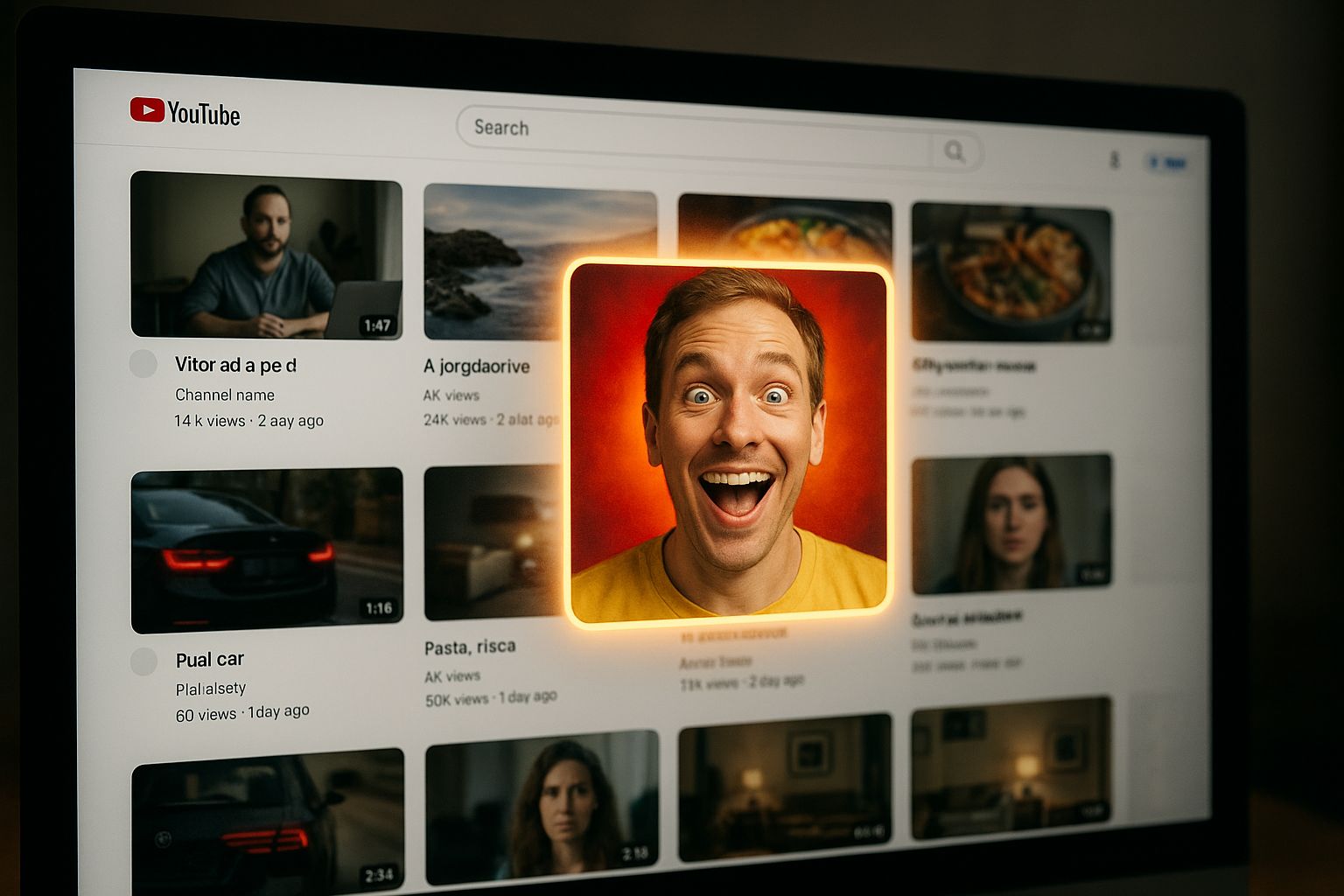
Maintain a consistent thumbnail style across your channel to build brand recognition. This doesn’t mean all thumbnails should look identical, but rather that they should share design elements like color schemes, fonts, or layout patterns. Testing different thumbnail styles with similar content can reveal what works best for your specific audience.
5. Add Closed Captions and Transcripts
Closed captions make your videos accessible to a wider audience, including viewers who are deaf or hard of hearing, non-native speakers, and those watching without sound. Beyond accessibility, captions provide additional text content for YouTube’s algorithm to analyze, potentially improving your video’s relevance for certain search terms. While YouTube’s auto-generated captions have improved, they still contain errors that can affect comprehension and search accuracy.
6. Create Compelling Cards and End Screens
Cards and end screens are interactive elements that encourage viewers to take specific actions, such as watching another video or subscribing to your channel. Strategic placement of these elements can significantly increase your channel’s overall watch time and subscription rate. Cards work best when they appear at natural transition points or when you verbally reference related content.
End screens should appear during the final 20 seconds of your video and feature 2-4 elements maximum to avoid overwhelming viewers. Testing different combinations of suggested videos, playlist links, subscription buttons, and website links will reveal what your specific audience responds to best.
7. Organize Videos into Strategic Playlists
Playlists group related videos together, encouraging viewers to watch multiple videos in succession. This increases total watch time—a key ranking factor. Create themed playlists around specific topics, skill levels, or content series. The playlist title and description should target broader keywords that connect the individual videos.
Consider the viewing sequence when organizing playlists. Place strong-performing videos early in the sequence to hook viewers, and arrange content in a logical progression that builds on previous videos. This encourages completion of the entire playlist rather than early abandonment. For more insights on enhancing user engagement, explore strategies for enhancing e-commerce experiences.
8. Optimize Your Channel Page
Your channel page serves as your YouTube homepage and significantly influences subscription decisions. Optimize your channel description with relevant keywords that describe your content focus and value proposition. Create a compelling channel trailer that quickly communicates what new visitors can expect from your content. For more insights on improving user experiences, check out how enhancing e-commerce experiences can also apply to optimizing your YouTube channel.
Organize your channel page with featured videos and playlists that highlight your best content. This strategic organization helps new visitors quickly find relevant videos and increases the likelihood they’ll subscribe after sampling your work.
Channel art (banner) should visually represent your brand and include essential information like posting schedule and social media handles. Consistency between your channel art, thumbnail style, and video content helps build a recognizable brand identity.
Channel Optimization Checklist
✓ Keyword-rich channel description
✓ Compelling channel trailer (under 90 seconds)
✓ Organized playlists for different topics
✓ Featured videos section highlighting best content
✓ Professional channel art with consistent branding
✓ Complete “About” section with contact information
9. Include Hashtags (But Not Too Many)
YouTube hashtags appear above your video title and in search results, helping categorize your content. Limit hashtags to 3-5 per video, focusing on your primary topic and a mix of broad and niche-specific terms. Using too many hashtags (over 15) can cause YouTube to ignore all of them, while irrelevant hashtags can attract the wrong audience and hurt your retention rates.
10. Add Timestamps for Key Moments
Timestamps (also called chapters) break your video into navigable sections, improving the viewing experience by allowing users to jump to specific parts. Beyond user experience, timestamps provide additional context to YouTube’s algorithm about your video’s structure and content. Create timestamps by adding time markers (0:00, 1:30, etc.) with descriptive text in your description.
Videos with well-structured timestamps often appear in featured snippets on Google search results, potentially increasing your visibility beyond YouTube itself. For maximum effectiveness, include keywords in your timestamp descriptions and ensure each section is at least 10 seconds long. For more insights on enhancing digital platforms, check out how e-commerce experiences are enhanced with innovative strategies.
How to Get Your YouTube Videos on Google’s First Page
YouTube Videos Google Tends to Rank
• How-to tutorials and demonstrations
• Product reviews and comparisons
• Educational content explaining complex topics
• Original research or data presentations
• News and current event analysis
• Entertainment videos with high search volume
Ranking on Google’s first page dramatically expands your potential audience beyond YouTube’s platform. Google increasingly features video results for many search queries, particularly for how-to content, reviews, and tutorials. The key to cross-platform success lies in optimizing for both YouTube’s algorithm and Google’s search criteria.
Google tends to favor YouTube videos that directly answer specific questions or provide clear solutions to problems. Your video’s title and description should align closely with common search queries, using natural language patterns that match how people actually search. Including the phrases “how to,” “tutorial,” or “guide” can help signal to Google that your content provides instructional value. For more tips on optimizing your videos, check out this YouTube SEO guide.
Video length also influences Google rankings. For instructional content, videos between 4-10 minutes tend to perform best in Google search results. This length provides enough detail to thoroughly address the topic without overwhelming viewers with excessive information.
What Types of Videos Google Loves to Rank
Google gives preferential treatment to certain video formats when determining what deserves a spot on page one. Tutorial videos with clear step-by-step instructions consistently outperform other formats in search results. Product reviews, especially those with thorough demonstrations, also perform exceptionally well because they fulfill specific purchase-related queries. Educational content that simplifies complex topics through visual explanation has become increasingly prominent in Google’s video carousels and featured snippets.
Videos that answer a specific question completely within the first minute stand the best chance of securing Google rankings. This “answer-first” approach aligns with Google’s mission to provide the most relevant information as quickly as possible. Including your target keyword in your video file name before uploading (e.g., “how-to-rank-youtube-videos.mp4” instead of “final_video_v2.mp4”) provides Google with additional context about your content.
Schema Markup for Video Content
Schema markup is structured data that helps search engines understand the content on your website. When embedding YouTube videos on your own site, implementing VideoObject schema markup significantly increases the likelihood of your video appearing in Google search results. This markup provides Google with essential metadata about your video, including title, description, thumbnail URL, upload date, and duration.
Creating Video-Rich Blog Posts
Embedding your YouTube videos within relevant, keyword-optimized blog posts creates a powerful synergy for SEO. Google values content that offers multiple formats for consuming information. When your video appears alongside complementary written content, it signals comprehensive coverage of the topic. For maximum effectiveness, your blog post should expand upon the video content rather than simply transcribing it, providing additional context, examples, or supplementary information.
Content Strategies That Boost Rankings
While technical optimization is crucial, content quality ultimately determines your video’s ranking potential. YouTube’s algorithm increasingly prioritizes videos that drive meaningful engagement and satisfy viewer intent. A strategic approach to content creation can dramatically improve your key performance metrics and, consequently, your rankings.
Hook Viewers in the First 15 Seconds
The opening moments of your video are critical for retention. YouTube’s algorithm closely monitors viewer behavior during this period to determine if your content deserves promotion. Effective hooks create curiosity, promise specific benefits, or present a compelling problem that viewers want to see resolved. Avoid lengthy intros or logo animations that delay the delivery of valuable content – instead, lead with your strongest material to immediately demonstrate value.
Pattern interrupts—sudden changes in pacing, visuals, or tone—can effectively re-engage viewers whose attention might be drifting. These might include switching between talking head footage and demonstrations, incorporating animated text overlays, or using sound effects to emphasize key points. Strategic use of these interrupts throughout your video, especially during transitional moments, can significantly improve overall retention rates.
The Ideal Video Length for SEO
Contrary to popular belief, there is no universal “perfect” length for YouTube videos. The ideal duration depends on your content type, audience expectations, and competition analysis. However, data consistently shows that videos over 10 minutes receive preferential treatment in YouTube’s algorithm because they provide more opportunities for mid-roll advertisements. This doesn’t mean artificially stretching your content – rather, focus on creating comprehensive videos that thoroughly address your topic without unnecessary filler. For more insights, you might explore how enhancing e-commerce experiences can benefit from video content strategies.
Pattern Interrupts to Keep Viewers Watching
Pattern interrupts—sudden changes in pacing, visuals, or tone—can effectively re-engage viewers whose attention might be drifting. These might include switching between talking head footage and demonstrations, incorporating animated text overlays, or using sound effects to emphasize key points. Strategic use of these interrupts throughout your video, especially during transitional moments, can significantly improve overall retention rates.
Most viewers’ attention naturally declines around the 2-4 minute mark, making this an ideal placement for your strongest pattern interrupts. Similarly, concluding your video with a compelling call-to-action encourages engagement signals like comments, subscriptions, and clicks to related videos—all factors that positively influence rankings.
Measuring Your Video SEO Success
Effective YouTube SEO requires ongoing measurement and refinement. YouTube Analytics provides comprehensive data that reveals how your optimization efforts translate into performance improvements. Understanding which metrics matter most helps you focus your analysis on the factors that directly influence rankings.
Key Metrics in YouTube Analytics
While view count is the most visible metric, it’s actually one of the least important for SEO purposes. Instead, focus on audience retention (average view duration and percentage watched), click-through rate, and engagement metrics like watch time, likes, comments, and shares. The “Traffic Sources” report is particularly valuable for SEO analysis, showing you which keywords are driving discovery of your videos. Pay special attention to “YouTube search” as a traffic source—increasing percentages here indicate your optimization efforts are working. For more insights, explore how enhancing e-commerce experiences can parallel video content strategies.
Setting Realistic Timeline Expectations
YouTube SEO is a marathon, not a sprint. Newly optimized videos typically experience ranking fluctuations for 4-6 weeks as YouTube tests them against competing content. Substantial ranking improvements generally require consistent optimization across multiple videos over 3-6 months. However, implementing the strategies outlined in this guide often produces noticeable improvements in click-through rate and engagement metrics within the first 10-14 days, even before significant ranking changes occur.
Start Ranking Your Videos Today
Improving your YouTube rankings doesn’t require a massive subscriber base or professional production equipment. By implementing proper keyword research, metadata optimization, and content strategies focused on maximizing viewer engagement, even smaller channels can achieve significant visibility. The most successful YouTube creators aren’t necessarily those with the biggest budgets, but rather those who consistently optimize their content for both viewers and algorithms.
Remember that YouTube’s algorithm ultimately serves viewer interests, not creator preferences. By focusing on creating genuinely valuable content that satisfies search intent and keeps viewers engaged, you align your goals with YouTube’s priorities—the surest path to sustainable ranking improvements. Begin implementing these strategies with your next video upload, and use the performance data to continuously refine your approach.
Frequently Asked Questions
As you implement your YouTube SEO strategy, you’ll likely encounter specific questions about optimization best practices and performance expectations. Here are answers to the most common questions we receive about ranking YouTube videos.
How long does it take for YouTube SEO changes to affect rankings?
Most SEO changes begin affecting your video’s performance within 24-72 hours, but significant ranking improvements typically take 3-4 weeks to stabilize. YouTube continuously tests videos against competitors, so rankings often fluctuate during this evaluation period. For brand new channels, establishing ranking authority generally requires 2-3 months of consistent uploading and optimization before significant ranking improvements occur.
Should I delete videos with poor performance?
Deleting underperforming videos is rarely the best strategy. Low-performing content doesn’t directly harm your channel’s standing with YouTube’s algorithm, and even videos with modest view counts contribute to your channel’s overall watch time. Instead of deletion, consider updating these videos with improved titles, thumbnails, descriptions, and tags. You can also add end screens linking to better-performing content.
If a video contains outdated information that might confuse viewers, consider unlisting it rather than deleting. This preserves any backlinks or embeds while removing it from search results. Another option is creating an updated version and linking to it from the original video, capitalizing on any existing traffic the older content still receives.
The exception to this rule is videos with extremely high click rates but very low retention (under 10%). These videos signal to YouTube that your content may be misleading, potentially harming your channel’s overall algorithmic evaluation.
Does paid promotion affect organic rankings?
Paid promotion through YouTube Ads doesn’t directly influence organic rankings, but it can indirectly improve performance metrics that do affect rankings. Specifically, if promoted views generate good engagement signals (comments, likes, high retention), these positive indicators can boost organic ranking potential. However, if paid traffic results in poor engagement metrics, it may actually harm your video’s ranking prospects.
For maximum effectiveness, use paid promotion strategically on your highest-quality content that already demonstrates strong organic engagement. This amplifies positive signals rather than artificially inflating view counts on underperforming videos.
How often should I update my video titles and descriptions?
- For new videos (under 90 days): Make minor optimizations every 10-14 days based on performance data
- For established videos (over 90 days): Update quarterly unless performance suddenly declines
- After major algorithm updates: Review and adjust all high-potential videos
- When trending topics emerge in your niche, consider updates to align with new search patterns
When updating metadata, preserve your primary keywords and maintain the core message to avoid confusing existing viewers. Track performance metrics before and after changes to determine if updates positively or negatively affected your rankings. Minor tweaks to improve clarity or keyword placement generally work better than complete rewrites. For more insights on enhancing user experiences, check out this article on enhancing e-commerce experiences.
Remember that sudden, dramatic changes to high-ranking videos can trigger algorithmic re-evaluation, potentially causing temporary ranking fluctuations. For videos already performing well, focus on incremental improvements rather than wholesale changes.
YouTube Analytics provides a “real-time” report showing how recent updates affect performance, making it easier to quickly identify whether changes are having the desired impact. If performance declines after an update, you can always revert to the previous version of your metadata.
Can I rank for competitive keywords with a small channel?
Yes, smaller channels can successfully rank for competitive keywords by implementing a strategic approach. The key is finding specific angles or sub-topics within competitive areas where larger creators haven’t provided comprehensive coverage. For example, instead of targeting “weight loss tips” (extremely competitive), a smaller channel might focus on “weight loss tips for shift workers” or “weight loss meal prep for small apartments” – more specific variations with dedicated search volume.
Content quality and viewer engagement often outweigh channel authority in YouTube’s ranking algorithm. Videos that generate exceptional retention rates and engagement can rank above content from larger channels, especially for newer search queries where ranking hierarchies aren’t firmly established. This means producing genuinely superior content—more thorough, better presented, or more current—can overcome subscriber disadvantages.
Another effective strategy is creating content around emerging trends or topics before larger creators notice them. YouTube’s “Research” panel in Creator Studio highlights rising search terms in your niche, revealing opportunities to establish early ranking positions before competition intensifies.
Finally, consider creating longer, more comprehensive videos than your competitors. If the top results for a competitive keyword are primarily 5-7 minute videos offering surface-level coverage, a detailed 15-20 minute video that explores the topic in depth may earn higher engagement metrics that compensate for lower channel authority.
YouTube SEO Ranking Timeline
Days 1-3: Initial indexing and testing
Days 4-14: Preliminary ranking based on early engagement
Days 15-30: Rankings stabilize as more data accumulates
Days 31-60: Algorithm confidence increases, rankings solidify
Days 61-90: Long-term ranking position established
90+ days: Evergreen status (minimal fluctuations)
YouTube SEO is both an art and a science, requiring technical knowledge, creative content creation, and consistent analysis. By implementing the strategies outlined in this guide, you’ll be well-positioned to improve your video rankings not just on YouTube but across Google’s search ecosystem. Remember that sustainable ranking improvements come from creating genuine value for viewers—when you consistently satisfy search intent with engaging, well-optimized content, the algorithm naturally rewards your efforts.
Ready to start implementing these YouTube ranking strategies? Begin by auditing your existing content for optimization opportunities, then apply these techniques to your next video upload. For personalized guidance on your specific content strategy, TubeRanker’s analytics tools can help identify your highest-potential keywords and optimization opportunities.

