

Key Takeaways
- Social listening transforms random social media conversations into strategic competitive intelligence that can uncover competitors’ weaknesses and market opportunities.
- Unlike traditional market research, social listening provides real-time, unfiltered customer sentiment that reveals true perceptions of your competitors’ products and services.
- Tracking specific keywords, hashtags, and brand mentions allows you to map competitor strategies and identify product gaps before they become obvious in the marketplace.
- Sprout Social provides comprehensive social listening tools that integrate seamlessly with existing competitive intelligence workflows for maximum strategic impact.
- Companies implementing social listening for competitive intelligence typically see a 35% improvement in strategic decision-making speed compared to those relying solely on traditional research methods.
In today’s hyperconnected marketplace, your competitors are revealing their playbook—whether they realize it or not. Every customer complaint, product launch announcement, and marketing campaign leaves digital footprints across social platforms. The question isn’t whether this competitive intelligence exists, but whether you’re capturing it effectively. Sprout Social helps organizations transform these scattered social signals into actionable competitive intelligence that drives strategic advantage.
Why Your Business Needs Social Listening Today
Traditional competitive intelligence often relies on quarterly reports, press releases, and carefully curated public statements. But that’s only half the story. Social listening cuts through the corporate polish to reveal what competitors and their customers are really saying. When a competitor’s product fails to meet expectations, you won’t find that in their annual report—but you will see it in real-time across Twitter, Reddit, and industry forums.
Consider this: 96% of unhappy customers won’t complain directly to a company, but 67% will share negative experiences on social media. This creates a goldmine of competitive intelligence hidden in plain sight. By implementing robust social listening, you gain unfiltered access to competitor vulnerabilities, customer pain points, and market opportunities long before they become obvious.
The strategic advantage comes from seeing the complete picture—not just what competitors want you to see, but what they can’t hide. Social listening transforms casual conversations into competitive intelligence that informs product development, marketing messaging, and sales strategies.
What Social Listening Actually Reveals About Your Competitors
Social listening goes far beyond counting mentions or tracking engagement metrics. When strategically implemented, it provides a comprehensive window into your competitors’ operational reality. The insights revealed often contradict the polished image presented in official channels, giving you the tactical advantage of seeing behind the curtain.
Customer Pain Points and Sentiment Analysis
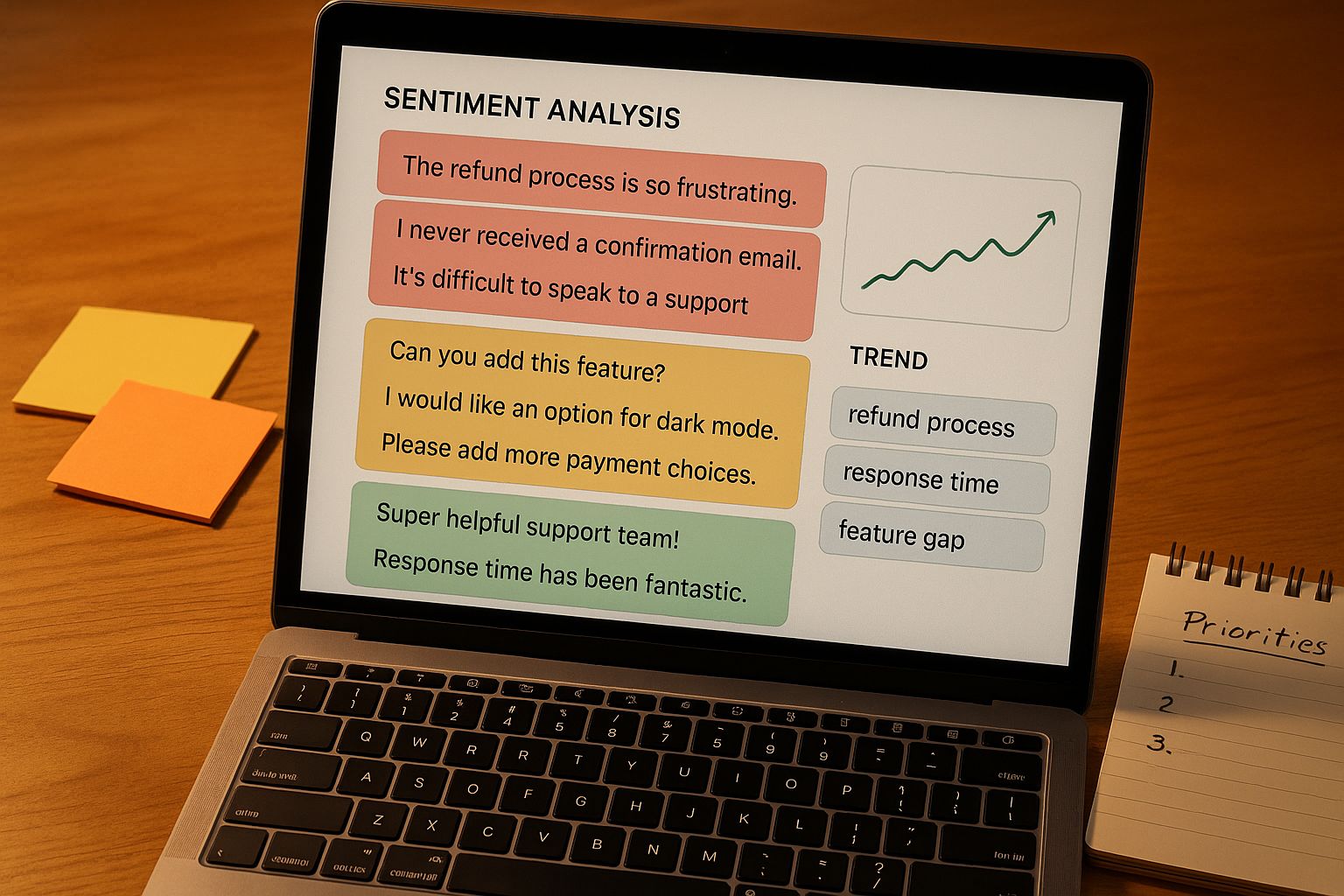
The most valuable intelligence often comes from what customers say when they think competitors aren’t listening. Sentiment analysis tools can automatically categorize and quantify customer frustrations across thousands of social mentions. This reveals patterns of dissatisfaction that represent direct market opportunities. When customers consistently complain about a competitor’s customer service response time, complicated return process, or confusing interface, you’ve discovered a competitive advantage you can leverage in your marketing and product development.
Product Feature Gaps and Opportunities
Customer wish lists are innovation gold mines. When users publicly request features from your competitors, they’re essentially handing you a product development roadmap. Advanced social listening identifies these feature requests and organizes them by frequency and sentiment impact. This intelligence allows you to prioritize development resources toward features with proven market demand that competitors aren’t delivering.
The most sophisticated competitive intelligence programs combine these feature requests with sentiment analysis to identify which missing capabilities cause the most significant customer frustration. This creates a prioritized opportunity matrix that guides strategic product decisions.
Marketing Campaign Effectiveness
Your competitors spend millions testing marketing messages, campaign themes, and value propositions. Social listening allows you to benefit from their investment by measuring which campaigns generate authentic engagement versus mere impressions. This reveals which value propositions truly resonate with your shared target audience. When a competitor launches a new campaign, social listening measures real-time sentiment shifts, message amplification rates, and conversion signals that show whether their positioning is working—giving you insights without matching their marketing spend. For more insights, explore how enhancing ecommerce experiences can amplify your marketing strategies.
Emerging Industry Trends Before They Go Mainstream
Industry disruption rarely happens overnight. Before major shifts become obvious, subtle conversation pattern changes on social platforms provide early warning signals. Effective social listening tracks these emerging topics and sentiment shifts around industry terms, identifying potential threats and opportunities months before they impact market share.
By tracking conversation volume and sentiment around emerging technologies, methodologies, or competitor pivots, you create an early warning system for market disruption. This advance intelligence provides crucial time to adapt strategies, reallocate resources, and position ahead of market shifts rather than reacting to them.
- Track conversation patterns around industry terminology to spot emerging trends
- Monitor sentiment changes around established solutions to identify satisfaction gaps
- Identify early adopters discussing alternative approaches to industry problems
- Analyze cross-industry terminology entering your market’s conversation
- Measure velocity of new terminology adoption among industry influencers
5 Ways Social Listening Outperforms Traditional Market Research
Traditional competitive intelligence methods—industry reports, customer surveys, sales team feedback—still have their place. However, social listening provides critical advantages that complement and sometimes surpass conventional approaches. When integrated into a comprehensive competitive intelligence strategy, social listening fills blind spots and accelerates insight development in ways traditional methods cannot match.
1. Real-Time Data vs. Delayed Insights
Traditional market research operates on a significant time delay—studies are designed, executed, analyzed, and reported over weeks or months. By the time insights reach decision-makers, the competitive landscape has often shifted. Social listening eliminates this lag by providing continuous, real-time intelligence streams that capture market shifts as they happen.
When a competitor launches a new feature or responds to a market crisis, social listening captures immediate customer reactions, giving you a 24-48 hour intelligence advantage over organizations relying on traditional research methods. This time advantage creates opportunity windows for tactical responses before competitors can course-correct their strategy based on the same market feedback.
2. Unfiltered Customer Opinions vs. Survey Responses
Survey responses are notoriously subject to various biases—social desirability bias, acquiescence bias, and even the framing of questions influences results. Social listening captures authentic opinions shared voluntarily without the artificial constraints of survey design. Customers express their true frustrations, priorities, and preferences when talking to their networks rather than responding to a brand’s questions.
3. Competitor Strategy Visibility Without Legal Issues
Many competitive intelligence methods operate in gray ethical areas or require significant investments in industry networks. Social listening provides legally obtained, publicly available data that reveals competitor strategies without crossing ethical lines. When competitors announce initiatives, product updates, or positioning changes, social listening captures not just the announcement but the complete market response—revealing whether customers believe and value the new direction.
4. Cost Efficiency and Scalability
Traditional market research costs typically scale with the scope of research—more competitors or markets mean proportionally higher costs. Social listening platforms provide enterprise-wide intelligence with relatively fixed costs, allowing you to monitor multiple competitors across numerous product lines without significant budget increases. This cost efficiency enables competitive intelligence at a scale that would be financially prohibitive through traditional research methods.
The scalability extends to international markets as well, with advanced platforms offering multi-language monitoring that would require specialized research firms in each region using conventional methods. This global perspective reveals regional competitive differences that might otherwise remain hidden.
5. Cross-Channel Intelligence in One Place
Perhaps the most significant advantage of modern social listening is the ability to integrate intelligence from dozens of channels into unified insights. Rather than managing separate research streams for different platforms, comprehensive social listening aggregates signals from Twitter, LinkedIn, Reddit, industry forums, review sites, and even select news sources into coherent intelligence briefings.
Setting Up Your Social Listening System
Building an effective competitive intelligence program using social listening requires strategic planning rather than simply activating monitoring tools. The system must align with your specific intelligence needs while filtering the overwhelming volume of social data into actionable insights. Begin by identifying your critical intelligence questions before configuring your listening architecture. For businesses looking to enhance their ecommerce experiences, understanding social data can provide valuable insights into customer preferences and market trends.
Essential Platforms to Monitor
Not all social platforms deliver equal competitive intelligence value. Twitter/X remains the primary source for real-time product feedback and customer service issues, with its public nature making competitor challenges immediately visible. LinkedIn provides deeper insights into organizational strategy, executive messaging, and talent movement patterns that often signal future directions before formal announcements. Reddit’s specialized communities offer unfiltered product comparisons and technical discussions that reveal functional strengths and weaknesses competitors may not acknowledge publicly. For more on how platforms can enhance experiences, check out enhancing ecommerce experiences.
Beyond these mainstream platforms, industry-specific forums often contain the most valuable technical intelligence. For B2B products, platforms like Stack Overflow, GitHub, or vertical-specific communities frequently contain detailed discussions of implementation challenges, compatibility issues, and workaround discussions that reveal product limitations competitors don’t disclose. Review sites like G2 Crowd, Capterra, and industry equivalents provide structured competitor comparisons that highlight perceived market positioning.

Keywords That Reveal Competitor Strategies
Effective competitive intelligence requires monitoring beyond obvious brand names and product terms. Create keyword sets that capture strategic intent signals: competitor names plus terms like “roadmap,” “upcoming,” “beta,” “preview,” or “planning” identify future direction discussions. Technical limitation terms like “workaround,” “bug,” “issue,” or “alternative to” paired with competitor names reveal product weaknesses. Including competitor names with pricing terms (“expensive,” “worth it,” “renewal,” “discount”) uncovers satisfaction issues with their value proposition and potential pricing strategy changes.
Tools That Automate the Heavy Lifting
Enterprise-grade social listening platforms like Sprout Social, Brandwatch, and Synthesio provide the comprehensive monitoring capabilities needed for serious competitive intelligence. These platforms offer advanced sentiment analysis, trend identification, and automated categorization that transform raw social data into structured intelligence. The most effective systems integrate with competitive intelligence databases and CRM systems to connect social insights with customer interactions and market performance metrics.
For organizations with limited budgets, tools like Mention, Brand24, and even Google Alerts can provide basic monitoring capabilities, though they lack the analytical depth and integration options of enterprise solutions. The key differentiator in tool selection should be analytical capabilities rather than mere data collection—effective competitive intelligence requires pattern recognition across thousands of data points, not just notification of individual mentions.
“We implemented social listening across seven competitor brands and discovered three distinct customer segments they were consistently disappointing. Within six months, we’d developed targeted offerings for these underserved segments and captured 14% market share from our largest competitor.”
— VP of Strategy, Fortune 500 Technology Company
How to Extract Actionable Intelligence from Social Data
The difference between social listening and true competitive intelligence lies in analysis. Raw social data becomes valuable when patterns emerge across thousands of interactions, revealing strategic insights rather than anecdotal observations. Transforming data into intelligence requires systematic analysis approaches focused on business impact rather than social metrics.
Pattern Recognition Techniques
Effective competitive intelligence analysis follows a structured pattern recognition process rather than focusing on individual data points. Begin by establishing baseline conversation volumes and sentiment for each competitor across different channels. This baseline allows you to identify statistically significant deviations that signal strategic shifts. When conversation patterns about a competitor suddenly change in volume, sentiment, or topic distribution, that deviation often reveals important strategic moves before they’re officially announced.
Volume pattern analysis is particularly valuable for identifying early product launch signals. Most companies experience predictable conversation pattern changes 30-90 days before major launches as they seed influencer discussions, increase hiring in specific departments, and expand partner communications. By tracking these precursor signals, you can identify competitor launch windows with surprising accuracy. For more insights, check out how enhancing e-commerce experiences can impact product launches.
Separating Signal from Noise
The greatest challenge in social listening analysis is distinguishing meaningful business signals from platform noise. Establish clear significance thresholds based on historical data patterns rather than arbitrary metrics. A 15% sentiment shift for a major enterprise product might signal a critical product issue, while a 30% shift for a consumer application might simply reflect normal volatility. Develop competitor-specific baselines that account for their typical conversation patterns, seasonal variations, and known marketing calendar to accurately identify anomalous signals worthy of further investigation. For more on transforming workflows, check out transforming healthcare workflows with innovative solutions.
Creating context-aware filters dramatically improves signal quality. For example, filtering competitor mentions to focus on verified customer accounts versus general market discussion often reveals satisfaction patterns that generic sentiment analysis misses. Similarly, isolating conversations from industry influencers or technical practitioners provides earlier warning of emerging issues than waiting for mainstream customer awareness.
Converting Mentions into Strategic Insights
The true value of social listening emerges when individual data points coalesce into actionable strategic insights. This requires systematic categorization and connection of seemingly disparate signals. Implement a consistent tagging taxonomy that links social mentions to specific business impact categories: product limitations, pricing concerns, customer service failures, technical implementation challenges, or positive differentiation. This structured approach transforms thousands of individual mentions into quantifiable intelligence that highlights competitor vulnerabilities and market opportunities.
Timing analysis adds another crucial dimension by identifying when competitor vulnerabilities peak during customer lifecycles. For example, discovering that competitor satisfaction consistently drops 45-60 days after implementation identifies a precise window for competitive displacement efforts. Similarly, identifying sentiment patterns around contract renewal periods reveals optimal timing for competitive outreach.
Creating Competitive Intelligence Reports
Effective competitive intelligence isn’t measured by data collection but by influence on strategic decision-making. Structure intelligence reports to directly inform specific business decisions rather than providing general market awareness. Each report should answer concrete questions: Where are competitors most vulnerable to customer churn? Which competitor claims generate skepticism versus belief? What unmet needs create the greatest displacement opportunity?
The most impactful competitive intelligence reports integrate social insights with traditional intelligence sources, connecting social signals to financial performance indicators, product roadmap intelligence, and sales win/loss patterns. This multi-source validation transforms interesting social observations into credible strategic intelligence that drives executive decision-making.
Social Listening Success Stories
The theoretical benefits of social listening for competitive intelligence become concrete through real-world implementation stories. These cases demonstrate how organizations have transformed social data into strategic advantage. To explore more about the tools used in these transformations, check out this comprehensive guide on social listening tools.
How Brand X Identified a Market Gap Worth $2M
A mid-sized SaaS provider implemented comprehensive social listening across their three primary competitors, focusing specifically on feature request patterns and complaint clustering. After three months of data collection, a clear pattern emerged: customers consistently requested improved data visualization capabilities that none of the market leaders adequately provided. While competitors dismissed these requests as coming from a small segment, social volume analysis revealed the requests represented nearly 15% of all feature discussions across platforms.
The company redirected development resources to prioritize advanced visualization capabilities, launching them six months ahead of any competitor. The result was a 22% increase in competitive displacement sales and $2.3M in incremental revenue directly attributed to customers citing superior visualization as their primary switching reason. This focused development investment generated ROI exceeding 800% within the first year, all from intelligence that existed publicly on social platforms before the project began. For more on transforming workflows, check out how Catalyst Pro is transforming healthcare workflows.
Turning Competitor Complaints into Your Advantage
A retail brand leveraged social listening to identify a specific customer service failure pattern affecting their largest competitor. Analysis revealed that the competitor’s recent policy change requiring photo documentation for certain returns generated significant customer frustration, particularly among their highest-value demographic. The sentiment pattern was clear: customers felt accused of dishonesty and found the process unnecessarily complicated.
Rather than simply matching the competitor’s price points (their previous strategy), the company launched a targeted campaign emphasizing their “hassle-free, trust-based return process” specifically in geographic areas where competitor sentiment showed the greatest decline. This precisely targeted campaign generated a 34% increase in new customer acquisition from competitor customers, with 72% specifically mentioning the return policy as a primary switching factor during post-purchase surveys.
Common Social Listening Mistakes That Waste Resources
Despite its potential, many organizations implement social listening programs that generate data without delivering intelligence. Understanding common pitfalls helps you avoid costly implementation mistakes that undermine program value.
Tracking Too Many Irrelevant Metrics
The most prevalent mistake in social listening programs is measuring what’s easy rather than what’s valuable. Raw mention counts, generic sentiment scores, and engagement metrics rarely provide actionable competitive intelligence without context and categorization. These surface-level metrics create an illusion of insight while failing to answer critical business questions. Effective programs start with specific intelligence requirements and work backward to identify relevant measurement frameworks rather than beginning with available metrics. For instance, enhancing e-commerce experiences can benefit from targeted social listening strategies.
Focus instead on contextual metrics directly linked to business outcomes: sentiment patterns specifically around key product differentiators, complaint velocity compared to resolution timelines, or feature discussion volume as a leading indicator of market priorities. These purpose-built measurement frameworks extract meaningful intelligence from the same data that generic approaches miss entirely.
Missing Indirect Competitors
Traditional competitive monitoring often focuses exclusively on direct, known competitors while missing emerging threats from adjacent markets. Effective social listening expands beyond obvious competitors to track conversation patterns around alternative approaches to customer problems. This broader monitoring frequently identifies non-obvious competitors entering your market from unexpected directions before they appear in conventional competitive analysis.
For example, a project management software company that only monitored other project management tools missed the growing threat from collaborative workspace platforms that users increasingly described as “replacing our project management system” in social conversations. By the time this threat appeared in market share reports, the competitor had already established strong positioning in key accounts.
Reacting to Data Without Strategic Analysis
Perhaps the most dangerous pitfall is responding to individual social data points without proper pattern validation. Anecdotal customer complaints or competitor praise on social platforms may represent outlier opinions rather than market trends. Organizations that immediately shift strategies based on limited social signals without proper validation often create internal whiplash that undermines strategic consistency. To avoid these pitfalls, consider using social listening tools to gather comprehensive insights.
Establish clear significance thresholds and validation requirements before acting on social intelligence. Individual data points should inform hypotheses for further investigation rather than triggering immediate strategic pivots. The most successful programs integrate social signals with other intelligence sources, requiring multi-source confirmation before major strategic adjustments.
Integrating Social Intelligence Across Your Organization
The value of competitive social intelligence multiplies when it flows beyond the marketing department to influence decisions across the organization. True competitive advantage comes from connecting social insights to functional areas that typically lack direct market visibility. This cross-functional integration transforms social listening from a marketing tactic into a strategic intelligence asset.
Begin by mapping the specific competitive intelligence needs of each department rather than pushing generic social reports across the organization. Product teams need different insights than sales teams or executive leadership. Customizing intelligence delivery to address specific functional questions dramatically increases adoption and impact.
Implementation success depends on delivering insights in existing workflow systems rather than requiring teams to access separate social listening platforms. Integrate competitive intelligence from social sources directly into CRM systems for sales teams, product management tools for development teams, and executive dashboards for leadership.
Feeding Insights to Product Development
Product teams make critical prioritization decisions with limited market visibility beyond what sales and customer success teams manually report. Social listening provides unfiltered customer perspective at scale, highlighting which competitor features generate genuine enthusiasm versus mere acknowledgment. By categorizing competitive product discussions by sentiment impact rather than just mention volume, product teams can distinguish between features customers genuinely value versus those that simply generate discussion without influencing purchase decisions.
Arming Sales Teams with Competitive Ammunition
Sales teams need specific, actionable competitive intelligence rather than generic market overviews. Social listening identifies precise competitor vulnerabilities that create displacement opportunities in active sales cycles. The most effective programs deliver competitor-specific battle cards that highlight current customer frustrations, recent implementation challenges, and emerging product limitations identified through social channels. This real-time intelligence allows sales teams to address unspoken objections and position directly against competitor weaknesses that prospects may have already encountered through their network.
Guiding Marketing Campaigns with Competitor Weaknesses
Beyond general market positioning, social listening reveals specific message testing opportunities based on competitor vulnerability patterns. By analyzing which competitor claims generate skepticism or negative sentiment, marketing teams can develop messaging that directly addresses market doubts rather than competing with established strengths. This targeted approach increases campaign effectiveness by focusing resources on positioning battles you can win based on existing market perceptions rather than attempting to change firmly established competitive narratives. For more insights, explore how enhancing e-commerce experiences can also play a role in competitive positioning.
The Future of Competitive Intelligence Is Social
As AI capabilities continue advancing, social listening will evolve from monitoring conversations to predicting competitive moves before they happen. Pattern recognition algorithms already identify subtle signals that precede major competitor actions—shifts in hiring patterns, changes in executive messaging themes, or evolving customer sentiment can predict product pivots months before formal announcements. Organizations that build these predictive capabilities now will establish sustainable competitive intelligence advantages that extend far beyond current social listening implementations.
Frequently Asked Questions
Social listening for competitive intelligence generates numerous questions about implementation, legal boundaries, and measurement approaches. These common questions address the most frequent concerns organizations face when establishing or expanding their social intelligence programs.
Implementation questions typically focus on resource requirements, tool selection, and departmental ownership. While specific answers depend on organizational structure and existing intelligence programs, successful implementations generally start with clear use cases rather than tool capabilities, establish cross-functional governance rather than marketing-only ownership, and build progressive expansion plans rather than attempting comprehensive monitoring immediately. To explore more about this, consider reading about various social listening tools that can aid in effective implementation.
Legal and ethical concerns represent another common question cluster, particularly regarding data usage boundaries and competitor research limitations. While social listening uses publicly available information, organizations should establish clear guidelines that respect platform terms of service and avoid deceptive practices in data collection.
- Start with specific intelligence questions rather than general monitoring
- Focus on quality of analysis rather than quantity of mentions
- Integrate insights into existing workflows rather than creating separate systems
- Validate social signals with other intelligence sources before major decisions
- Prioritize trend identification over individual mention response
What’s the difference between social monitoring and social listening?
Social monitoring tracks and responds to individual brand mentions, essentially functioning as a reactive customer service channel. Social listening tools analyze patterns across thousands of conversations to identify trends, sentiment shifts, and strategic insights. Monitoring operates at the message level for direct engagement, while listening operates at the market level for strategic intelligence. Effective competitive programs require both capabilities, using monitoring for individual competitive alerts while applying listening for pattern recognition and trend identification across broader market conversations.
How often should we update our social listening strategy?
Your listening strategy should undergo quarterly reviews to ensure alignment with evolving business priorities and competitive landscape changes. However, the underlying keyword architecture and competitor tracking framework require monthly maintenance to incorporate new product terms, emerging competitors, and changing market terminology. The most successful programs implement a tiered review structure: weekly refinement of alert thresholds and filtering rules, monthly expansion of tracking terms and categorization frameworks, and quarterly strategic reviews that connect listening insights to business objectives. For more insights, explore how to strengthen your competitive analysis strategy with social listening.
- Review alert thresholds and response workflows weekly
- Update keyword sets and competitor tracking monthly
- Evaluate strategic alignment and business impact quarterly
- Conduct comprehensive program assessment annually
This progressive maintenance approach ensures your listening program remains technically accurate while adapting to strategic shifts in the competitive landscape. The most common failure point in social listening programs is static keyword architecture that gradually loses relevance as market terminology evolves.
Importantly, your update frequency should increase during periods of market disruption or significant competitor changes. During major market shifts, weekly strategy adjustments may be necessary to capture emerging terms and competitive movements that wouldn’t be identified through static frameworks.
Can social listening help identify potential partnership opportunities?
Social listening excels at identifying complementary solution providers that share your customer base without competing directly. By analyzing which non-competing products are frequently mentioned alongside competitors in positive context, you can identify potential partnership opportunities that address adjacent customer needs. The most valuable partnerships often emerge from products that customers naturally integrate with competitor solutions, revealing existing workflow connections that could be strengthened through formal partnerships.
Is it legal to gather competitive intelligence through social media?
Competitive intelligence through public social media channels is legal when conducted within platform terms of service and without deception. Information voluntarily shared on public platforms can be collected and analyzed without legal concern. However, organizations should establish clear ethical guidelines that prohibit misrepresentation, employee policy violations, or automated scraping that violates platform rules. The ethical line typically involves how information is collected rather than how it’s used—proper collection methods focused on public information create legally sound intelligence programs.
How do I measure the ROI of our social listening program?
Effective ROI measurement connects social intelligence to specific business decisions and their outcomes rather than tracking program activity metrics. Document specific cases where social intelligence influenced product decisions, sales strategies, or marketing campaigns, then measure the performance difference between influenced and non-influenced initiatives. For example, track win rates in sales opportunities where teams used competitive intelligence from social sources versus those without such intelligence, or compare feature adoption rates between socially-informed product developments versus traditionally planned features.
The most sophisticated programs implement formal intelligence impact tracking, requiring business units to document when and how social intelligence influenced decisions. This creates a direct attribution path connecting listening investments to business outcomes that demonstrates concrete ROI beyond general market awareness benefits.
While comprehensive ROI calculation methodologies vary by organization, successful measurement approaches focus on decision influence rather than data volume. A program that significantly influences three critical strategic decisions often delivers greater value than one generating dozens of unused insights, regardless of monitoring scope or data quantity.
When implemented strategically, social listening transforms from a marketing tactic into a core competitive intelligence asset that provides unfiltered market insights unavailable through traditional research methods. Organizations that master this capability gain an intelligence advantage that directly translates to market share growth and customer acquisition opportunities.
Social listening has become an essential tool for businesses looking to gain a competitive edge. By monitoring social media platforms, companies can gather valuable insights into customer sentiment, market trends, and competitor strategies. For those looking to deepen their understanding, exploring social listening tools can provide further guidance on how to effectively leverage this powerful resource.
Turn social listening into action. Pipe brand/keyword mentions straight into a unified Email & SMS inbox, auto-tag competitor insights, trigger follow-ups, book calls, and convert conversations to revenue with built-in payments and automation—plus a complimentary growth consult to set it up. Start free at em2bos.com.

