

Article-At-A-Glance
- Social media automation can save brands up to 6 hours per week while maintaining an authentic presence when implemented strategically
- The 30-60-10 rule provides an ideal framework for balancing automated content with genuine human interaction
- Content batching and scheduling tools like Buffer and Hootsuite help maintain consistency without sacrificing your brand’s unique voice
- Certain elements should never be automated, including crisis responses and personalized customer interactions
- Successful automation requires creating voice templates that capture your brand’s personality across all automated communications
Social media doesn’t have to be a daily grind. With the right automation strategies, you can maintain an authentic brand presence while reclaiming hours of your workweek. The key lies not in automating everything, but in knowing exactly what to automate and how to preserve your human touch throughout the process. SocialFlow’s latest research shows that brands using strategic automation see 37% higher engagement rates than those manually posting all content.
Finding that sweet spot between efficiency and authenticity is what separates successful social media strategies from those that feel robotic and disconnected. Let’s explore how to strike that perfect balance.
The Social Media Burnout Problem: Why Automation Matters
The demands of social media marketing have reached unsustainable levels. With brands now expected to maintain active presences across 5-7 platforms, create daily content, and respond to followers within minutes, burnout has become the industry’s open secret. Most marketing professionals report spending 12+ hours weekly just on social media tasks that could be partially automated. This relentless pace leads to inconsistent posting schedules, rushed content creation, and ultimately, diminished results.
Automation offers a strategic solution to this problem—not by replacing the human element, but by handling repetitive tasks so you can focus on creative work and meaningful interactions. When implemented thoughtfully, automation creates space for more authentic engagement, not less.
The most successful brands don’t view automation as an all-or-nothing proposition. Instead, they identify specific processes that benefit from automation while preserving their unique voice and perspective. This selective approach prevents the “robot effect” that makes followers feel like they’re interacting with a machine rather than a real brand personality. For more insights on improving customer interactions, explore enhancing e-commerce experiences.
5 Proven Ways to Automate Social Media While Staying Human
Effective social media automation enhances your authentic presence rather than replacing it. These five strategies allow you to reclaim time while maintaining the personal connections your audience craves. The trick is implementing automation that amplifies your voice instead of substituting a generic one.
“Automation should handle the mechanics of social media, not the personality of your brand. When you get this balance right, your followers won’t even realize you’re using tools—they’ll just notice your consistent, engaging presence.”
1. Batch Create Content That Sounds Like You
Instead of scrambling to create posts daily, set aside dedicated time each week or month to develop a collection of authentic content that captures your brand voice. This approach allows for deeper creative thinking and consistency in tone. When batching, create content clusters around specific themes, repurposing core ideas across multiple formats while maintaining your unique perspective. The key is writing in your natural voice, including the phrases, humor, and viewpoint that make your brand recognizable.
After creating your content batch, schedule it strategically throughout your calendar using automation tools that preserve formatting and voice elements. This method ensures quality never suffers due to time constraints or last-minute pressure.
2. Use Scheduling Tools to Post at Peak Times
Posting when your audience is most active dramatically increases engagement, but these optimal times rarely align with convenient work hours. Automation solves this disconnect by allowing you to schedule content delivery at peak engagement windows—even at 9pm on Sunday when your team is offline. Modern scheduling tools like Buffer, Hootsuite, and Later analyze your audience’s behavior patterns to recommend optimal posting times unique to your follower base.
The authenticity advantage comes from consistency and timeliness—your content reaches people when they’re most receptive, creating a dependable rhythm that feels intentional rather than random. This reliability builds trust with your audience while maximizing the impact of each piece of content you create.
3. Set Up Custom Response Templates for Comments
Engaging with followers is essential for authenticity, but responding individually to similar questions becomes time-consuming as your account grows. The solution is creating a library of customizable response templates that address common inquiries while still feeling personal. These templates should include personalization variables that pull in user names and specific details from their comments. Learn more about how enhancing e-commerce experiences can benefit your business strategies.
The key to maintaining authenticity with response automation is including customization points in every template. Start with a personalized greeting, reference specific elements from the original comment, and vary your closing phrases to avoid repetition. This approach saves significant time while still providing followers with thoughtful, relevant responses.
For complex or sensitive inquiries, your system should flag these for human review, ensuring automated responses only handle appropriate situations.
4. Create Platform-Specific Content Variations
Each social platform has its own language, format preferences, and audience expectations. Automation tools can help adapt your core message to fit these different environments without requiring completely separate content creation processes. The most effective approach is creating a primary content piece, then using automation to adjust formatting, caption length, hashtag usage, and visual elements for each platform. For more insights, check out this balance between automation and authenticity in social media management.
4. Create Platform-Specific Content Variations
Each social platform has its own language, format preferences, and audience expectations. Automation tools can help adapt your core message to fit these different environments without requiring completely separate content creation processes. The most effective approach is creating a primary content piece, then using automation to adjust formatting, caption length, hashtag usage, and visual elements for each platform.
Advanced automation tools can now intelligently resize images, adjust text length, and even recommend platform-specific hashtags while preserving your original message. This multi-platform approach ensures your content feels native to each environment rather than obviously cross-posted, which audiences often perceive as lazy or inauthentic.
5. Implement Social Listening Automation
Authentic brands don’t just broadcast—they listen and respond. Social listening tools automatically monitor conversations about your brand, industry, and competitors across platforms, alerting you to important discussions. This automation helps identify opportunities for genuine engagement that might otherwise be missed in the social media noise.
When properly configured, these tools can detect sentiment shifts, emerging trends, and potential issues before they escalate. The authentic advantage comes from joining relevant conversations naturally and proactively, demonstrating that your brand is truly present and engaged rather than simply scheduling promotional content.
Best Social Media Automation Tools for Authentic Marketing
Choosing the right automation tools can make the difference between efficient authenticity and robotic-sounding content. The ideal solution varies based on your team size, content volume, and specific automation needs. What matters most is selecting tools that enhance your natural voice rather than forcing you into generic templates and workflows.
All-in-One Solutions for Small Businesses
For smaller teams managing multiple aspects of social media, comprehensive platforms offer the most efficient approach. Tools like Sprout Social, Buffer, and Later combine scheduling, analytics, and engagement features in user-friendly interfaces. These all-in-one solutions typically include content calendars, optimal time posting, and basic response management without requiring technical expertise. The authentication advantage comes from their customization options—allowing you to maintain your unique voice while streamlining workflows.
Enterprise-Level Tools That Maintain Brand Voice
Larger organizations with complex approval processes and strict brand guidelines require more sophisticated automation. Enterprise platforms like Hootsuite Enterprise, Khoros, and Sprinklr include advanced features like AI-powered content suggestions, multi-level approval workflows, and comprehensive compliance checks. These tools excel at preserving brand consistency across large teams while still allowing for timely, personalized interactions that feel authentic to followers.
Free Options for Startups and Solopreneurs
Limited budget doesn’t mean limited automation possibilities. Several powerful tools offer free tiers that provide essential automation features. Canva’s content planner, Buffer’s basic scheduling, and Later’s visual Instagram planner all provide robust functionality without cost. While these free options typically limit the number of scheduled posts or connected accounts, they offer an excellent starting point for implementing automation while maintaining your authentic voice.
Automation Danger Zones: What Not to Automate
Effective automation requires recognizing which aspects of social media should always remain human-controlled. Knowing these boundaries prevents the automation missteps that can damage brand reputation and erode audience trust. The most successful brands use automation strategically while keeping certain elements exclusively in human hands.
Crisis Management Responses
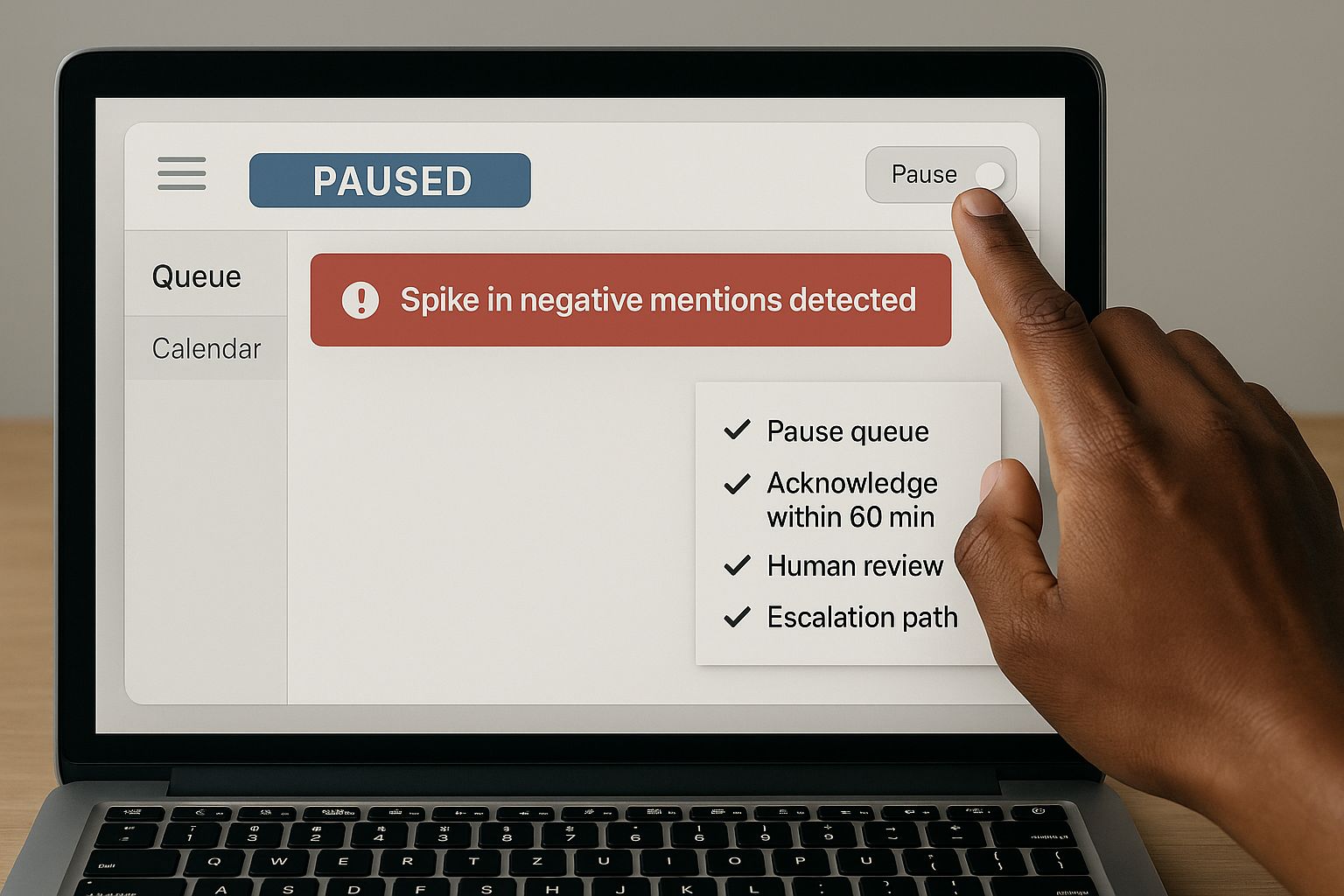
When negative situations emerge, automated responses almost always make things worse. Public relations challenges require nuanced understanding, empathy, and real-time adaptability that automation simply cannot provide. Automated crisis responses typically come across as tone-deaf and insensitive, often amplifying the original problem rather than resolving it.
Instead of automating crisis responses, create alert systems that immediately notify your team of potential issues. Establish clear escalation protocols that pause scheduled content and bring human decision-makers into the conversation quickly. This approach ensures genuine human judgment guides your brand through sensitive situations. For more insights, explore how to balance AI automation vs authenticity in social media management.
Remember that social media audiences can instantly distinguish between authentic human responses and pre-programmed messages during difficult moments. The investment in real-time human handling during crises protects your brand’s reputation and demonstrates genuine care for your community.
Direct Messages and Personal Inquiries
While automated response templates can handle basic inquiries, personalized direct messages should receive human attention. These one-on-one interactions represent significant opportunities to build loyalty and resolve concerns with the human touch that automation cannot replicate. Your automation systems should flag DMs for human review, perhaps sending initial acknowledgment responses while routing conversations to appropriate team members for personalized follow-up.
Trending Topics and Time-Sensitive Events
Joining conversations around breaking news, trending topics, and cultural moments requires contextual understanding and sensitivity that automated systems lack. Attempts to automatically engage with trending hashtags often result in embarrassing missteps or tone-deaf contributions. These real-time cultural conversations demand human judgment to ensure your brand’s participation feels natural and appropriate rather than forced or opportunistic.
How to Create an Authentic Voice Template for Automation
The secret to automation that doesn’t sound automated lies in creating comprehensive voice templates that capture your brand’s unique personality. These guidelines ensure that all scheduled content, automated responses, and AI-generated suggestions maintain consistent tone, values, and language patterns. Think of your voice template as the personality blueprint that guides all automated communications.
Developing Your Brand’s Personality Guidelines
Begin by defining the core attributes that make your brand’s voice distinctive. Document specific language preferences, humor boundaries, formality level, and cultural references that align with your brand identity. Include concrete examples of phrases your brand would and wouldn’t use, along with tone variations for different situations (celebratory, informative, responsive). These guidelines should be specific enough that anyone—human or AI—can understand what makes your communication style unique. For more insights on enhancing customer interaction, consider enhancing e-commerce experiences to align with your brand’s voice.
Building a Content Database That Sounds Human
Create a library of pre-approved phrases, transitions, greetings, and responses that capture your brand voice. This database becomes the foundation for your automated content, ensuring consistency while avoiding repetitive language. The most effective content libraries include variations for different scenarios, platforms, and audience segments, allowing your automation to select appropriate options that maintain authenticity. For example, enhancing e-commerce experiences with tailored content can significantly improve customer engagement.
Testing Automated Content With Your Audience
Before fully implementing automation, conduct small-scale tests to gauge audience reaction to automated content. Compare engagement metrics between manually created and automated posts to identify any authenticity gaps. Look specifically at response sentiment, sharing behavior, and comment quality as indicators of how well your automated content preserves your authentic voice.
The most valuable feedback often comes directly from your community—pay attention to how they interact with different types of content and adjust your automation approach accordingly. This continuous refinement process ensures your automated content evolves alongside your brand voice.
The 30-60-10 Automation Rule for Balanced Social Media
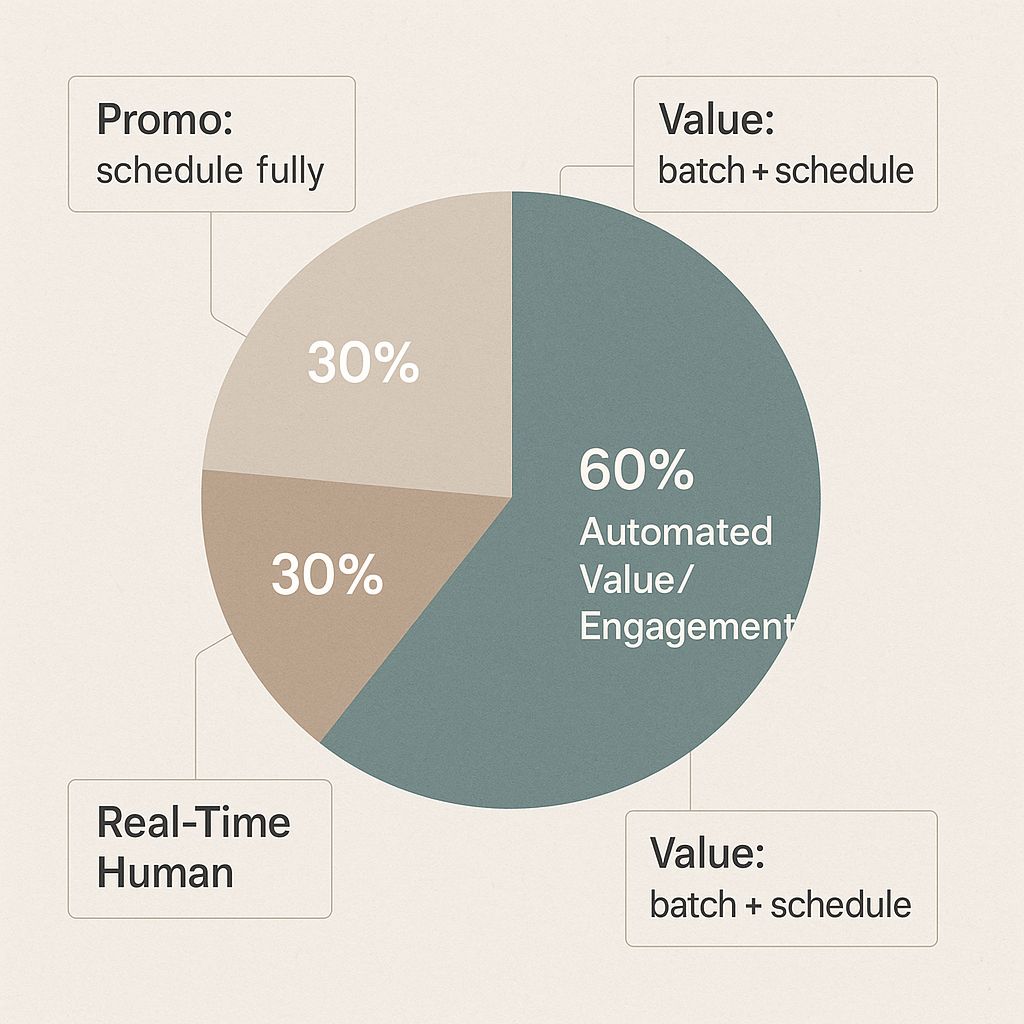
Finding the perfect balance between efficiency and authenticity doesn’t require guesswork. The 30-60-10 rule provides a practical framework that ensures your social presence remains genuine while leveraging automation’s benefits. This approach divides your social media content into three strategic categories, each with a specific automation approach.
30% Scheduled Promotional Content
This category includes your marketing messages, product announcements, sales notifications, and other business-oriented content. These posts can be fully automated through scheduling tools because they typically follow consistent formats and messaging. The key to maintaining authenticity is crafting these promotional pieces during dedicated content creation sessions where you can infuse them with your brand’s unique voice and perspective.
When scheduling promotional content, use platform-specific formatting and timing to ensure each post feels native to its environment rather than generically cross-posted. Even with automation handling the delivery, each promotional piece should read as if it was crafted specifically for the moment and platform where it appears. For more insights on optimizing your digital presence, explore how enhancing e-commerce experiences can make a difference.
60% Automated Engagement Content
The majority of your social presence should consist of value-adding content that educates, entertains, or inspires your audience. This includes industry insights, helpful tips, behind-the-scenes glimpses, user-generated content sharing, and thought leadership pieces. While the distribution of this content can be automated, the creation process should incorporate your authentic perspective and expertise. For instance, you can explore ways to enhance e-commerce experiences through thoughtful content strategies.
Content batching works exceptionally well for this category—creating themed content series in advance allows for thoughtful development while scheduling tools ensure consistent delivery. The authenticity comes from your unique insights and voice, while automation handles the mechanics of consistent publishing.
10% Real-Time Human Interaction
This final category represents the truly human moments that cannot and should not be automated. Real-time responses to comments, participation in trending conversations, personalized interactions with key community members, and spontaneous content that captures timely moments all require genuine human presence. This 10% investment in completely manual engagement provides the authentic foundation that makes your automated content feel more genuine by association.
The human-led interactions demonstrate that real people stand behind your brand, creating a halo effect that extends to your scheduled content. When followers receive personal responses and see your team engaging naturally, they perceive your entire presence as more authentic—even the parts that utilize automation.
Measuring Automation Success: Beyond Vanity Metrics
The true measure of successful social media automation isn’t just efficiency gained, but whether authenticity has been maintained or enhanced. Traditional metrics like follower counts and basic engagement rates tell only part of the story. Evaluating automation effectiveness requires a deeper analysis focused on quality over quantity.
Engagement Quality vs. Quantity
Look beyond simple engagement numbers to evaluate the nature of interactions your content receives. Meaningful comments that demonstrate genuine connection are worth more than dozens of generic reactions. When reviewing your automated content performance, analyze comment sentiment, conversation depth, and user-initiated sharing as indicators of authentic connection.
The most valuable engagement metric for measuring authenticity is conversation continuation—do users respond multiple times within a single thread, creating actual dialogue? This indicates your automated content successfully initiated genuine human connection rather than just generating passive consumption.
- Conversation depth: Average number of back-and-forth exchanges in comment threads
- Comment sentiment: Emotional tone and personal connection in audience responses
- Shares with added commentary: Users adding their own thoughts when sharing your content
- Direct message initiation: Conversations that move from public comments to private messaging
- User-generated content inspired by your posts: Audience creating their own related content
These qualitative metrics reveal whether your automation strategy preserves the human elements that drive meaningful social connections or simply generates surface-level activity. For businesses looking to enhance their strategies, exploring ways to enhance e-commerce experiences can provide valuable insights.
Audience Growth and Retention Signals
Authentic automation should strengthen audience relationships over time, reflected in both retention and growth patterns. Monitor follower retention rates, content saves, and profile visits alongside new follower acquisition. An effective automation strategy will show increasing audience loyalty metrics even as efficiency improves—if retention drops while you automate more, you’ve likely crossed the line into territory that feels inauthentic to your audience.
Conversion Metrics That Matter
Ultimately, social media exists to drive business outcomes. Authentic automation should improve conversion metrics by creating more meaningful connections with potential customers. Track how automated versus manual content performs in driving specific actions like website visits, email sign-ups, or purchases. The most successful automation strategies show improved conversion rates alongside increased efficiency, demonstrating that authenticity and automation can coexist productively. For instance, enhancing eCommerce experiences through automation can significantly boost conversion rates.
Real-World Success: Businesses That Automate Authentically
Theory becomes practical when we examine how real companies navigate the balance between automation and authenticity. These success stories demonstrate that with intentional strategy, brands can maintain their unique voices while leveraging powerful automation tools.
Consider how outdoor retailer REI maintains its authentic voice across thousands of automated social posts annually. Their content calendar incorporates scheduled promotional content and automated engagement pieces, but these scheduled elements mirror the brand’s genuine passion for outdoor adventure. By batching content creation during intensive planning sessions, their marketing team infuses authentic expertise and values into every scheduled post.
Small businesses demonstrate equally impressive results with more limited resources. Cookbook author and food blogger Tieghan Gerard of Half Baked Harvest automates content distribution across platforms but maintains authenticity by personally creating all recipes and photography during dedicated content days. Her automation system adapts each piece of content for platform-specific requirements while preserving her distinctive voice and aesthetic.
The common thread among these success stories is intentional boundaries—knowing precisely what to automate and what to keep manual. Each organization established clear guidelines about which elements of their social presence required human hands versus which could benefit from automation without sacrificing authenticity.
“We automate the mechanics, not the humanity. Our scheduling tools handle when content goes live and ensures consistent presence, but every word and image still comes from our creative team’s genuine excitement about what we do. The automation just ensures our voice reaches people at the right moments.” — Social Media Director, Patagonia
Take Control of Your Social Media Without Sacrificing Authenticity
Implementing thoughtful automation transforms social media from a demanding daily grind into a strategic channel where authentic connections scale efficiently. The key is approaching automation as an amplifier of your genuine voice rather than a replacement for human creativity and connection. By automating wisely—scheduling content strategically, batching creation processes, implementing response templates, and using platform-specific formatting—you can maintain authenticity while reclaiming hours of productive time each week. Remember that successful automation enhances your brand’s natural voice rather than substituting a generic alternative.
Frequently Asked Questions
As brands explore social media automation, several common questions arise about maintaining authenticity while improving efficiency. These practical answers address the most frequent concerns about implementing automation without losing the human touch that makes social media valuable.
How much time can I save with social media automation?
Most brands implementing strategic automation report saving 5-10 hours per week on social media management. The exact time savings depends on your posting frequency, platform diversity, and which elements you choose to automate. Teams focusing on content creation and community engagement while automating scheduling and distribution typically see the highest efficiency gains without sacrificing quality.
The greatest time savings typically come from content batching combined with scheduled distribution—creating a month’s content in one focused session rather than daily scrambles. Additional efficiency comes from templated responses, cross-platform content adaptation, and automated performance reporting that eliminates manual data collection.
Will my followers know I’m using automation tools?
When implemented strategically, automation remains invisible to your audience. The key is maintaining your authentic voice throughout automated content and never automating elements that require genuine human response. Your followers won’t notice or mind scheduled posting times—they care about consistent quality content that provides value, regardless of the tools used to deliver it. What audiences detect instantly, however, is generic messaging, delayed responses to time-sensitive issues, or obviously templated replies to personalized comments.
Can I automate content across different platforms simultaneously?
Yes, but with important caveats. Effective cross-platform automation requires content adaptation rather than identical cross-posting. Advanced automation tools can adjust your core content to meet platform-specific requirements—modifying image dimensions, hashtag usage, caption length, and formatting while preserving your message. This approach ensures content feels native to each platform rather than obviously recycled, which audiences perceive as low-effort and inauthentic.
The most successful cross-platform automation incorporates platform-specific elements into each variation, such as using carousel posts for Instagram while creating thread formats for Twitter from the same core content. This maintains platform authenticity while still leveraging the efficiency of creating content once and distributing it widely.
How do I respond to negative comments through automation?
Negative comments generally shouldn’t receive fully automated responses. However, automation can support your response process by flagging negative comments for immediate human review, categorizing common concerns, and providing response templates that your team can personalize. This semi-automated approach ensures timely acknowledgment while maintaining the human judgment essential for handling sensitive situations.
The most effective approach creates a triage system where automation identifies potential issues and routes them to appropriate team members, along with relevant customer history and templated response frameworks that can be customized. This balances efficiency with the personal attention negative feedback requires.
What’s the ideal balance between automated and manual posts?
The 30-60-10 rule provides an effective starting framework: 30% fully automated promotional content, 60% semi-automated value-adding content, and 10% completely manual real-time engagement. However, this balance should be adjusted based on your specific audience, resources, and content strategy. Brands with highly engaged communities might increase the manual percentage, while those with limited resources might lean more heavily on automation for distribution while ensuring creation remains authentic.
Monitor engagement metrics as you adjust your automation balance. If you notice declining comment quality, reduced sharing, or decreased conversion rates, you may have tilted too far toward automation. Conversely, if your team feels consistently overwhelmed despite automation tools, you may need to increase scheduled content while preserving quality through batched creation processes.
Finding your brand’s perfect balance requires experimentation and careful attention to both efficiency gains and audience response. The ultimate goal is creating a sustainable system where automation handles repetitive tasks while your team focuses on the creative and responsive elements that truly require human touch. For instance, enhancing e-commerce experiences can be a part of this balanced approach.
In today’s fast-paced world, the healthcare industry is constantly evolving to meet the demands of patients and providers. With the integration of advanced technology, healthcare workflows are being streamlined for better efficiency and patient outcomes. Discover how transforming healthcare workflows with Catalyst Pro can significantly enhance these processes and improve overall healthcare delivery.
Save hours every week without sounding like a bot. Consolidate your socials, email/SMS, scheduling, and automations in one free business OS—complete with voice templates and human handoff—so every scheduled post still feels personal. Build your authentic, always-on presence today at em2bos.com.

