
Key Takeaways
- Instagram Stories are viewed by 500 million users daily, yet remain significantly underutilized for driving conversions by most marketers.
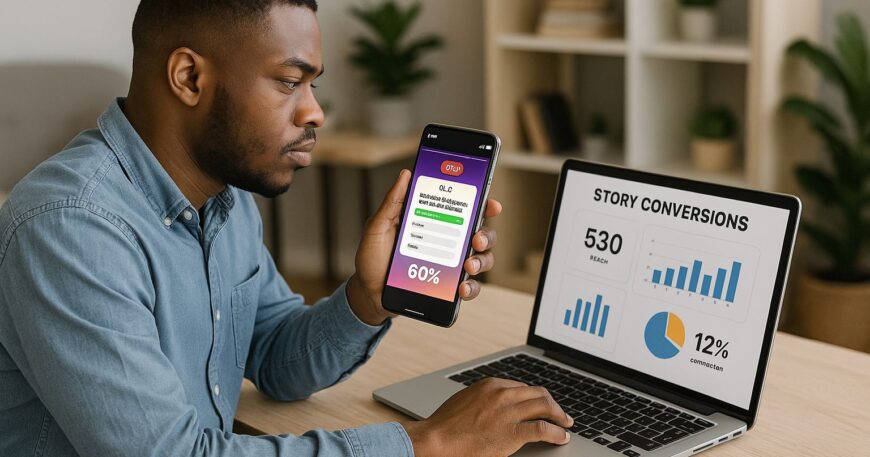
- Interactive elements like poll and quiz stickers can increase engagement rates by up to 80% while naturally qualifying leads for your business.
- The full-screen format of Stories captures 5x more attention than regular feed posts, giving your conversion messages greater impact.
- Creating a strategic 3-day story sequence can systematically move viewers from awareness to action with minimal drop-off.
- Even accounts with fewer than 10,000 followers can drive significant conversions through product tags, DM strategies, and strategic highlight collections.
Those colorful circles at the top of Instagram aren’t just for sharing your coffee photos or office views. They’re untapped conversion machines that 90% of marketers are drastically underusing. With Instagram Stories now reaching over 500 million users every single day, the potential for turning casual viewers into paying customers is enormous. Instagram’s ephemeral content format offers unique advantages that feed posts simply can’t match when it comes to driving direct action.
If you’re treating Stories as just another place to post content without a conversion strategy, you’re leaving significant revenue on the table. The statistics don’t lie: brands using Stories strategically see conversion rates up to 3x higher than those relying solely on feed content. The immersive, full-screen nature of Stories creates a distraction-free environment that naturally guides viewers toward your call-to-action.
In this comprehensive guide, we’ll uncover exactly how to transform your Stories from passive entertainment into active conversion tools that generate measurable results. No fluff, no theoretical concepts – just proven strategies that are working right now for businesses of all sizes.
500 Million Daily Users But Zero Conversions: Your Instagram Stories Problem
Let’s address the elephant in the room. Despite Stories’ massive audience, the average conversion rate for most businesses hovers around a dismal 1-2%. The problem isn’t the platform – it’s how we’re using it. Most businesses approach Stories with the same mindset as their regular feed, failing to leverage the unique psychological triggers that make this format so powerful for driving action.
The ephemeral nature of Stories (disappearing after 24 hours) creates a natural urgency that regular posts lack. Yet instead of using this built-in FOMO to drive conversions, most businesses simply post and pray. Without a clear conversion pathway, even the most engaging Story becomes just another fleeting piece of content that entertains but doesn’t convert.
What’s more concerning is that Instagram’s algorithm increasingly favors Stories in terms of reach. A well-crafted Story often reaches 2-3x more of your followers than a regular post, meaning your highest-visibility content isn’t being optimized for conversion. This represents a massive opportunity cost that compounds with every Story you publish without conversion elements.
Why Most Marketers See Stories as Entertainment, Not Sales Tools
The disconnect happens because Instagram Stories evolved from Snapchat’s purely social, ephemeral format. This origin created a persistent myth that Stories should be casual, unpolished, and free from “sales-y” elements. While authenticity matters, this mindset ignores the sophisticated conversion tools Instagram has deliberately built into the Stories framework. From product tags to swipe-ups, countdown stickers to polls, the platform has systematically developed Stories into a conversion-focused format.
Another factor is measurement difficulty. Until recently, tracking conversions from Stories required cumbersome workarounds. As a result, many marketers simply didn’t bother, focusing instead on vanity metrics like views and replies. Without conversion data, it’s impossible to optimize what works – creating a cycle where Stories remain in the “brand awareness” bucket rather than the “revenue generator” category.
The Real Cost of Ignoring Stories in Your Marketing Strategy
Beyond the obvious lost sales, failing to optimize Stories for conversion damages your marketing efficiency across the board. When your highest-engagement content doesn’t convert, you’re essentially training your audience to consume without acting. This creates a passive following that becomes increasingly difficult to monetize over time, regardless of which tactics you try later.
There’s also a significant opportunity cost in ad spend. The same content that performs poorly organically typically underperforms in paid Story placements too. This means businesses are paying premium rates for Story ads without the conversion strategy to make them profitable – essentially subsidizing entertainment for their audience without a return.
Perhaps most concerning is the compounding effect. As Instagram continues prioritizing Stories in both organic reach and advertising options, the gap between brands that master Story conversions and those that don’t will widen dramatically. This isn’t just about missing opportunities today – it’s about falling increasingly behind competitors who are building sophisticated Story conversion systems that improve with each iteration.
- Lost direct revenue from unconverted Story viewers
- Wasted ad spend on poorly optimized Story content
- Training your audience to consume without converting
- Falling behind competitors using advanced Story techniques
- Missing valuable first-party data from interactive Story elements
The good news? This widespread underutilization creates an exceptional opportunity for businesses willing to approach Stories strategically. Let’s examine exactly how to transform your Stories from passive entertainment into your most powerful conversion channel.
The Hidden Conversion Power of Instagram Stories
While the standard Instagram feed remains cluttered with competing content, Stories provide a full-screen immersive experience that commands undivided attention. This visual dominance creates a perfect environment for conversion messages to land with maximum impact. When a viewer enters your Story, they’re giving you their full focus – a rare commodity in today’s distracted digital landscape.
The sequential nature of Stories also creates a natural narrative flow that guides viewers toward conversion. Unlike feed posts where users quickly scroll past, Stories allow you to build progressively stronger calls-to-action through a series of connected frames. This storytelling format mirrors proven sales sequences used in the most effective marketing campaigns throughout history.
Case Study: How Fashion Nova Drives $500K+ Monthly Through Stories
Fashion Nova has mastered the art of Story conversions by creating a seamless path from discovery to purchase. Their strategy combines time-sensitive offers with product demonstrations that feature real customers. Each Story sequence follows a specific pattern: attention-grabbing lifestyle image, product close-up with price tag, customer testimonial, and finally a direct swipe-up to purchase with a limited-time incentive.
This systematic approach has generated over $500,000 in monthly revenue directly attributed to Instagram Stories. What’s particularly noteworthy is their use of continuous testing – Fashion Nova runs multiple story sequences simultaneously, tracking conversion rates for different product categories, call-to-action phrasing, and frame counts to constantly optimize performance.
Why Stories Convert Better Than Feed Posts for Specific Audiences
Instagram’s internal data reveals that Stories drive significantly higher conversion rates among users aged 18-34, with particularly strong performance in the 25-29 demographic. This younger audience has grown accustomed to the vertical, immersive format and views it as a more authentic channel for brand communication. They’re also more likely to use interactive features like polls and quizzes that create psychological investment before a conversion request.
Additionally, Stories excel at converting first-time buyers. The combination of limited-time visibility and interactive elements creates a perfect environment for impulse purchases, especially for products under $75. For higher-ticket items, Stories function effectively as the middle step in a longer conversion journey, moving prospects from awareness (typically created through feed posts) to consideration before directing them to more detailed landing pages.
The Attention Advantage: 5x More Focus on Full-Screen Content
Eye-tracking studies confirm what marketers have suspected: full-screen Stories capture approximately 5x more visual attention than standard feed posts. With no competing visuals, notification icons, or alternate scrolling options, viewers process Story content with significantly higher cognitive engagement. This attention advantage translates directly to conversion effectiveness, particularly for messages requiring some level of explanation or emotional appeal.
The vertical format also aligns perfectly with natural holding positions for mobile devices, creating a physically comfortable viewing experience that extends average engagement time. With less physical strain and no thumb required for scrolling, viewers are more likely to complete entire Story sequences – crucial for multi-step conversion narratives.
7 Story Elements That Drive Direct Conversions
Transforming your Stories into conversion machines requires moving beyond basic photo and video sharing to leverage the full suite of interactive tools Instagram provides. These seven elements, when strategically implemented, create powerful conversion pathways that feel natural rather than pushy.
1. Strategic Swipe-Up Links That Actually Work
For accounts with over 10,000 followers, the swipe-up feature remains the most direct conversion tool. However, simply adding links isn’t enough – effective swipe-ups follow specific patterns. First, directly reference the swipe action with both text and visual cues (like animated arrows). Second, create a compelling reason to swipe by highlighting the exclusive benefit waiting on the other side. Finally, ensure landing pages maintain visual continuity with your Story design for a seamless transition experience.
Pro tip: Use dedicated landing pages for Story traffic rather than sending viewers to your general website. These specialized pages should match the specific offer mentioned in your Story and continue the visual language established in your content. Conversion rates increase by an average of 36% when landing pages visually match the originating Story.
2. Product Tags That Feel Natural, Not Forced
Product tags in Stories provide a non-intrusive way to make any content shoppable. The key to high-converting product tags lies in their implementation. Rather than tagging products in obviously staged photos, incorporate them into authentic usage scenarios that solve real problems for your audience. Show the product in action through user-generated content whenever possible, as this increases tag click-through rates by up to 25% compared to brand-created imagery.
3. Poll Stickers That Qualify Leads
Poll stickers do far more than boost engagement – they’re powerful qualification tools when framed correctly. Design polls that subtly segment your audience based on purchase intent or product preferences. For example, rather than asking “Do you like this product?” try “Would this solve your [specific problem]?” This approach not only increases engagement but also provides valuable data for follow-up targeting through ads or direct messages.
4. Quiz Stickers That Segment Your Audience
Quiz stickers create a playful way to qualify prospects while educating them about your offerings. Design quizzes that address common misconceptions about your product category or help users identify which of your solutions best fits their needs. The interactive nature of quizzes increases retention of product information by up to 40% compared to passive content consumption. For more insights, check out how enhancing ecommerce experiences can further engage your audience.
The data gathered through quiz responses also provides invaluable segmentation insights. By analyzing which answers correlate with higher conversion rates, you can refine your broader marketing messages to emphasize the most compelling product benefits. Many sophisticated brands now use quiz response patterns to create custom audience segments for remarketing campaigns.
5. Countdown Stickers That Create FOMO
Countdown stickers tap into the powerful psychological trigger of time-based scarcity. When implemented authentically for genuine limited-time offers, these stickers can increase conversion rates by 30-45% compared to identical offers without visible countdowns. The key is ensuring the deadline is real and meaningful – artificial urgency damages brand trust when discovered. For more strategies on enhancing your marketing efforts, explore enhancing eCommerce experiences.
6. Question Stickers That Generate Sales Conversations
Question stickers transform passive viewers into active participants, creating natural openings for sales conversations. Instead of generic prompts like “Ask me anything,” use specific questions related to pain points your product solves. When viewers respond, you gain both valuable market research and direct opportunities to address objections through personalized responses that guide interested prospects toward conversion. For more insights on engaging your audience, explore how technology influences engagement.
7. Highlight Collections That Funnel Browsers to Buyers
Story Highlights extend the 24-hour lifespan of your best converting content while creating organized pathways for different buyer journeys. Rather than random highlight categories, design a strategic funnel system where each highlight collection serves a specific stage in the customer journey – from problem education to product showcase, customer testimonials, and finally how to purchase. This systematic approach ensures that even first-time profile visitors can quickly find relevant conversion content regardless of what’s currently in your active Stories. Learn more about enhancing ecommerce experiences to optimize your strategy.
The 15-Second Rule: Story Length vs. Conversion Rate
Extensive analysis of over 10,000 Story campaigns reveals a critical pattern: conversion rates drop dramatically after 15 seconds per Story frame. This isn’t surprising considering the average attention span on mobile devices, but it has profound implications for conversion design. Each individual frame should deliver its core message within this 15-second window, even if the content technically runs longer.
For videos, this means front-loading key information and conversion cues in the first 10 seconds. For static images, it means ensuring text is scannable enough to comprehend within this timeframe. The most effective approach combines both – using movement to capture attention while overlaying concise text that delivers your core message almost instantly. This strategy is crucial for enhancing e-commerce experiences and driving conversions.
This doesn’t mean your entire Story sequence should be limited to 15 seconds – rather, each segment should respect this threshold while building toward your ultimate conversion goal. Think of it as a series of connected 15-second opportunities rather than one extended pitch.
Why Multi-Frame Stories Outperform Single Frames
Despite the importance of brevity within individual frames, data consistently shows that multi-frame Story sequences dramatically outperform single-frame Stories for conversion. The ideal sequence builds progressive commitment through 3-5 connected frames, each serving a specific purpose in the conversion journey. This structured approach allows you to address multiple aspects of the buying decision while maintaining viewer engagement.
The sequential nature of Stories also creates a psychological commitment effect – once viewers have consumed several frames in sequence, they become increasingly likely to complete the final conversion action. Each frame they view represents a micro-commitment that makes the ultimate conversion step feel like a natural conclusion rather than an abrupt request.
The Perfect Story Frame Count for Maximum Conversion
After analyzing thousands of Story sequences, the optimal frame count for direct response conversion falls consistently between 3-5 frames. This range provides sufficient space to establish context, demonstrate value, overcome objections, and present a compelling call-to-action without exceeding attention thresholds. Conversion rates begin to decline significantly beyond 7 frames, with each additional frame reducing completion rates by approximately 7%.3
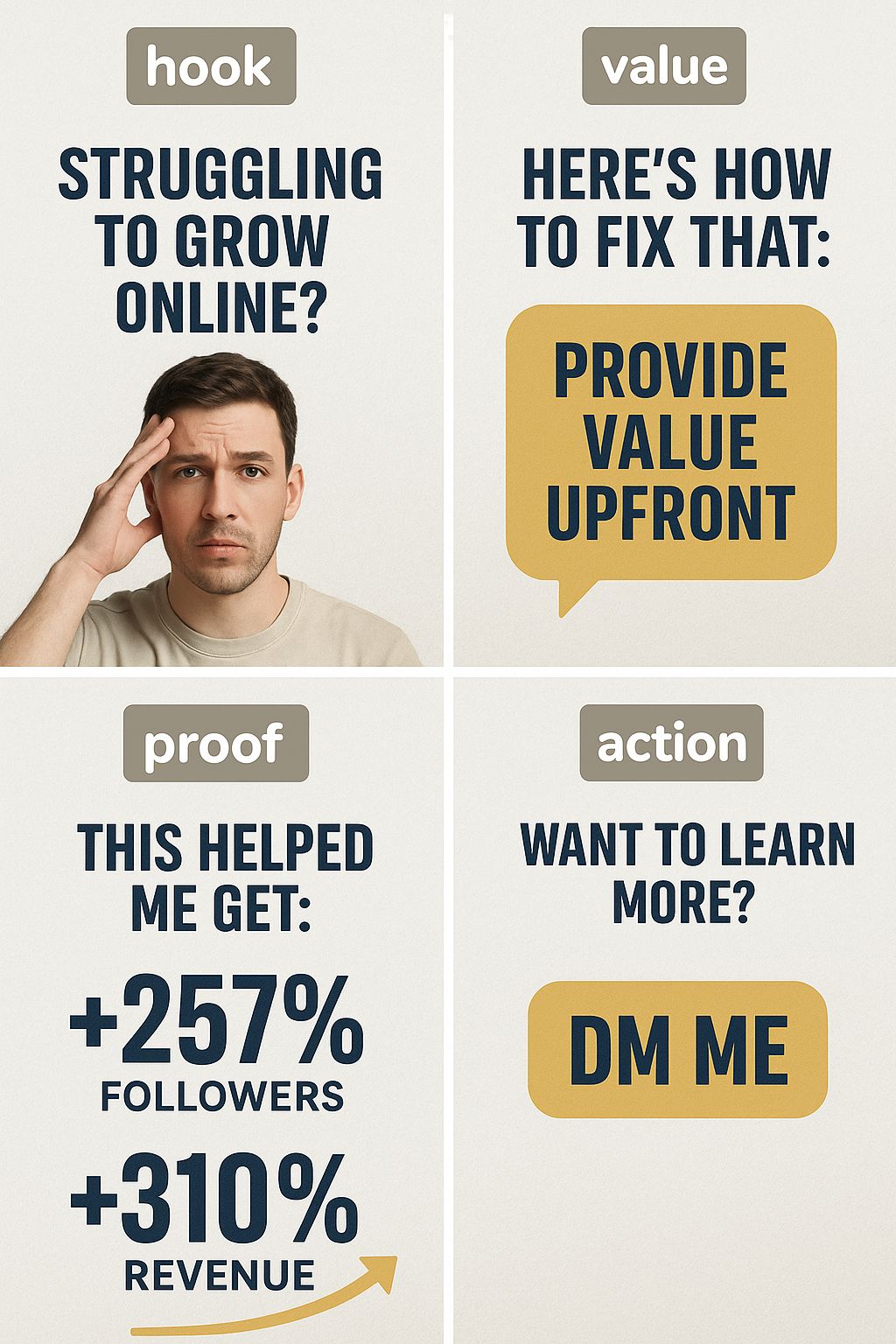
Within this 3-5 frame ideal range, the most effective structure follows a specific pattern: hook frame (problem/attention grabber), value frame (solution/benefit), proof frame (testimonial/demonstration), and action frame (specific next step). For five-frame sequences, an additional objection-handling frame inserted before the action step further increases conversion rates, particularly for higher-priced offerings.
Your 3-Day Story Conversion System
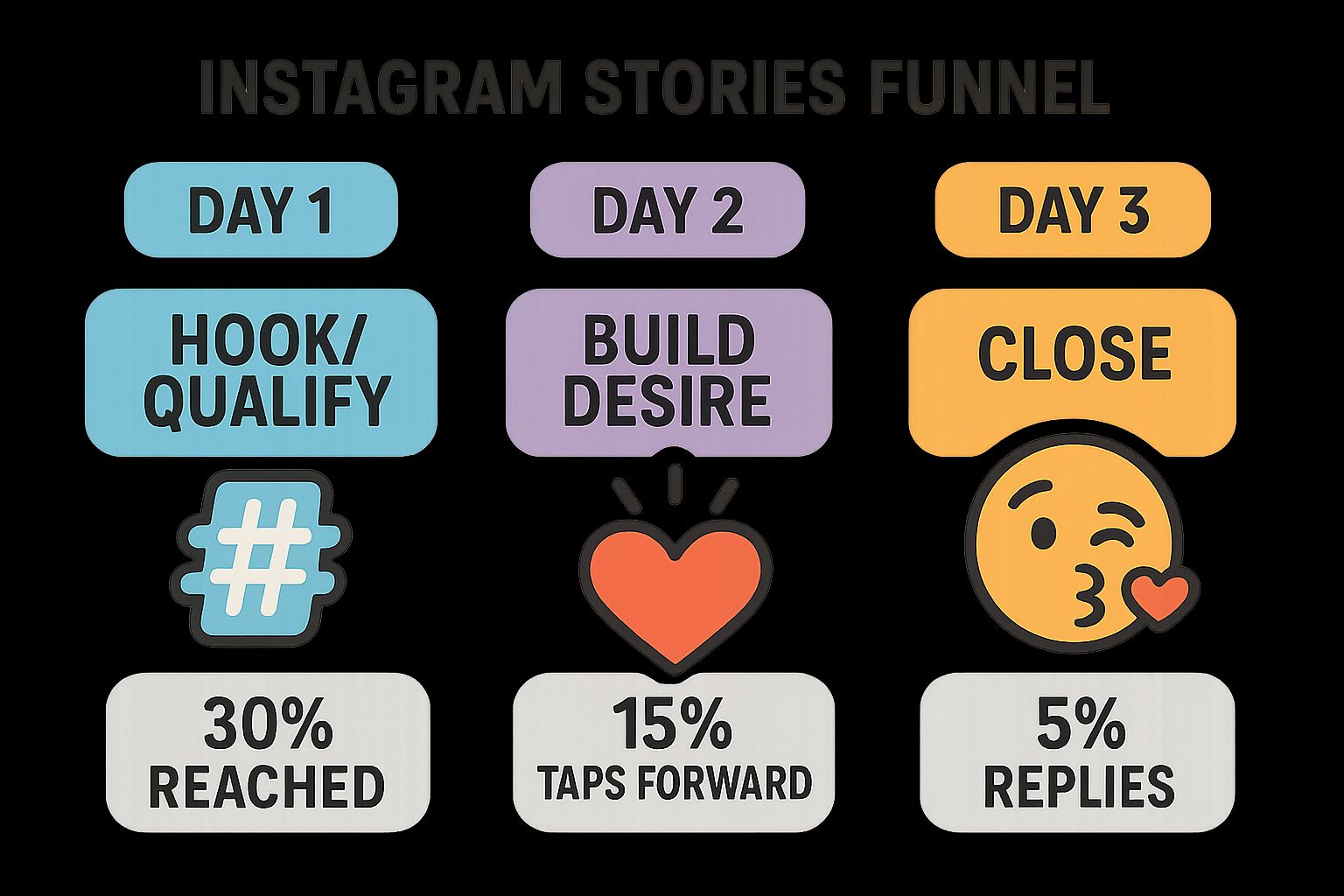
The most successful Story conversion strategies don’t rely on random posts but instead follow a deliberate sequence that moves viewers through a conversion journey. This three-day approach aligns perfectly with both viewer psychology and Instagram’s algorithm to maximize both reach and conversion rates.
By breaking your conversion sequence across three consecutive days, you create multiple touchpoints that reinforce your message without overwhelming your audience. This approach also leverages the psychological principle of spaced repetition, which has been proven to significantly increase message retention and action-taking.
Day 1: Content That Hooks New Viewers
Your first day focuses exclusively on capturing attention and establishing relevance. Rather than leading with product features, start with relatable problems or aspirational outcomes that connect emotionally. This is where you’ll use your most visually striking content – the images or videos that stop thumbs from scrolling. Interactive elements on Day 1 should be low-commitment, like polls about common pain points or quiz stickers that help viewers self-identify their needs.
The key metrics for Day 1 are reach and story completion rate. Aim for at least 70% of viewers to watch your entire Day 1 sequence, which indicates you’ve captured genuine interest rather than casual browsing. Avoid direct product pitches on this day – the goal is simply to establish yourself as relevant to the viewer’s interests or challenges. For more insights, explore how technology hijacks people’s minds to better understand viewer engagement.
Day 2: Middle-Funnel Content That Builds Desire
Your second day bridges the gap between problem awareness and solution consideration. This is where you introduce your product or service as the ideal solution, focusing heavily on specific benefits rather than features. Day 2 should include demonstration content showing your product in action, preferably through user-generated content that feels authentic. Testimonials work exceptionally well on Day 2, especially when they mirror the demographics and challenges of your target audience.
Interactive elements on Day 2 should qualify prospects further, with question stickers that invite specific product questions or polls that help viewers envision using your solution. The objective isn’t conversion yet – it’s building desire and overcoming potential objections before your Day 3 conversion request.
Day 3: Close Content That Drives Action
Your final day focuses exclusively on conversion, with clear calls-to-action and incentives to act now rather than later. This is where countdown timers, limited-time offers, and swipe-up links take center stage. Make the desired action extremely clear and remove any friction that might prevent immediate conversion.
The most effective Day 3 sequences include a specific reason to act today – whether it’s a genuine scarcity element (limited quantities), time sensitivity (offer expiration), or special incentive (bonus for immediate action). Your visual design should also shift toward more action-oriented colors and movement that directs attention to your CTA.
Measuring Story Success Beyond Views
While Instagram makes it easy to track views, meaningful conversion measurement requires looking beyond this surface metric. Stories that generate thousands of views but few conversions are ultimately entertainment, not marketing assets. Implementing proper tracking allows you to identify which Story elements genuinely drive revenue rather than just engagement.
The 3 Story Metrics That Actually Matter for Conversions
The first critical metric is Exit Rate by Frame, which shows precisely where viewers drop off in your sequence. This pinpoints content weaknesses more specifically than overall completion rate. By identifying high-exit frames, you can systematically improve the elements that are breaking your conversion flow. Look especially for exits that occur immediately after introducing pricing or calls-to-action, as these indicate potential objection points that need addressing.
Next, track Reply Rate by Frame Type. Certain frames consistently generate more direct messages than others, and these replies often represent high-intent prospects. By categorizing which content triggers the most meaningful conversations, you can optimize future Stories to encourage these valuable interactions. Product demonstration frames typically generate 3-4x more conversion-focused replies than lifestyle content.
Finally, measure Attribution Window Performance. Unlike feed posts, Story conversions often occur within a compressed timeframe – typically 60% within 4 hours of viewing. Understanding your unique attribution window helps allocate resources more effectively. If your Stories drive primarily same-day conversions, you should post them when your audience is most likely to be in a position to complete a purchase immediately.
How to Set Up Custom UTMs for Story Traffic
Standard link tracking often fails to capture the nuanced performance differences between Story variants. Implement a UTM structure that includes campaign name (the overall promotion), content (specific Story sequence), and medium (Instagram Stories). This granular approach allows you to identify which specific Story sequences drive the highest-quality traffic, not just the highest volume.
For maximum insight, create separate UTM parameters for each major Story frame within a sequence. This allows you to determine whether conversions come primarily from your testimonial frame, product demonstration, or special offer announcement. While this requires more initial setup, the actionable data it generates pays dividends through continuously improving conversion rates.
Story Conversion Tools Worth The Investment
As your Story strategy matures, certain tools become essential for scaling your conversion efforts without proportionally increasing your workload. The right technology stack allows you to maintain personalized, high-converting Story experiences even as your audience grows.
The most valuable investments focus on three areas: content creation efficiency, performance analysis, and automated follow-up for non-converters. Rather than adopting dozens of specialized tools, look for solutions that integrate these functions to maintain a cohesive conversion strategy.
Free Options That Deliver Results
For businesses just beginning to optimize Stories for conversion, several free tools provide substantial value. Canva’s Story templates offer conversion-focused layouts that incorporate psychological triggers and clear call-to-action positioning. Their template library includes proven frameworks specifically designed to drive swipe-ups and direct messages.
Instagram’s own Creator Studio provides surprisingly detailed metrics when used correctly. By creating custom date ranges and comparing Story performance against specific business objectives, you can identify patterns that aren’t visible in the standard mobile analytics. Pay particular attention to the retention curve, which shows exactly where viewers drop off in multi-frame sequences.
Paid Solutions For Serious Conversion Tracking
As your Story strategy generates consistent revenue, reinvesting in advanced tools becomes justifiable. Dash Hudson and Later offer sophisticated Story analytics that connect directly to e-commerce platforms, allowing true revenue attribution down to the individual Story frame. These platforms also provide competitive benchmarking to understand how your conversion rates compare to similar brands in your category.
For businesses running complex multi-touchpoint campaigns, consider investing in customer journey analytics platforms like Klayvio or ActiveCampaign. These tools connect Story engagement to email, SMS and website behavior, creating unified conversion paths that recognize when Stories serve as critical middle-funnel touchpoints rather than direct conversion drivers.
Turn Your Stories Into Your Top Sales Channel This Week
The strategies outlined in this guide aren’t theoretical – they’re proven approaches you can implement immediately to transform your Story performance. Start by auditing your current Stories against the conversion principles we’ve discussed. Identify the largest gaps first, whether they’re in your call-to-action clarity, interactive element usage, or measurement approach.
Begin with implementing the three-day sequence on your next promotion, even if you start with simplified versions of each day’s content. Track results meticulously, focusing on conversion metrics rather than vanity engagement numbers. With each iteration, refine individual elements based on performance data rather than aesthetic preferences. Within 30 days of consistent application, you should see measurable improvements in direct Story attributions.
Frequently Asked Questions
As you implement these strategies, several common questions typically arise. Addressing these concerns proactively will help you avoid common pitfalls and accelerate your results.
How many Instagram Stories should I post daily for optimal conversion?
Quality consistently outperforms quantity when it comes to Story conversions. Rather than focusing on a specific number, aim for 1-2 complete Story sequences daily that follow proper conversion principles. Testing reveals diminishing returns after 3 sequences per day, with audience fatigue becoming a significant factor. If your content quality is exceptional, you can gradually increase frequency while monitoring completion rates to ensure you’re not overwhelming your audience.
Do Instagram Story ads convert better than organic Stories?
Story ads typically show 15-20% higher conversion rates than identical organic content, primarily because the ad platform optimizes delivery to users most likely to take your desired action. However, this advantage only applies when your ad creative follows proper Story conversion principles. Poorly designed Story ads consistently underperform even average organic content. For maximum effectiveness, test conversion sequences organically first, then amplify your top performers through the ad platform.
Can businesses under 10K followers drive conversions without the swipe-up feature?
Absolutely. While the swipe-up feature provides the most direct conversion path, several effective alternatives exist for smaller accounts. Product tags offer a native shopping experience directly within Stories. For service businesses, the “DM me” approach combined with automated responses can actually outperform swipe-ups by creating personalized conversion conversations.
Strategic use of profile links also remains highly effective. By creating a clear two-step process (“Click our profile link in bio”) with a compelling reason to take this slightly longer path, many sub-10K accounts achieve conversion rates within 70-80% of swipe-up metrics. The key is acknowledging the extra step while providing sufficient value to justify it. For more insights on how technology can influence user behavior, check out this article on how technology hijacks people’s minds.
Remember that Story Highlights allow you to preserve your best conversion content permanently on your profile, creating an always-available conversion path that works regardless of your follower count. Organize these highlights as a strategic funnel rather than random content categories.
How do Instagram Story conversions compare to TikTok and YouTube Shorts?
Each platform shows distinct conversion patterns. Instagram Stories typically convert higher for considered purchases in the $50-500 range and for established brands with existing audience relationships. TikTok excels at impulse purchases under $50, particularly for new customer acquisition, while YouTube Shorts shows strongest performance for information products and subscription services where longer educational content drives conversion.
Should I create separate Stories for different audience segments?
As your strategy advances, segmented Stories become increasingly valuable. The Close Friends feature provides a simple segmentation option, allowing you to deliver specialized offers to your most engaged followers. For more sophisticated targeting, create segment-specific Story sequences and use the “Share to” function to send them to custom lists of highly-qualified prospects.
Your most powerful segmentation approach combines Story interactions with DM automation. When viewers respond to qualification-focused interactive elements, use their responses to deliver personalized follow-up content that addresses their specific interests or objections. This approach creates the feel of one-to-one marketing at scale.
With strategic implementation of these conversion principles, your Instagram Stories can quickly transform from casual content into your most predictable revenue driver. The ephemeral nature that once seemed like a limitation becomes your greatest advantage – creating natural urgency while allowing rapid testing and optimization.
Remember that Instagram is constantly evolving its Stories features, with new interactive elements and shopping integrations appearing regularly. The brands that adapt quickest to these tools consistently capture disproportionate market share. Start implementing these strategies today to position yourself among the conversion leaders rather than the entertainment creators.
Instagram Stories have become an essential tool for businesses looking to increase engagement and drive conversions. By creating visually appealing and interactive content, brands can capture the attention of their audience and encourage them to take action. This platform offers numerous features, such as polls, questions, and countdowns, which can be used strategically to boost interaction and gather valuable insights. For businesses in the e-commerce sector, enhancing e-commerce experiences through Instagram Stories can lead to increased sales and customer loyalty.
Automate smarter, not colder. With EM2BOS, you can schedule, respond, and manage every conversation across email, SMS, and social media—without losing your authentic voice. Streamline engagement, save time, and still sound human. Start free at em2bos.com.

