

Key Takeaways
- Despite Twitter’s evolution to X, the platform still offers unique real-time engagement opportunities for small businesses at a fraction of the cost of other digital marketing channels
- Small businesses can leverage Twitter/X for direct customer service, competitive analysis, and building authority through strategic content and Twitter Spaces
- Platform stability concerns and algorithm changes require businesses to be more strategic about their Twitter/X investment
- Measuring ROI through engagement metrics and conversion tracking is essential to determine if Twitter/X is worth your business’s time and resources
- Many successful small businesses are implementing hyper-focused content strategies that emphasize quality over quantity for better results
Twitter’s rebrand to X in 2023 left many small business owners wondering if the platform still deserves a place in their social media strategy. With constant changes to algorithms, verification systems, and overall user experience, the question is valid – is Twitter/X still worth it for SMBs with limited time and resources? EveryWhere Social has been tracking these changes closely, and the answer isn’t as straightforward as you might think.
The social media landscape has shifted dramatically, but Twitter/X still holds unique advantages for small businesses willing to adapt their approach. From real-time customer engagement to cost-effective marketing opportunities, the platform offers distinct benefits that aren’t easily replicated elsewhere. The key is understanding how to navigate the new reality of X while maximizing return on your investment.
Article-at-a-Glance
This comprehensive guide examines whether Twitter/X remains a valuable channel for small businesses in 2024. We’ll explore the platform’s current advantages, practical strategies for success, potential red flags, and a framework to help you decide if Twitter/X aligns with your business goals. Drawing on real-world examples and data, we’ll provide actionable insights to help you make informed decisions about your social media strategy.
Twitter’s Transformation: What SMBs Need to Know Now
Twitter’s evolution to X represents more than just a name change. The platform has undergone fundamental shifts in functionality, culture, and business focus. For small businesses, these changes have created both opportunities and challenges that weren’t present in the pre-X era.
The verification system overhaul, which introduced X Premium (formerly Twitter Blue), has altered the dynamics of authority and trust on the platform. Small businesses must now navigate a landscape where the blue checkmark no longer automatically signals official status but rather paid subscription status. This has leveled the playing field in some ways while creating new complications in others. For more insights, check out this article on Twitter for small businesses.
Content visibility has also changed dramatically with the platform’s evolving algorithm. Posts from X Premium subscribers receive preferential treatment, potentially impacting organic reach for non-paying businesses. Additionally, the platform’s shift toward becoming an “everything app” means users are engaging with content differently than they did on traditional Twitter.
“The platform that was once primarily text-based has evolved to emphasize visual content, longer posts, and new features like Communities and Spaces. Small businesses that adapt to these changes can still find significant value on X, while those clinging to outdated Twitter strategies may struggle to see results.”
The Real Value of Twitter/X for Small Businesses in 2024
Despite the changes, Twitter/X continues to offer unique value propositions that make it worth considering for small businesses. The platform’s real-time nature remains unmatched, providing opportunities for immediate customer engagement that other social networks simply can’t replicate. This immediacy allows businesses to join conversations as they happen, rather than days later when the moment has passed.
Cost-Effective Marketing in an Expensive Digital Landscape
With digital advertising costs rising across platforms like Facebook and Instagram, Twitter/X offers a relatively affordable alternative for small businesses. Organic reach, while diminished, remains more accessible than on many other platforms. For businesses with limited marketing budgets, Twitter/X provides an opportunity to build visibility without breaking the bank.
Even the platform’s paid promotion options tend to be more affordable than comparable offerings on other social networks. Small businesses can run targeted campaigns for as little as $5-10 per day and see meaningful results. This accessibility makes Twitter/X particularly valuable for businesses testing new messaging or products before investing in more expensive marketing channels.
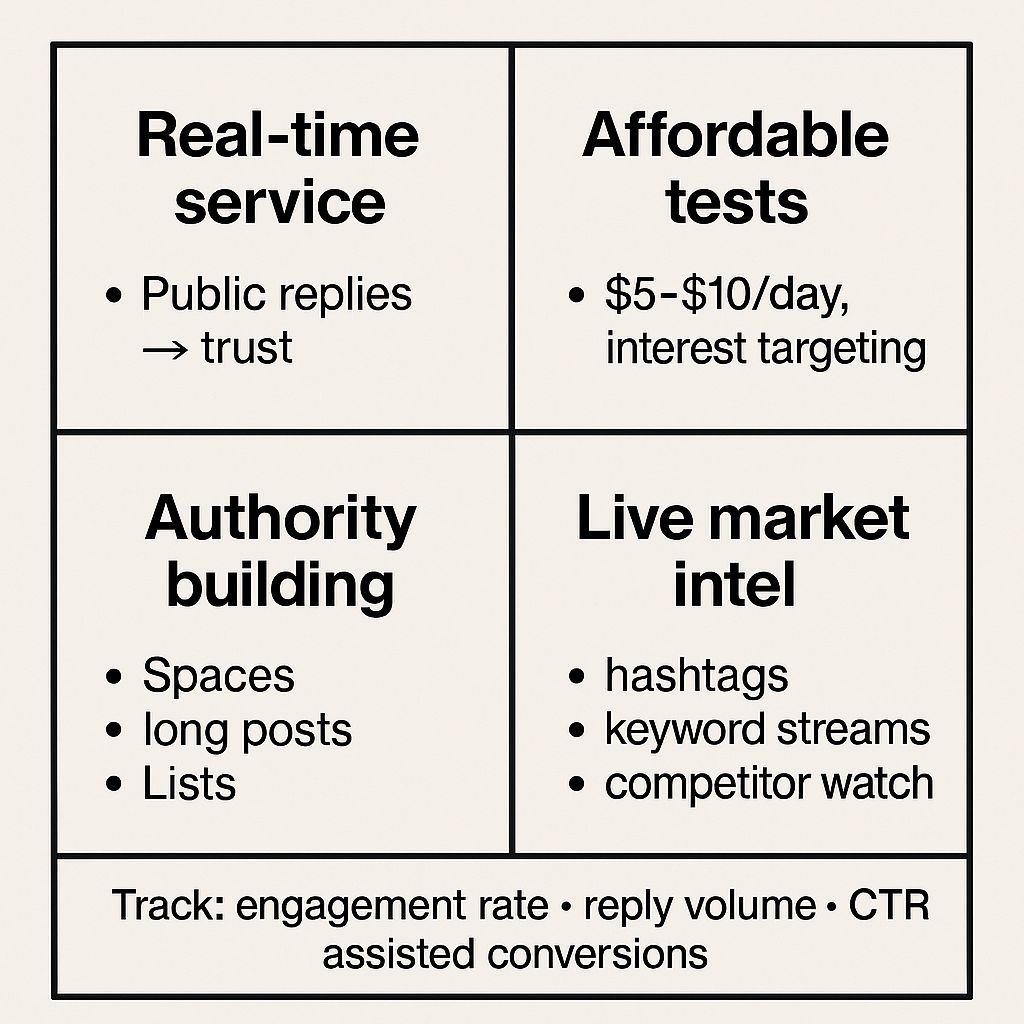
The platform’s targeting capabilities also allow for precise audience segmentation, helping businesses reach potential customers based on interests, behaviors, and demographic factors. This targeting efficiency means marketing dollars go further, an essential consideration for budget-conscious small businesses.
Direct Customer Service Opportunities
Twitter/X excels as a customer service channel, offering businesses a way to address concerns publicly and demonstrate responsiveness. This transparency can turn potential negative situations into positive demonstrations of your company’s values and commitment to customer satisfaction.
Direct Customer Service Opportunities
Twitter/X excels as a customer service channel, offering businesses a way to address concerns publicly and demonstrate responsiveness. This transparency can turn potential negative situations into positive demonstrations of your company’s values and commitment to customer satisfaction.
Unlike email or phone support, Twitter/X interactions are visible to everyone, giving businesses an opportunity to showcase their customer service excellence. According to data from Sprout Social, 77% of consumers are more likely to recommend a brand following a positive social media service interaction. This public-facing customer service approach creates a ripple effect that extends beyond the individual being helped.
The platform’s direct messaging feature also enables private conversations when needed, creating a seamless transition from public acknowledgment to personalized problem-solving. This flexibility makes Twitter/X a versatile customer service tool that can adapt to various situations and sensitivity levels.
Networking with Industry Leaders and Influencers
Despite changes to the platform, Twitter/X remains a digital town square where industry conversations happen in real-time. Small businesses can tap into these discussions to build relationships with thought leaders, potential partners, and influencers in their field. The platform’s conversational nature makes it easier to engage authentically with these connections compared to more formal networking channels.
Building these relationships can open doors to collaborative opportunities, speaking engagements, and valuable industry insights. For B2B companies especially, the professional networking potential on Twitter/X continues to offer substantial value that can translate into business growth. Many deals and partnerships still begin with a simple tweet or reply.
The platform’s list feature also allows businesses to organize and monitor key industry voices, creating a customized feed of relevant content and opportunities. This targeted listening helps small businesses stay informed about industry trends and identify potential collaboration partners efficiently.
Real-Time Market Research Capabilities
Twitter/X provides small businesses with access to real-time consumer opinions, trends, and competitor activities without the cost of formal market research. By monitoring relevant hashtags, keywords, and conversations, businesses can gather valuable insights about their target audience’s needs, preferences, and pain points. This continuous feedback loop helps inform product development, marketing messages, and overall business strategy. For more on how businesses are enhancing their customer interactions, check out this article on enhancing e-commerce experiences.
The platform also serves as an early warning system for emerging issues and opportunities in your industry. Many trends appear on Twitter/X before they reach mainstream awareness, giving attentive businesses a competitive advantage. This real-time intelligence allows small businesses to be proactive rather than reactive to market changes.
Twitter/X’s search functionality enables businesses to research specific topics or track mentions of their brand, products, or competitors. This competitive intelligence gathering would be far more expensive and time-consuming through traditional market research methods, making it a particularly valuable feature for resource-constrained small businesses.
5 Ways SMBs Are Finding Success on Twitter/X Today
While the platform has evolved, innovative small businesses are adapting their strategies to thrive on Twitter/X. These approaches focus on quality over quantity and strategic engagement rather than broadcast messaging. By implementing these proven tactics, small businesses can still achieve meaningful results despite changes to the platform.
1. Hyper-Focused Content Strategy
Successful small businesses on Twitter/X have abandoned the scatter-shot approach in favor of highly focused content strategies. Rather than trying to be everything to everyone, they identify 2-3 key themes that align with their expertise and audience interests. This focused approach helps establish clear authority in specific areas rather than diluting their voice across too many topics.
Content calendars have also evolved from rigid schedules to flexible frameworks that allow businesses to join relevant conversations as they emerge. The most effective SMBs maintain a library of evergreen content they can customize and deploy when related topics trend, balancing planned content with responsive engagement. This adaptability ensures their voice remains relevant in fast-moving conversations.
Many businesses are also embracing Twitter/X’s expanded character limit to share more substantive content directly on the platform instead of always linking out. These mini-blog posts often see higher engagement than traditional link-sharing, as users prefer consuming content without leaving the platform. The most successful posts provide complete value within the tweet itself while still creating pathways to deeper engagement with the business.

2. Community Building Through Conversations
Rather than using Twitter/X primarily as a broadcast channel, savvy small businesses are focusing on building engaged communities through genuine conversation. This approach prioritizes responding to comments, asking questions, and facilitating discussions among followers. The engagement-first strategy creates stronger connections with audience members and improves visibility under the current algorithm.
Regular Twitter/X chats have become a powerful community-building tool for businesses with limited marketing resources. By hosting weekly or monthly conversations around specific topics, businesses create recurring touchpoints with their audience while positioning themselves as community leaders. These structured conversations provide value to participants while increasing the hosting business’s visibility and authority.
Businesses seeing the greatest success are those that engage beyond their own content, joining relevant conversations across the platform. This outward-focused approach helps expand their network and demonstrates genuine interest in the broader community rather than just self-promotion. The most effective engagement strategies allocate at least 30% of Twitter/X time to commenting on others’ content rather than creating original posts. For businesses looking to improve their online presence, enhancing e-commerce experiences can also be a valuable strategy.
3. Strategic Hashtag Usage
While hashtag effectiveness has declined overall, strategic implementation still drives discovery and community building on Twitter/X. Successful small businesses have moved away from broad, popular hashtags in favor of more niche, targeted tags that connect them with highly relevant audiences. This targeted approach may reach fewer people overall but connects businesses with users more likely to be genuinely interested in their offerings.
Industry-specific hashtags continue to serve as valuable community gathering points where businesses can find and engage with potential customers and partners. Many B2B companies have found particular success with weekly industry hashtags that aggregate professional discussions. By consistently participating in these conversations, businesses establish themselves as active community members rather than outside advertisers.
Creating branded hashtags for specific campaigns or events has also proven effective for small businesses looking to organize conversations around their activities. The most successful branded hashtags are short, memorable, and clearly connected to the campaign’s purpose. These tags create a central hub for all related content while making it easy for customers to join the conversation. For businesses looking to enhance their e-commerce experiences, leveraging branded hashtags can be a powerful tool.
4. Leveraging Twitter Spaces for Authority Building
Twitter Spaces has emerged as a powerful tool for small businesses looking to establish authority in their industry without massive production costs. These live audio conversations allow business owners to showcase their expertise through Q&A sessions, panel discussions, and interviews with industry figures. The informal, conversational format creates an accessible entry point for businesses new to content creation.
Successful businesses approach Spaces strategically, scheduling regular sessions that address specific audience pain points or industry trends. This consistency builds an audience that returns for future conversations while creating a valuable content archive that continues working for the business over time. Many companies repurpose Spaces recordings into blog posts, newsletters, and other content formats, maximizing the return on their time investment.
5. Creative Customer Support Solutions
Forward-thinking small businesses have transformed Twitter/X from a reactive customer service channel into a proactive support hub. By creating dedicated support accounts or using distinctive hashtags for assistance requests, these companies make it easy for customers to get help while keeping main timelines focused on marketing and community building. This structured approach improves response times and customer satisfaction while maintaining brand messaging clarity. For more insights on how Twitter can benefit small businesses, check out this Twitter small business guide.
Some innovative businesses have implemented community-based support models where experienced customers help answer questions from newer users. By recognizing and incentivizing these customer advocates, businesses extend their support capacity without increasing staff costs. This community-powered approach also strengthens customer loyalty by creating meaningful roles for engaged users within the brand ecosystem.
The Twitter/X Red Flags Small Businesses Can’t Ignore
While Twitter/X continues to offer valuable opportunities, small businesses must also consider the platform’s growing challenges. Understanding these potential drawbacks is essential for making informed decisions about where to invest limited time and resources. For some businesses, these red flags may signal a need to reduce Twitter/X investment in favor of more stable channels.
The platform’s rapid changes have introduced uncertainty that particularly impacts small businesses without dedicated social media teams. What works today may not work tomorrow, requiring constant adaptation and monitoring that can strain limited resources. This volatility makes long-term strategy development more challenging compared to other marketing channels.
Platform Stability Concerns
Twitter/X has experienced increased technical issues in recent months, including outages, delayed notifications, and functionality glitches. For small businesses relying on the platform for customer communication or time-sensitive promotions, these reliability issues present significant operational risks that must be factored into platform strategy decisions.
Algorithm Unpredictability
The platform’s algorithm has undergone multiple changes with limited transparency, making it difficult for businesses to predict content performance or develop reliable growth strategies. What worked six months ago may be ineffective today, requiring constant testing and adaptation that many small businesses struggle to maintain alongside other operational demands.
The prioritization of paid subscribers in the algorithm has also created new challenges for organic reach, potentially requiring businesses to consider X Premium subscriptions as part of their basic operating costs. This shift represents an additional expense that must be evaluated against potential returns, especially for businesses operating with tight margins.
Brand Safety Issues
Content moderation changes have increased the likelihood of business content appearing alongside controversial or potentially problematic material. This adjacency risk creates brand safety concerns that small businesses—particularly those in sensitive industries or with conservative customer bases—must carefully consider when determining their platform strategy.
Declining Organic Reach
Data from multiple social media management platforms indicates a general decline in organic reach across Twitter/X, with non-subscriber content particularly affected. This reduction means businesses must create more content or invest in paid promotion to maintain previous visibility levels, effectively increasing the resource cost of platform participation.
The shrinking impact of organic content has prompted some businesses to shift their approach from high-volume posting to more selective, high-quality content supplemented with strategic paid promotion. This hybrid model may deliver better results but requires more sophisticated planning and potentially higher financial investment than previous Twitter strategies.
Twitter/X Alternatives Worth Exploring
As Twitter/X continues to evolve, many small businesses are diversifying their social media presence by exploring alternative platforms. This strategic approach reduces dependency on any single channel while potentially reaching new audience segments. The key is identifying platforms that align with your business goals and target audience demographics rather than simply chasing the newest trend.
When evaluating alternatives, consider where your specific audience spends their time online and which platforms best showcase your content type. Video-heavy businesses may find more success on TikTok or Instagram, while text-focused companies might explore LinkedIn or Threads. This content-audience alignment is more important than platform size or general popularity.
Most successful social media strategies now incorporate multiple complementary platforms rather than concentrating exclusively on one channel. This diversified approach creates a more resilient marketing ecosystem while allowing businesses to leverage each platform’s unique strengths.
Threads: The Growing Competitor
Meta’s Threads platform has emerged as a direct competitor to Twitter/X, offering a similar microblogging experience with the added advantage of Instagram integration. For businesses already maintaining an active Instagram presence, Threads provides a relatively seamless expansion opportunity with cross-posting capabilities and shared audience building. The platform’s rapid user growth—reaching over 100 million users within months of launch—indicates significant potential for businesses seeking Twitter/X alternatives.
LinkedIn: For B2B-Focused Businesses
LinkedIn has evolved far beyond its recruitment origins to become a powerful content platform, particularly for B2B companies. The platform’s professional focus creates a business-friendly environment with higher conversion rates for industry-related content. Many small businesses report that LinkedIn’s algorithm currently provides better organic reach than Twitter/X, especially for substantive, thought leadership content that addresses professional interests and challenges.
Specialized Platforms for Niche Industries
Industry-specific platforms often provide more qualified engagement opportunities than general social networks. For example, Behance serves creative professionals, Houzz targets home design businesses, and ResearchGate connects scientific and academic organizations. These specialized communities typically feature highly engaged users actively seeking industry content, creating efficient networking and marketing opportunities without the noise of general platforms.
Your Twitter/X Action Plan: Next Steps for Success
Whether you decide to increase, maintain, or reduce your Twitter/X investment, having a clear strategy is essential. Start by conducting an honest assessment of your current results, comparing engagement metrics and conversion data against your resource investment. This evaluation should include both quantitative metrics like click-through rates and qualitative factors such as community quality and customer service outcomes.
Based on your assessment, develop a 90-day action plan with specific goals, content approaches, and evaluation metrics. This short-term planning horizon acknowledges the platform’s rapidly changing nature while providing sufficient structure for consistent execution. Remember that success on Twitter/X in 2024 requires adaptation, authentic engagement, and strategic focus rather than simply posting frequently or accumulating followers.
Frequently Asked Questions
As Twitter transforms into X, small business owners have many questions about how to navigate the platform effectively. The answers below reflect current best practices based on platform data and successful business case studies. However, given the platform’s evolving nature, regularly reassessing your approach against current results remains essential for ongoing success.
These frequently asked questions address the most common concerns small businesses have about Twitter/X in 2024. From time investment to advertising effectiveness, we’ve gathered practical insights to help you make informed decisions about your social media strategy.
The landscape continues to change rapidly, so consider these answers as starting points rather than permanent truths. What works today may need adjustment tomorrow as the platform evolves and user behaviors shift in response.
“The businesses finding the most success on Twitter/X today are those that view it as a relationship-building tool rather than simply a promotional channel. They engage authentically, provide genuine value, and build communities around shared interests rather than just broadcasting messages about their products or services.”
How much time should a small business invest in Twitter/X weekly?
Most successful small businesses report spending between 3-5 hours weekly on Twitter/X management, though this varies based on industry and objectives. This time investment typically includes content creation (30%), community engagement (40%), analysis (20%), and strategy development (10%). Rather than daily hour-long sessions, many businesses find better results with shorter, more frequent engagement periods distributed throughout the week to maintain conversation momentum.
Quality consistently outperforms quantity on Twitter/X today. Businesses seeing the strongest results often post less frequently (3-5 times weekly) but invest more in creating valuable content and engaging with their community. This focused approach delivers better returns than high-volume posting strategies that were effective in earlier versions of the platform. For businesses looking to enhance their social media strategies, exploring options like enhancing e-commerce experiences can provide additional insights and tools.
Is Twitter/X advertising still effective for small businesses?
Twitter/X advertising remains effective for specific objectives, particularly awareness building and conversation generation, though conversion costs have increased for many industries. The most successful small business campaigns use highly targeted parameters rather than broad audience definitions, focusing on interest-based targeting that reaches users with demonstrated affinity for related topics. Many businesses report stronger results with promoted tweets that amplify their best organic content rather than creating separate advertising-only messages.
How has Twitter Blue/X Premium changed the platform for businesses?
Twitter Blue/X Premium has created a two-tiered visibility system that impacts organic reach for business accounts. Premium subscribers receive algorithmic preference, making their content more likely to appear in feeds and search results. For businesses, this change essentially introduces a new cost consideration – either purchase Premium to improve visibility or accept potentially reduced reach for non-Premium content. Additionally, businesses in the e-commerce sector might explore enhancing e-commerce experiences to leverage these platform changes effectively.
The verification changes associated with Premium have also altered the trust landscape on the platform, removing the previous distinction between notable accounts and general users. For businesses that previously held verified status based on notability, this change has eliminated a trust signal that helped distinguish official accounts from potential impersonators. Some businesses address this by highlighting their official status in their profile information and cross-linking from verified websites.
Can small businesses still grow organically on Twitter/X?
Organic growth remains possible on Twitter/X but typically occurs more slowly and requires more strategic effort than in previous years. Businesses achieving organic growth focus on creating distinctive, valuable content that serves specific audience needs rather than general promotional messaging. The most effective growth strategies emphasize community building through consistent engagement with followers and participation in relevant conversations across the platform.
Content that generates strong engagement continues to receive algorithmic boost, making audience interaction a critical factor in organic growth. Businesses successfully growing their presence often prioritize creating content specifically designed to encourage replies, quotes, and shares rather than passive consumption. This engagement-focused approach aligns with the platform’s current algorithmic preferences while building stronger audience relationships.
What metrics should SMBs track to measure Twitter/X effectiveness?
Beyond basic follower counts, small businesses should focus on engagement rate (interactions per impression), click-through rate for linked content, and conversation metrics like reply quality and frequency. These interaction-based measurements provide more meaningful insights into audience relationships than simple visibility metrics. For businesses using the platform for customer service, response time and resolution rate have proven particularly valuable in measuring effectiveness.
Conversion tracking remains essential for evaluating Twitter/X’s business impact, whether through platform tools or UTM parameters that identify traffic sources in analytics. The most sophisticated small businesses implement multi-touch attribution models that recognize Twitter/X’s role in the overall customer journey rather than expecting immediate direct conversions from every interaction. This nuanced measurement approach better captures the platform’s value in relationship building and awareness generation. For more insights, check out this guide on Twitter for small businesses.
Ultimately, the metrics that matter most depend on your specific business objectives for the platform. Awareness-focused strategies should prioritize impression and reach measurements, while conversion-oriented approaches require tracking the complete funnel from engagement to final action. Regular analysis of these metrics against your resource investment provides the clarity needed to make informed decisions about continuing, adjusting, or reducing your Twitter/X presence.
For businesses looking to maximize their social media impact while managing limited resources, EveryWhere Social offers tailored strategies for navigating today’s complex social landscape, including personalized recommendations for Twitter/X implementation based on your specific business needs and audience characteristics.
Twitter/X has been a platform of choice for small and medium businesses (SMBs) aiming to connect with their audience in real-time. However, as the platform evolves, businesses are questioning its effectiveness in driving engagement and sales. For those in the e-commerce sector, understanding how to enhance their online presence is crucial. Discover more about enhancing e-commerce experiences to ensure your business remains competitive in the digital marketplace.
Turn X into a measurable growth channel: unify DMs, email/SMS, scheduling, and attribution in one place so you can post at peak times, reply faster, and convert conversations into customers. Start free and keep your voice authentic while you automate the busywork at em2bos.com.

