

Article-At-A-Glance
- YouTube Shorts offers stronger SEO benefits and seamless integration with existing YouTube channels, making it ideal for businesses with established video content
- TikTok’s algorithm provides faster virality potential and reaches younger demographics, perfect for brands targeting Gen Z consumers
- Small businesses should assess their audience alignment, content capabilities, and growth goals before choosing which platform to prioritize
- A multi-platform approach might be optimal for many SMBs, but starting with one platform and mastering it before expanding is the recommended strategy
- Both platforms require consistent posting schedules and authentic content that aligns with their unique audience expectations
In the rapidly evolving world of short-form video, small businesses face a crucial decision: YouTube Shorts or TikTok? This choice isn’t just about jumping on the latest trend—it’s about strategic allocation of your limited marketing resources. According to Network Solutions, both platforms offer unique advantages for businesses looking to leverage video content for growth, but understanding their differences is essential for maximizing your return on investment.
Short-form video has revolutionized digital marketing, creating opportunities for businesses of all sizes to connect with audiences in ways that were previously accessible only to larger companies with substantial production budgets. Now, with just a smartphone and some creativity, SMBs can create compelling content that drives engagement and builds brand awareness.
As a small business owner or marketer, your time and resources are precious, and diving into short-form video without a clear strategy can lead to wasted efforts. Let’s explore how these platforms compare and which might be the better fit for your specific business needs.
The Short-Form Video Dilemma: YouTube Shorts vs. TikTok
The battle between YouTube Shorts and TikTok represents more than just a competition between platforms—it highlights two distinct approaches to short-form video content. YouTube Shorts, launched in 2020, leverages Google’s massive ecosystem and YouTube’s established audience of over 2 billion monthly users. TikTok, meanwhile, pioneered the modern short-form video format and has built an algorithm specifically designed to make content go viral quickly.
Both platforms cater to audiences seeking quick, engaging video content, but they do so through different mechanisms and with different underlying business models. For small businesses, understanding these differences is crucial to developing an effective content strategy that aligns with your marketing goals and available resources.
- YouTube Shorts offers integration with your existing YouTube channel, potentially extending the reach of your longer-form content
- TikTok provides unparalleled virality potential, with the possibility of reaching millions of viewers regardless of follower count
- YouTube Shorts benefits from Google’s search ecosystem, improving discoverability over time
- TikTok excels at driving immediate engagement and trend participation
- Both platforms offer advertising options, but with different targeting capabilities and pricing structures
The decision between these platforms isn’t necessarily an either/or proposition. Many successful businesses maintain a presence on both. However, for SMBs with limited resources, prioritizing one platform initially may lead to better results than splitting attention between multiple channels.
Why SMBs Need to Choose Wisely
The stakes are high when it comes to social media marketing decisions. With limited time, budget, and creative resources, small businesses can’t afford to spread themselves too thin across multiple platforms. Choosing the wrong platform for your business type and audience can result in months of wasted effort and missed opportunities to connect with potential customers.
The Real Cost of Platform Indecision
Many small businesses make the mistake of trying to be everywhere at once, creating accounts on every available social platform without a strategic approach. This “spray and pray” method typically results in inconsistent posting, poor engagement, and ultimately, abandonment of the platforms altogether. The real cost isn’t just the time invested in creating content—it’s the opportunity cost of not focusing your efforts where they could generate the most impact.
When you choose a platform that aligns with your business goals and audience, you can develop expertise specific to that platform’s best practices, algorithms, and content styles. This focused approach allows you to build momentum and establish a meaningful presence that drives real business results. For example, enhancing ecommerce experiences can be a strategic move to connect with your audience effectively.
How the Wrong Platform Drains Your Marketing Resources
Each social platform has its own content requirements, audience expectations, and technical specifications. Creating content for TikTok requires a different approach than developing YouTube Shorts. If you choose a platform that doesn’t align with your capabilities or resources, you’ll likely struggle to produce content consistently or effectively, which can be as challenging as navigating financial platforms that aren’t intuitive.
For example, if your business doesn’t have team members comfortable appearing on camera or lacks the capacity to keep up with rapidly changing trends, TikTok might present significant challenges despite its potential reach. Similarly, if you don’t have the ability to create content that ties into your broader video marketing strategy, YouTube Shorts might not deliver the expected benefits.
What Happens When Competitors Outperform You on Social
In today’s digital landscape, social media presence can significantly impact consumer perception of your brand. When competitors establish themselves as leaders on platforms like TikTok or YouTube Shorts, they gain advantages beyond just content engagement. They build brand recognition, establish authority in your industry, and create relationships with potential customers before you have the chance to make an impression.
Content Style Requirements for Success
TikTok rewards authentic, trend-driven content that feels native to the platform. Videos that appear overly produced or “corporate” typically perform poorly compared to content that embraces TikTok’s informal, creative approach. Success on the platform often requires staying on top of trending sounds, challenges, and formats—which can change weekly or even daily. This constant evolution demands agility and cultural awareness from business content creators.
5 Types of TikTok Ads SMBs Should Consider
TikTok offers several advertising formats that can help small businesses extend their reach beyond organic content. In-Feed ads appear natively in users’ For You Page, blending with organic content while including call-to-action buttons. TopView ads secure the prime first-view position when users open the app. Branded Hashtag Challenges encourage user-generated content around your brand. Branded Effects let users interact with custom AR filters and stickers. Finally, Spark Ads allow you to boost your existing organic content, maintaining its authenticity while reaching a wider audience.
Brand Examples That Nailed Their TikTok Strategy
Several small businesses have found remarkable success on TikTok by embracing the platform’s unique culture. Duolingo transformed their brand mascot into a chaotic character that participates in trends, growing their following to millions despite being an education app. Washington Post humanized journalism by showing behind-the-scenes content with their video producer creating timely, humorous takes on news stories. Fenty Beauty leveraged user-generated content by resharing customer videos and demonstrations, building community while showcasing their products in real-world applications.
Small businesses like Scrub Daddy have also thrived by personifying their products and joining trends, while local bakery Jenna Rae Cakes used behind-the-scenes content to grow their following from local to international. The common thread among successful brands is their willingness to be playful, authentic, and responsive to platform trends rather than pushing traditional marketing messages.
What’s particularly noteworthy is that these brands adapted their voice and style specifically for TikTok rather than repurposing content designed for other platforms. This platform-specific approach, while requiring additional creative effort, yields significantly better engagement and reach results.
Platform Comparison: Direct Face-Off
When choosing between YouTube Shorts and TikTok, small businesses need to consider several key factors beyond just audience demographics. Each platform offers distinct advantages and challenges in terms of content creation requirements, time to results, cost considerations, and analytics capabilities.
Understanding these differences can help you make a more informed decision about which platform aligns better with your specific business goals, resources, and marketing strategy. Let’s examine how these platforms compare across several crucial dimensions that impact SMB success.
Content Creation Difficulty Level
YouTube Shorts typically demands higher production quality than TikTok, with viewers expecting clearer visuals and audio. The platform’s ecosystem rewards informational content, tutorials, and demonstrations that provide value, making it ideal for businesses that can showcase expertise or products in educational ways. YouTube also provides more robust editing tools within its app, including the ability to splice clips from longer videos, add text overlays, and apply filters.
TikTok, by contrast, places greater emphasis on creativity, trend participation, and authenticity over production quality. The platform’s native editing tools are more extensive than YouTube’s, offering effects, transitions, and sound libraries specifically designed for creating engaging short-form content. However, staying relevant on TikTok requires constant awareness of evolving trends and sounds, which can be more time-intensive for businesses trying to maintain cultural relevancy.
Time to Results: How Fast Can You Gain Traction?
TikTok’s algorithm is designed to push content to potentially interested viewers regardless of follower count, making it possible for businesses to go viral and gain significant traction with their very first post. In contrast, YouTube Shorts typically builds momentum more gradually, with content discovery increasing over time as videos accumulate watch time, engagement, and algorithm recognition. For businesses seeking immediate impact and rapid growth, TikTok often delivers faster initial results, while YouTube Shorts provides more sustainable long-term growth and discoverability through search.
Cost Analysis: Platform Investment Requirements
Both platforms allow businesses to create and share content for free, but the associated production costs and time investments differ. YouTube Shorts generally requires more upfront planning and potentially higher production quality, which may translate to higher costs for equipment or editing software. TikTok content can be created more spontaneously with minimal equipment, though staying on top of trends may require more consistent time investment. For advertising, TikTok’s minimum campaign spend starts around $50 with a daily minimum of $20, while YouTube offers more flexible options through the Google Ads platform, including per-view pricing that can work with smaller budgets.
Analytics Capabilities for Business Growth
YouTube Studio provides comprehensive analytics including detailed audience demographics, traffic sources, watch time, and retention rates—valuable data for refining your content strategy and understanding viewer behavior. TikTok’s analytics for Business accounts offer insights into follower growth, content performance, and audience demographics, though with somewhat less depth than YouTube’s offering. Both platforms allow you to see which content performs best, but YouTube’s integration with Google Analytics provides additional tracking capabilities, particularly valuable for businesses focused on driving website traffic and measuring conversions.
Match Your Business Type to the Right Platform
Not all businesses will benefit equally from the same platform. Your industry, product type, target audience, and marketing objectives should influence your platform choice. Some business models naturally align better with the content style and audience expectations of one platform over the other. For more insights, check out this article on YouTube Shorts vs. TikTok.
Understanding these natural alignments can help you focus your efforts where they’re likely to generate the best return on investment. Let’s look at how different business types might approach the YouTube Shorts vs. TikTok decision.
Best Platform for Service-Based Businesses
Service-based businesses often find YouTube Shorts more effective for demonstrating expertise and building trust through educational content. Professional services like consultants, financial advisors, or business coaches can leverage Shorts to preview longer, more detailed content housed on their main YouTube channel. The platform’s search functionality also helps potential clients discover service providers when researching solutions to their problems. For service businesses targeting younger demographics or offering more visually engaging services (fitness trainers, makeup artists, etc.), TikTok can showcase personalities and create client connections through more casual, relatable content.
Retail and E-commerce: Where Your Products Shine
Both platforms offer unique advantages for retail businesses. TikTok excels at showcasing products in authentic, creative ways that feel like recommendations rather than advertisements. The platform’s #TikTokMadeMeBuyIt phenomenon demonstrates its power to drive impulse purchases and create product virality. YouTube Shorts, meanwhile, allows for more detailed product demonstrations, comparisons, and “how-to” content that can showcase product benefits more thoroughly.
Businesses with visually appealing products that can be demonstrated quickly (fashion, beauty, home goods) often see stronger results on TikTok, while companies with products that require more explanation or demonstration might benefit from enhancing eCommerce experiences through YouTube Shorts’ slightly longer format and connection to more detailed content.
B2B Companies: Yes, Short-Form Works for You Too
Contrary to popular belief, B2B companies can effectively leverage short-form video, particularly on YouTube Shorts. The platform’s professional audience and connection to longer educational content makes it ideal for sharing industry insights, quick tips, or previews of more detailed case studies. B2B brands can use Shorts to humanize their company, showcase company culture, provide quick industry updates, or offer solutions to common pain points. While TikTok might seem less obvious for B2B marketing, forward-thinking companies are finding success by translating complex business concepts into accessible, entertaining content that connects with decision-makers on a more personal level.
How to Make Your Decision: 3-Step Framework
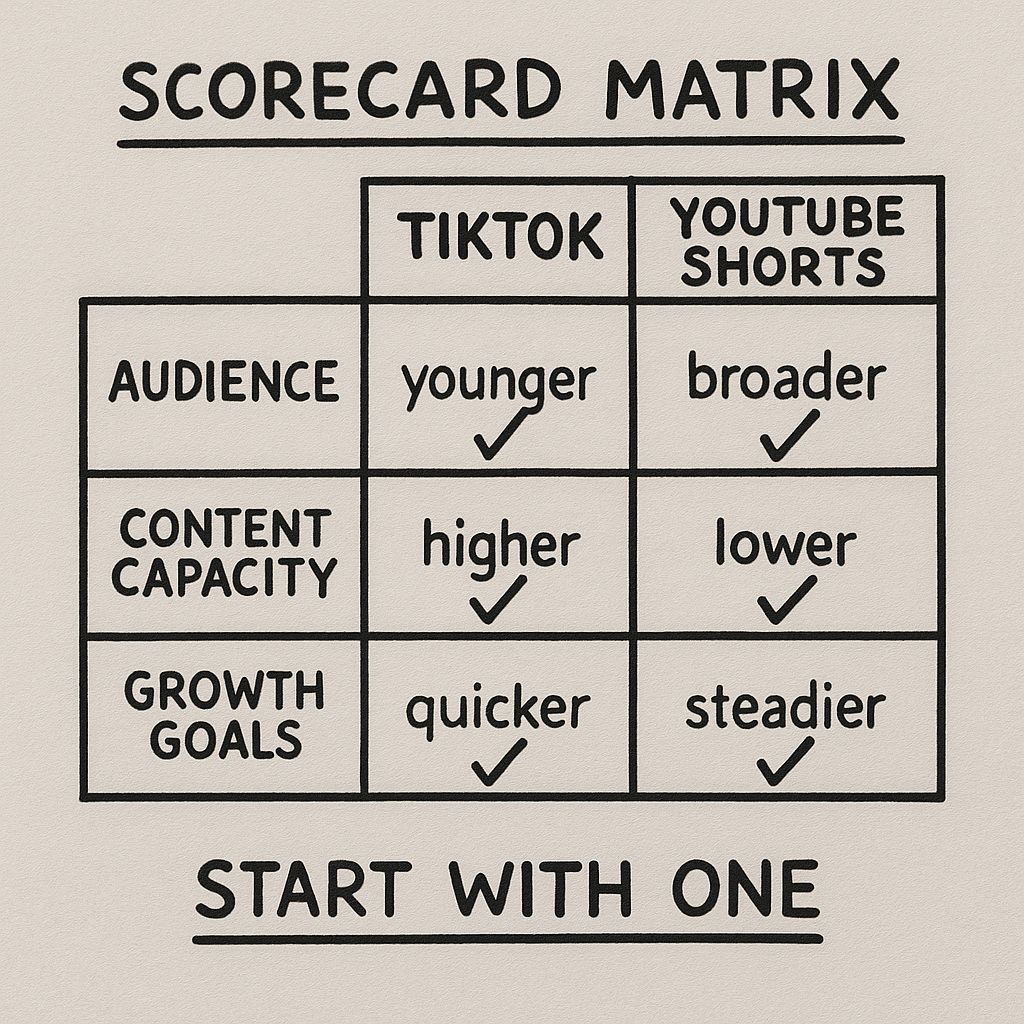
Rather than making a platform decision based solely on general trends or what competitors are doing, small businesses should follow a structured approach that accounts for their specific circumstances. This three-step framework helps you evaluate which platform aligns best with your business’s unique position, resources, and goals. By systematically assessing these key areas, you’ll develop a clearer understanding of where your efforts are most likely to yield positive results.
1. Audience Alignment Assessment
Begin by comparing your target customer demographics with the user bases of both platforms. YouTube has broader age distribution with significant usage across generations, while TikTok skews younger with particularly strong engagement among Gen Z and younger Millennials. Beyond age, consider geographic concentration, interest categories, and platform behavior patterns. YouTube users often come with search intent and research motivation, while TikTok users typically seek entertainment and discovery.
The key question isn’t just where your audience exists, but where they’re most receptive to your type of business and content. Some audiences maintain different expectations across platforms—they might welcome educational content on YouTube while preferring entertainment-focused content on TikTok. This assessment should include reviewing any existing social media analytics you have to understand where your audience already engages most effectively with your brand. For more insights, check out this comparison of TikTok and YouTube Shorts.
2. Content Production Capabilities Audit
Take a realistic inventory of your content creation resources, including available time, technical skills, comfort on camera, and production equipment. YouTube Shorts generally demands higher production quality and more polished presentations, while TikTok audiences often respond better to authentic, less-produced content. Consider whether your team can consistently create content that matches each platform’s expectations and whether your business lends itself to the trending, entertainment-focused approach of TikTok or the more informational style that performs well on YouTube Shorts.
Also evaluate your content pipeline and how it connects to your broader marketing strategy. YouTube Shorts can serve as entry points to longer videos or playlists, making it ideal for businesses with existing video content or those planning to develop a comprehensive YouTube presence. TikTok, meanwhile, works best as a standalone channel with content specifically created for the platform’s unique style and audience expectations.
3. Growth Goals Evaluation
Define what success looks like for your business on social media. If you’re primarily focused on brand awareness and reaching new audiences quickly, TikTok’s algorithm may offer advantages with its potential for rapid virality. If your goals include search discoverability, driving website traffic, or building a sustainable content library that delivers value over time, YouTube Shorts might better align with your objectives. Consider whether you’re seeking immediate impact or long-term growth, and choose the platform that best supports your specific business timeline and objectives. For businesses looking to enhance their online presence, enhancing eCommerce experiences can be a key factor in driving traffic and engagement.
Start Small and Scale: The SMB Approach
For most small businesses, the wisest approach is to start with a single platform and master it before expanding to others. This focused strategy allows you to develop platform-specific expertise, build an audience, and establish consistent production processes without overwhelming your resources. Success on one platform will teach you valuable lessons about content creation, audience engagement, and video marketing that will transfer—with appropriate adaptations—to other platforms when you’re ready to expand.
Beginning with a single platform also allows you to test and refine your video content strategy with a specific audience before investing additional resources in multi-platform distribution. This approach minimizes risk while maximizing the potential impact of your initial efforts. For many SMBs, it’s better to have a strong, engaging presence on one platform than a weak, inconsistent presence on multiple platforms.
Once you’ve established a successful routine on your primary platform, you can evaluate expanding to the second platform by repurposing and adapting content. This expansion should be strategic and planned, rather than reactive to competitors or industry trends that may not align with your specific business needs. For more insights, consider reading about YouTube Shorts vs. TikTok to help determine the best platform for your content strategy.
- Choose one platform based on your audience alignment, content capabilities, and growth goals
- Develop a consistent posting schedule that’s sustainable for your resources
- Create platform-specific content following best practices for your chosen channel
- Measure results against your defined goals and refine your approach
- Consider expansion only after establishing consistent success on your primary platform
Your First 30 Days on Either Platform
Your initial month on either platform should focus on learning and establishing foundations rather than expecting immediate results. Create a content calendar with 8-12 videos for the month, ensuring you can maintain a consistent posting schedule of 2-3 times per week. For YouTube Shorts, focus on creating content that showcases your expertise, answers common customer questions, or demonstrates products in action. For TikTok, research trending sounds and formats in your industry, and develop content that puts your business’s unique spin on these trends while maintaining authenticity to your brand voice.
When to Expand to the Second Platform
Consider expanding to a second platform when you’ve met three key criteria: you’ve established a consistent content creation process that doesn’t strain your resources; you’re seeing measurable results that align with your business goals; and you have capacity to develop platform-specific content rather than simply cross-posting the same videos. Typically, this stability takes at least three to six months of consistent effort on your primary platform.
When expanding, avoid the common mistake of simply reposting identical content across platforms. While you can repurpose core ideas and footage, each platform has different aspect ratios, caption requirements, hashtag strategies, and audience expectations. Invest time in understanding these differences and adapting your content accordingly to maximize performance on each platform.
Tools That Make Managing Both Platforms Easier
Several tools can streamline a multi-platform short-form video strategy. Content planning tools like Airtable or Trello help organize your content calendar across platforms. Video editing apps like CapCut, InShot, or Adobe Premiere Rush allow you to export in different aspect ratios and formats for each platform. Analytics tools such as Sprout Social or Hootsuite provide unified dashboards to compare performance across platforms. For small businesses with limited resources, these tools can significantly reduce the time investment required to maintain a presence on both YouTube Shorts and TikTok while ensuring content is properly optimized for each platform’s unique requirements.
The Smart Multi-Platform Strategy
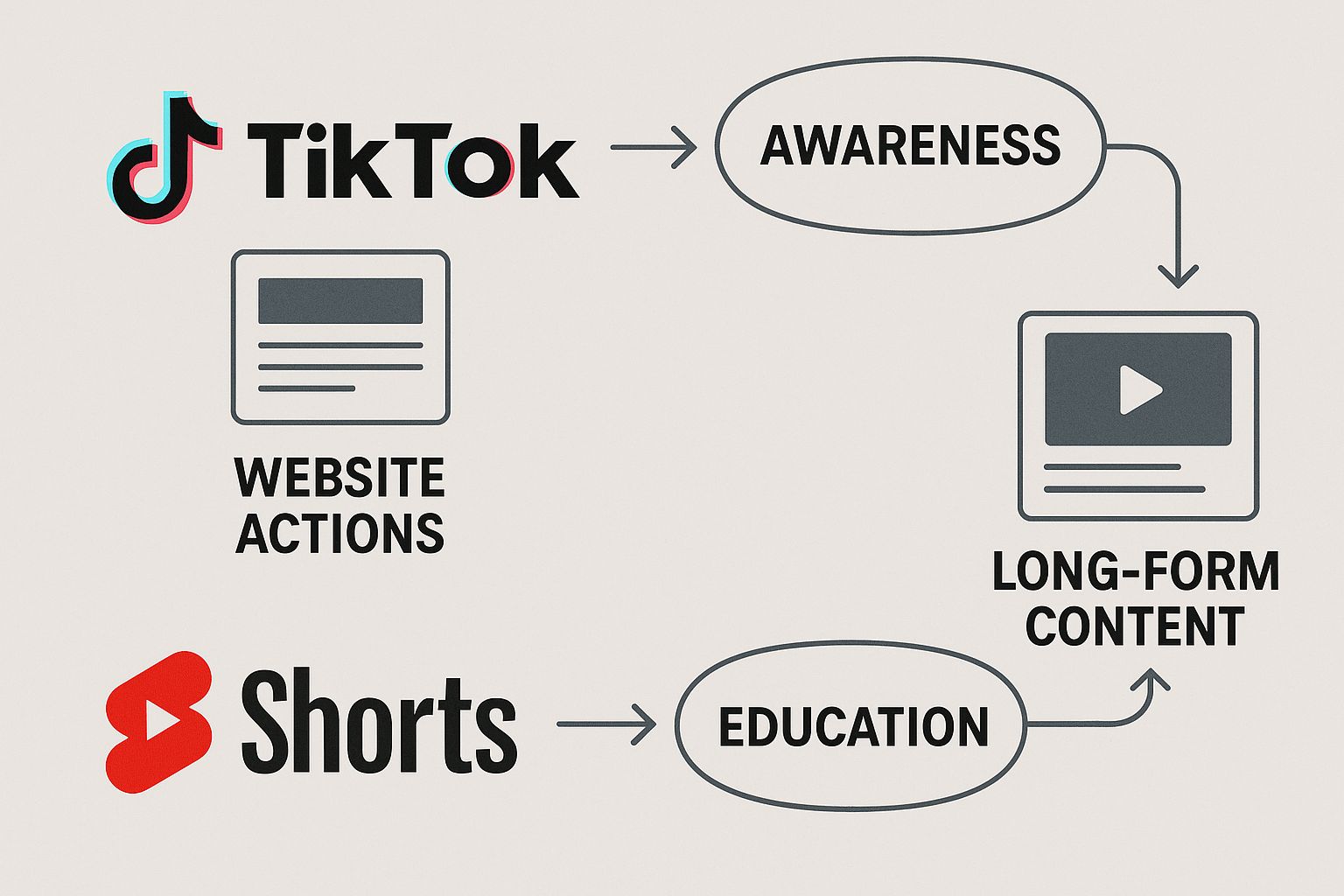
For businesses ready to leverage both platforms, the most effective approach is not simply duplicating content but creating an ecosystem where each platform serves a distinct yet complementary purpose. TikTok can excel at creating initial awareness and personality-driven engagement, while YouTube Shorts can connect viewers to more detailed content and drive longer-term engagement with your brand. This strategic approach might involve creating platform-exclusive content while maintaining consistent branding and messaging that allows audiences to recognize your business across platforms. When implemented thoughtfully, a multi-platform strategy can create multiple entry points to your brand while leveraging the unique strengths of each platform to move customers through different stages of their journey with your business.
Frequently Asked Questions
As you develop your short-form video strategy, you’ll likely encounter questions about implementation, resource allocation, and best practices. Here are answers to some of the most common questions small businesses ask when navigating the YouTube Shorts vs. TikTok decision. These insights can help you avoid common pitfalls and develop a more effective approach to short-form video marketing.
Remember that while general best practices are valuable, the most effective strategy for your business will depend on your specific goals, audience, and resources. Regular testing and refinement based on your own data will ultimately yield the best results for your unique business context.
Can I repurpose the same content across YouTube Shorts and TikTok?
Yes, you can repurpose core content ideas across platforms, but simply cross-posting identical videos often results in suboptimal performance. Each platform has different aspect ratios (TikTok prefers 9:16 while YouTube Shorts supports both 9:16 and 1:1), caption styles, music libraries, and audience expectations. The most successful multi-platform strategies involve adapting content to each platform’s specific format and culture while maintaining consistent messaging and branding.
Consider shooting your content with both platforms in mind, then editing platform-specific versions that leverage each channel’s unique features. For example, you might create a more tutorial-focused version for YouTube Shorts with additional text overlays explaining key points, while developing a more trend-focused, entertaining version of the same core concept for TikTok. This approach maximizes your content investment while respecting the distinct environment of each platform.
How much budget should an SMB allocate to short-form video marketing?
For small businesses just starting with short-form video, you can begin with minimal financial investment—many successful businesses create content using just smartphones and free editing apps. The primary investment will be time: expect to spend 3-5 hours weekly for content planning, recording, editing, and community management when starting on a single platform. As your strategy develops, you might consider allocating budget for basic equipment improvements (like a smartphone tripod, simple lighting, or an external microphone), paid promotion of your best-performing content, or tools that streamline your workflow. Many businesses find that starting with a time investment and gradually adding financial resources as they see results provides the most sustainable approach to building a short-form video presence. Learn more about enhancing ecommerce experiences as you expand your digital marketing efforts.
Which platform offers better analytics for tracking ROI?
YouTube provides more comprehensive analytics through YouTube Studio, offering detailed data on viewer demographics, traffic sources, watch time, and retention rates. The platform’s integration with Google Analytics also allows for more robust tracking of how video content drives website visits and conversions. YouTube’s search-based nature makes it easier to attribute business results directly to video content, especially for businesses focused on driving specific actions beyond views and engagement.
TikTok’s analytics for Business accounts offer insights into follower growth, video performance, and audience demographics, though with somewhat less depth than YouTube. TikTok excels at showing content reach and engagement metrics, but may present more challenges for directly attributing business outcomes beyond the platform itself. For tracking complete ROI, many businesses supplement TikTok’s native analytics with trackable links and platform-specific promotion codes to measure conversions resulting from TikTok content.
Do I need professional video equipment to succeed on either platform?
No, professional equipment is not required for success on either platform. Both YouTube Shorts and TikTok were designed with smartphone creators in mind, and many of the most successful accounts use nothing more than a smartphone and natural lighting. Content relevance, creativity, and consistency generally matter far more than production quality. That said, ensuring good lighting and clear audio will improve viewer retention regardless of which platform you choose. Simple, affordable additions like a smartphone tripod ($15-30), a ring light ($30-50), or a basic lavalier microphone ($20-40) can significantly improve your video quality without requiring a major investment or technical expertise.
How often should SMBs post content on these platforms for best results?
Consistency matters more than frequency, especially for small businesses with limited resources. For most SMBs, posting 2-3 times per week on your primary platform is sufficient to build momentum while remaining sustainable. TikTok’s algorithm may reward more frequent posting (some successful accounts post daily), while YouTube Shorts can generate results with less frequent but highly relevant content. Whatever schedule you choose, maintaining it consistently is crucial—algorithms on both platforms reward regular activity, and audiences come to expect content at predictable intervals.
The ideal frequency also depends on your content quality and audience engagement. It’s better to post one excellent video weekly than five mediocre videos that don’t resonate with viewers. Start with a schedule you can confidently maintain, measure the results, and adjust based on performance data and resource availability. Remember that building an audience takes time—commit to at least three months of consistent posting before evaluating whether your chosen frequency is effective.
For small businesses navigating the complex world of short-form video, the choice between platforms ultimately comes down to understanding your unique business needs, audience preferences, and content capabilities. Whether you choose YouTube Shorts, TikTok, or eventually both, the key to success lies in authentic content that provides value to viewers while showcasing your brand’s unique personality and expertise.
Network Solutions helps small businesses build effective online marketing strategies across all digital channels, including emerging platforms like YouTube Shorts and TikTok. Visit our resource center for more guides on leveraging video content to grow your business.
You’ve mastered the strategy, now it’s time to build the system that powers it.
With Catalyst’s Business Growth Engine, you can plan, publish, and track your short-form video results while transforming every view into a customer relationship.
Explore your all-in-one growth package today at mysbge.com.

