
Key Takeaways
- LinkedIn generates 80% of B2B social media leads, with 82% of B2B marketers reporting their best ROI on this platform compared to other social networks.
- Small businesses should focus on optimizing both company pages and personal leadership profiles to create a complete LinkedIn presence that attracts qualified prospects.
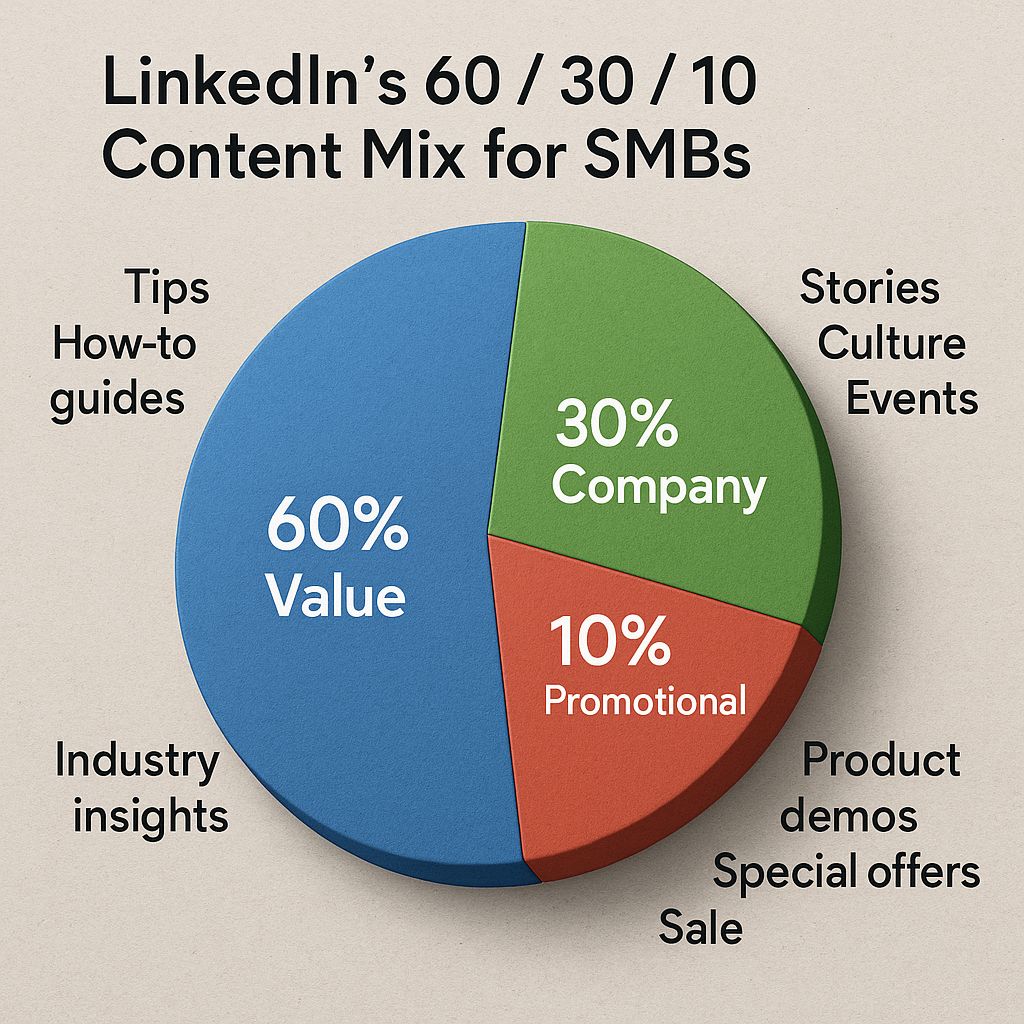
- Effective LinkedIn marketing requires a strategic balance of thought leadership content (60%), industry insights (30%), and promotional material (10%) for maximum engagement.
- LinkedIn’s unparalleled targeting capabilities allow SMBs to reach decision-makers by specific industry, company size, and job roles—even with modest advertising budgets.
- Consistent posting (3-5 times weekly) with a mix of content formats drives sustainable growth, with companies seeing a 2X increase in engagement when following a content calendar.
When it comes to B2B marketing, LinkedIn isn’t just another social platform—it’s the backbone of digital lead generation for savvy small businesses. According to Sprout Social, 82% of B2B marketers achieve their highest return on LinkedIn compared to other social networks, with the platform driving 80% of all B2B social media leads. For SMBs looking to compete with larger organizations, HubSpot’s LinkedIn marketing platform offers the targeting precision and professional environment that other platforms simply can’t match.
Most small businesses approach LinkedIn with the wrong mindset—treating it like Facebook or Twitter and wondering why their efforts fall flat. The professional network requires a fundamentally different strategy that aligns with its business-focused audience and unique algorithm. Rather than broadcasting generic updates, successful SMBs leverage LinkedIn’s ecosystem to showcase industry expertise, cultivate meaningful relationships, and position themselves as trusted authorities in their respective niches.
LinkedIn’s Untapped Potential for Small Businesses
“The targeting on LinkedIn is unparalleled in the realm of digital advertising. Small businesses can zero in on the exact industry, company size, and job role [of the people] that they know typically would buy their product or service.” – Jeremy Durant, Business Principal at Bop Design
LinkedIn has evolved far beyond its origins as a digital resume platform. Today, it serves as a comprehensive business ecosystem where SMBs can generate quality leads, establish thought leadership, recruit top talent, and build valuable partnerships—all within a professional context that other platforms can’t replicate. With over 900 million professionals worldwide, including key decision-makers across virtually every industry, LinkedIn offers SMBs unprecedented access to potential clients and collaborators who are already in a business mindset.
What makes LinkedIn particularly valuable for small businesses is its ability to level the playing field. Unlike traditional marketing channels, where bigger budgets typically win, LinkedIn’s algorithm rewards expertise and authenticity over pure advertising spend. A thoughtfully crafted content strategy and consistent engagement can help a five-person company establish credibility alongside industry giants, creating opportunities that would be nearly impossible to access through other channels.
For SMBs with limited marketing resources, LinkedIn offers a remarkably efficient return on time investment. The platform’s business-focused nature means your marketing efforts reach professionals who are actively seeking industry insights, solutions to business challenges, and potential partnerships—not just scrolling for entertainment. This concentrated audience of potential clients and collaborators makes every post, comment, and connection potentially more valuable than equivalent actions on broader social networks.
Why Most SMBs Get LinkedIn Marketing Wrong
The most common LinkedIn marketing mistake small businesses make is applying the same tactics they use on other social platforms. LinkedIn users aren’t looking for viral memes or casual updates—they’re seeking substantive insights, professional opportunities, and meaningful business connections. When SMBs treat LinkedIn as just another broadcast channel for promotional content, they miss the platform’s real value: building relationships through knowledge sharing and targeted engagement. Success requires understanding that LinkedIn is fundamentally a professional networking tool first and a marketing platform second.
The Real ROI: What LinkedIn Can Do That Other Platforms Can’t
LinkedIn’s unique positioning delivers three key advantages that other platforms simply can’t match. First, its targeting precision allows businesses to reach decision-makers by specific industry, company size, job function, and seniority—creating highly qualified lead pools. Second, its professional context means your audience is already in a business mindset, making them more receptive to industry insights and B2B offerings than on platforms designed primarily for entertainment. Third, LinkedIn’s built-in credibility transfer means that valuable content is more likely to be taken seriously, creating trust that’s difficult to establish on other social networks. These advantages explain why LinkedIn consistently delivers higher-quality leads for B2B companies compared to other digital channels.
The 80/20 Rule of LinkedIn Marketing Success
Successful LinkedIn marketing follows a modified version of the Pareto principle: 80% of your results will come from 20% of your activities. For most SMBs, this means focusing intensely on the highest-impact activities: optimizing your company page and leadership profiles, publishing thoughtful content that demonstrates expertise, engaging strategically with potential clients’ content, and utilizing targeted advertising with laser focus. The platforms’ most successful small business users don’t try to do everything—they identify which LinkedIn activities drive real business results for their specific industry and double down on those areas, rather than spreading themselves thin across every possible feature.
Building Your LinkedIn Foundation That Converts
Before jumping into content creation or advertising, establishing a solid foundation is essential. This starts with fully optimizing both your company page and the personal profiles of key team members—particularly leadership. This dual approach creates a cohesive professional presence that validates your expertise when prospects research your business. Remember that on LinkedIn, both your organization and its people are part of your brand identity, and prospects will likely examine both before deciding to engage with your business.
Company Page Optimization That Attracts Qualified Leads
Your LinkedIn company page serves as your business’s professional storefront and should be optimized to attract your ideal clients. Start with a compelling, keyword-rich “About” section that clearly communicates your unique value proposition and includes relevant industry terms to improve searchability. Visual elements matter significantly: use a high-resolution logo, an engaging banner image that showcases your brand personality, and consider creating a custom “Life” tab with team photos and culture highlights to humanize your business. Critically, include a clear call-to-action button directing visitors to a high-converting landing page specifically designed for LinkedIn traffic.
Beyond the basics, leverage the often-overlooked “Specialties” section to list relevant keywords and services that potential clients might search for. This section significantly impacts LinkedIn’s internal search algorithm and helps qualified prospects find your business. Additionally, ensure your page lists your complete service offerings, has recent recommendations, and features showcase pages for distinct business units or product lines if applicable. Remember to link your company page to employee profiles—this creates a network effect that amplifies your reach as team members engage with content. For more insights, consider enhancing your e-Commerce experiences to attract more prospects.
Regular posting is essential, but quality trumps quantity. Aim for 3-5 high-value updates weekly rather than daily low-impact content. Successful SMBs on LinkedIn focus on sharing insights that address their target audience’s specific pain points and challenges, positioning themselves as solution providers rather than simply product sellers. This approach generates significantly higher engagement rates and attracts prospects who already recognize the value your business can provide.
Personal Profile Transformation for Business Leaders
While company pages establish institutional credibility, the personal profiles of leadership team members often drive more meaningful engagement. As the face of your small business, your personal profile should reflect both your individual expertise and your company’s mission. Replace generic headlines like “Founder at Company X” with benefit-driven statements such as “Helping SMBs increase revenue through strategic digital marketing | Founder at Company X.” This immediately communicates value to potential connections. Enhance your profile by exploring ways to enhance e-commerce experiences that align with your business goals.
Your profile summary deserves special attention as it’s prime real estate for storytelling. Rather than listing achievements, craft a narrative that connects your personal journey to your company’s mission and explains why you’re passionate about solving specific problems for clients. Include specific results you’ve achieved for clients and incorporate keywords naturally throughout your profile to improve discoverability when prospects search for solutions in your industry.
Recommendations carry tremendous weight on personal profiles. Strategically request endorsements from clients, partners, and colleagues that speak specifically to the value you delivered and problems you solved. These third-party validations create powerful social proof that significantly increases your perceived credibility compared to self-promotion alone.
Setting Measurable LinkedIn Goals (Beyond Connection Counts)
Too many SMBs focus on vanity metrics like connection counts or follower numbers instead of business-driving outcomes. Effective LinkedIn marketing requires establishing clear, measurable objectives tied directly to your business goals. Start by identifying what specific action you want LinkedIn users to take—whether that’s downloading a resource, registering for a webinar, requesting a consultation, or making a purchase—and create a dedicated conversion path for that action.
Set realistic KPIs that matter for your business stage and industry. Early-stage LinkedIn marketing might focus on growing reach (impressions, follower growth rate) and engagement (comments, shares, click-through rates), while more established programs should track lead generation metrics (conversion rate, cost per lead, lead quality score) and ultimately revenue attribution (deals influenced, pipeline value, closed business). Having these metrics in place before launching your LinkedIn efforts ensures you can optimize for what actually impacts your business, not just what looks good in a report.
Content That Drives Business Results
Content is the currency of LinkedIn, but not all content performs equally. The platform’s algorithm heavily favors posts that generate meaningful conversation and time-on-platform, while downranking overly promotional material or content that quickly drives users off-site. This creates a unique dynamic where providing genuine value through insightful content actually improves your visibility more than traditional marketing approaches.
The Content Triangle: How to Balance Thought Leadership, Industry News, and Promotional Content
Successful SMB LinkedIn strategies follow the 60-30-10 content triangle: 60% thought leadership that showcases your expertise without selling, 30% curated industry insights that position you as informed and connected, and just 10% direct promotion of your products or services. This ratio ensures your audience receives consistent value while gradually building awareness of your offerings. Thought leadership pieces should address common challenges in your industry, share proprietary insights from your experience, or offer unique perspectives on trends affecting your target clients.
Industry news and third-party content should be thoughtfully curated and accompanied by your expert commentary explaining why the information matters specifically to your audience. For the promotional 10%, focus on client success stories, case studies, and solution demonstrations rather than feature lists or discount announcements. By following this distribution, you’ll build an audience that actively seeks out your content instead of tuning it out.
5 Types of LinkedIn Posts That Generate Leads
Certain content formats consistently outperform others when it comes to lead generation on LinkedIn. Case studies that showcase measurable results for specific client challenges create powerful social proof while demonstrating your problem-solving capabilities. Counterintuitive posts that challenge industry assumptions spark engagement and position you as a fresh thinker. Data-driven insights based on your unique experience or research establish authority that’s difficult for competitors to replicate.
Process-reveal posts that give a behind-the-scenes look at how you achieve results satisfy curiosity while pre-selling your methodology. Finally, “question posts” that address common pain points your prospects face demonstrate your understanding of their challenges and naturally lead to solution discussions. When crafting these high-performing formats, always include a clear but non-pushy next step for interested readers, such as downloading a related resource or joining your email list for more insights.
- Case studies showcasing measurable client results
- Counterintuitive perspectives that challenge industry assumptions
- Data-driven insights from your unique experience
- Process-reveal posts that demonstrate your methodology
- Question posts addressing common prospect pain points
Repurposing Your Existing Content for LinkedIn Success
Content creation doesn’t have to start from scratch. Small businesses can maximize their limited resources by strategically repurposing existing materials for LinkedIn’s specific environment. That comprehensive blog post can transform into a week’s worth of focused LinkedIn updates, each highlighting a different key insight. Customer testimonials can be reformatted into powerful social proof posts accompanied by relevant tips. Podcast episodes or webinar recordings can be transcribed and distilled into thought leadership articles using LinkedIn’s publishing platform.
When repurposing content, the key is adaptation, not just copying and pasting. LinkedIn’s audience responds best to content that feels native to the platform—conversational, concise, and formatted for easy consumption on mobile devices. Break long paragraphs into shorter ones, use bulleted lists for key points, and always add a personal perspective that frames why this information matters specifically to your LinkedIn audience. This approach allows you to maintain a consistent presence without the constant pressure of creating entirely new material.
Content Calendar Template for Consistent LinkedIn Performance
|
Day |
Content Type |
Purpose |
Format |
|---|---|---|---|
|
Monday |
Industry Insight |
Position as informed expert |
Curated article with commentary |
|
Wednesday |
Thought Leadership |
Showcase unique expertise |
Original post or article |
|
Friday |
Client Success |
Demonstrate results |
Case study or testimonial |
Consistency is the secret ingredient for LinkedIn algorithm success. Companies that maintain a regular posting schedule see up to 2X more engagement than those who post sporadically, even when the content quality is similar. The sample calendar above provides a manageable framework for SMBs with limited resources, focusing on three high-impact posts weekly rather than daily low-quality updates. This approach ensures you maintain visibility without sacrificing quality or overwhelming your team.
LinkedIn Live and Newsletters: When and How to Use Them
LinkedIn’s premium content formats—Live broadcasts and Newsletters—represent significant opportunities for SMBs to build dedicated audiences, but they require strategic implementation. LinkedIn Live videos generate 7X more reactions and 24X more comments than standard video posts, making them ideal for product demonstrations, expert interviews, or behind-the-scenes glimpses that humanize your brand. However, Lives require technical preparation and promotion to be successful; plan to notify your audience at least 24 hours in advance and ensure you have proper lighting, sound, and a strong internet connection.
LinkedIn Ads That Actually Work for Small Budgets
LinkedIn advertising often intimidates small businesses due to its higher cost-per-click compared to other platforms. However, what matters isn’t the cost per impression but the value per qualified lead—an area where LinkedIn consistently outperforms for B2B companies. With strategic targeting and the right ad formats, even businesses with modest budgets of $500-$1,000 monthly can generate significant results when their offering aligns with LinkedIn’s professional audience.
Targeting Capabilities You Didn’t Know Existed
LinkedIn’s targeting precision goes far beyond basic demographics, allowing SMBs to reach decision-makers with remarkable specificity. Beyond the standard targeting by job title, company size, and industry, LinkedIn offers more sophisticated options like targeting by member skills, groups they belong to, or even specific companies you want to pursue. The platform’s “Matched Audiences” feature enables uploading your existing contact lists for retargeting or creating lookalike audiences based on your best customers.
For maximum efficiency with limited budgets, combine multiple targeting parameters to create highly qualified segments. For instance, rather than targeting all “Marketing Directors,” narrow to “Marketing Directors at SaaS companies with 50-200 employees who have engaged with your content in the last 30 days.” This hyper-focused approach might reduce your overall reach, but dramatically increases the relevance of your ads to those who see them, improving both engagement rates and conversion potential.
Exclusion targeting is equally important for budget optimization. Use the exclusion filters to remove current customers, competitors, or job seekers from your campaigns. This simple step can significantly reduce wasted ad spend and improve your overall campaign performance by ensuring your budget focuses exclusively on potential buyers.
Best Ad Formats for Different Business Objectives
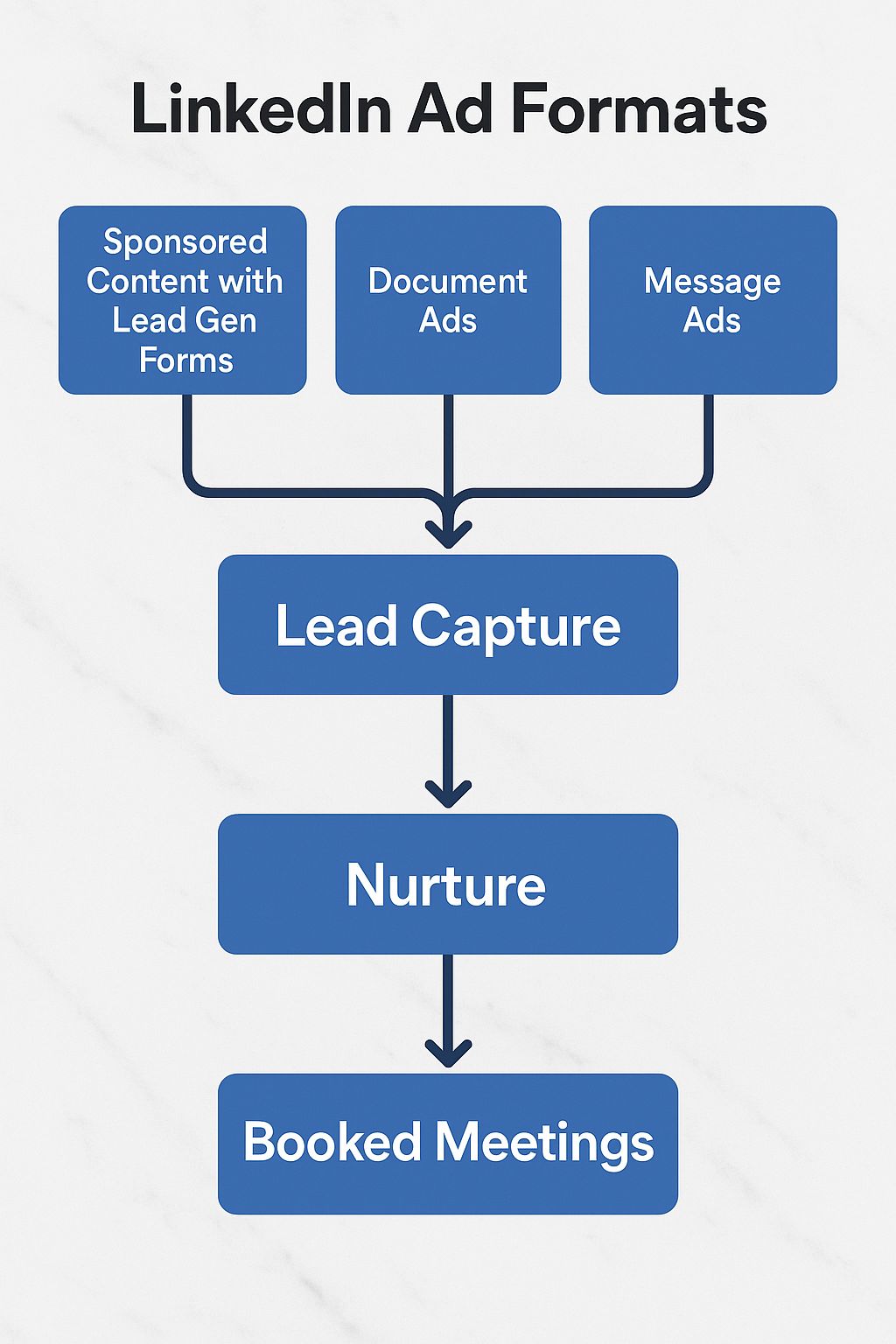
LinkedIn offers various ad formats, each suited to different objectives in your marketing funnel. For awareness, Sponsored Content in the main feed delivers the broadest reach with relatively strong engagement rates. For consideration stage campaigns, Document Ads showcasing downloadable resources like whitepapers or case studies effectively generate leads while establishing expertise. For decision-stage campaigns where immediate action is the goal, Message Ads (formerly InMail) deliver personalized offers directly to prospects’ inboxes with response rates averaging 3-5x higher than traditional email marketing.
For SMBs with limited budgets, Lead Gen Forms paired with Sponsored Content often deliver the best combination of reach and conversion. These forms auto-populate with the user’s LinkedIn profile data, eliminating friction and increasing completion rates by up to 40% compared to sending users to external landing pages. The direct integration with LinkedIn’s professional data also ensures higher lead quality than many other digital advertising channels. For more insights, explore how enhancing e-commerce experiences can further optimize digital marketing strategies.
Setting Up Your First Campaign Without Wasting Money
Start with a modest test budget of $300-500 spread across 2-3 weeks to gather meaningful data before scaling up. Begin with Sponsored Content promoting your highest-performing organic posts—this leverages content that’s already proven engaging while extending its reach to your target audience. Set daily budgets rather than lifetime budgets to maintain consistent visibility, and allocate at least $20-25 daily per campaign to ensure sufficient data collection.
Create multiple ad variations (3-5 per campaign) with different images, headlines, and copy approaches to identify what resonates best with your audience. LinkedIn’s algorithm will automatically optimize toward better-performing variations, but having diverse options increases your chances of finding messages that truly connect. Importantly, set up proper conversion tracking through either the LinkedIn Insight Tag or UTM parameters before launching campaigns to ensure you can measure actual business outcomes, not just clicks or impressions.
Retargeting Strategies That Close Deals
LinkedIn’s retargeting capabilities allow you to create custom audiences based on specific site actions, video views, or form interactions. This enables creating sophisticated nurture sequences that guide prospects through your sales funnel. For example, target website visitors who viewed service pages but didn’t contact you with case study content addressing common objections. Follow up with visitors who engaged with that content using Message Ads offering a consultation. This sequential approach delivers progressively more direct offers as prospects demonstrate increasing interest, enhancing e-commerce experiences.
For maximum efficiency, segment your retargeting audiences based on both behavior and recency. Someone who viewed your pricing page yesterday requires different messaging than someone who read a blog post three weeks ago. The most effective retargeting campaigns acknowledge where prospects are in their decision journey and provide the specific information needed to move them forward, rather than repeating general brand messages they’ve already seen.
LinkedIn Networking Beyond Connection Requests
LinkedIn’s true power for small businesses extends beyond content and advertising to strategic relationship building. The platform’s networking capabilities enable establishing meaningful connections with potential clients, partners, and industry influencers—often providing access that would be difficult or impossible through other channels. However, effective LinkedIn networking requires abandoning generic approaches in favor of personalized, value-focused interactions, much like enhancing eCommerce experiences through tailored strategies.
Smart Group Strategies That Position You as an Authority
LinkedIn Groups provide underutilized opportunities for establishing authority in specialized niches. Rather than joining the largest groups in your industry where conversations are often diluted, focus on smaller, highly-engaged groups where you can make a meaningful impact. Begin by listening and understanding the group’s culture before contributing—observe what topics generate discussion and identify common questions or challenges faced by members.
Once familiar with the group, share genuinely helpful insights without immediate selling. Answer questions thoroughly, provide unique perspectives from your experience, and share relevant resources without expectation of immediate return. This approach positions you as a helpful industry expert rather than someone simply seeking business. For maximum visibility, engage consistently rather than sporadically, and aim to be among the first to respond to new discussions since early, thoughtful responses typically receive the most visibility.
Consider creating your own LinkedIn Group focused on a specific challenge your target clients face. While building group membership requires effort, owning the platform gives you unparalleled positioning as the convener and facilitator of valuable industry conversations. Successful SMB-led groups typically focus on solving specific problems rather than broad industry topics, creating communities united by common challenges rather than just professional titles.
Connection Request Templates That Get Accepted
Generic connection requests (“I’d like to add you to my professional network”) significantly underperform compared to personalized outreach. Effective connection requests reference a specific shared interest, mutual connection, or recent content engagement that establishes relevance. Keep requests concise (2-3 sentences maximum) and focus on establishing common ground rather than immediately pitching your services.
- Content-based connection: “I noticed your comment on [topic] and appreciated your perspective on [specific point]. I’d love to connect to see more of your insights on these issues.”
- Event-based connection: “It was great hearing your question during the [event name] webinar yesterday. I’d like to connect to share some additional resources on that topic that might be helpful.”
- Industry-focused connection: “As fellow [industry] professionals focused on [specific challenge], I thought connecting could be valuable. I’ve been working on [relevant project/approach] that might interest you.”
- Mutual connection: “I noticed we’re both connected with [name]. I’ve been working with them on [project/topic] and thought connecting directly could be valuable given your expertise in [area].”
- Group-based connection: “I appreciated your insights in the [Group Name] discussion about [topic]. I’ve been researching similar challenges and would like to connect to exchange perspectives.”
Turning Conversations into Opportunities Without Being Pushy
The transition from connection to conversation to business opportunity represents the most crucial phase of LinkedIn networking. Begin new connections with a brief thank-you message that asks an open-ended, relevant question about their work or a recent post—this establishes two-way dialogue instead of immediately launching into pitching. Focus subsequent exchanges on providing value through insights, resources, or introductions related to their stated interests or challenges, such as enhancing e-commerce experiences.
When conversations develop naturally, look for appropriate moments to suggest more in-depth discussions based on specific needs they’ve mentioned. For example: “Based on the challenges you’ve described with [specific issue], I’d be happy to share how we’ve helped similar companies address that. Would a 20-minute call next week be helpful?” This approach frames the conversation around solving their articulated problem rather than generic promotion.
The most successful SMBs maintain a long-term relationship mindset, understanding that some connections may not have immediate needs but could become valuable clients or referral sources in the future. Maintain regular, non-sales touchpoints by engaging with their content, sharing relevant articles, or checking in periodically with genuinely helpful information. This consistent presence ensures you remain top-of-mind when needs eventually arise.
LinkedIn Tools and Automation That Save Time
For time-constrained small business owners, leveraging the right tools can dramatically improve LinkedIn efficiency and effectiveness. The key is identifying automation that enhances genuine relationship-building rather than replacing it with impersonal mass outreach that damages your reputation and violates LinkedIn’s terms of service.
Sales Navigator: Is It Worth It for Your Business?
LinkedIn Sales Navigator represents a significant investment for small businesses at $79.99/month per user, but delivers capabilities that can transform prospecting efficiency for B2B companies. Its advanced search filters allow identifying decision-makers by company growth indicators, technology usage, and posting activity—creating hyper-targeted prospect lists impossible to build with free LinkedIn. The platform’s lead recommendations and real-time notifications about prospect job changes or company news create perfect opportunities for timely, relevant outreach.
Sales Navigator becomes cost-effective when your average deal size exceeds $5,000 and your sales cycle benefits from relationship-based selling. For professional services firms, consultants, and B2B software companies, the platform typically pays for itself by uncovering just 1-2 qualified opportunities monthly. However, companies with transactional sales models, very low price points, or primarily B2C offerings generally see less compelling returns on this investment.
If testing Sales Navigator, start with a single-user license and establish clear metrics for evaluation before expanding. Track not just connection acceptance rates but meaningful conversation initiations, meetings scheduled, opportunities created, and ultimately closed business attributable to Navigator-facilitated relationships. This ROI analysis provides clear direction on whether broader implementation makes sense for your specific business model.
Ethical Automation Tools for Engagement and Connection
While LinkedIn explicitly prohibits scraping and mass automation tools, several approved third-party solutions can ethically enhance your LinkedIn efforts. Social scheduling platforms like Hootsuite, Buffer, or the native LinkedIn scheduler allow preparing content in batches and maintaining consistent posting schedules without daily platform logins. LinkedIn automation tools like Dux-Soup and LinkedHelper for connection management and outreach walk a fine line—they can dramatically improve efficiency but risk account restrictions if used for mass actions rather than personalized engagement.
Content creation assistants like Canva (for LinkedIn-optimized graphics) and AI writing tools for headline testing can accelerate content production without sacrificing quality. For analytics beyond LinkedIn’s native insights, tools like Shield Analytics provide deeper performance data and competitor benchmarking. The most successful SMBs combine these tools to automate repetitive tasks while ensuring all prospect-facing communications maintain authentic, personalized elements that build genuine relationships.
LinkedIn Analytics: The Numbers That Actually Matter
LinkedIn provides robust analytics for both personal profiles and company pages, but not all metrics deserve equal attention. For company pages, focus on engagement rate over raw impression counts—this reveals how compelling your content is regardless of audience size. Track click-through rates to understand what topics drive action, and monitor follower demographic trends to ensure you’re attracting your intended audience rather than general connections.
For personal profiles, SSI (Social Selling Index) provides a benchmark for your networking effectiveness across four dimensions, though its correlation with actual sales results varies widely. More important is tracking profile view trends, connection acceptance rates, and especially content engagement rates for different post types. Successful SMBs establish regular analytics review sessions (typically monthly) to identify which content themes, posting times, and engagement approaches drive meaningful business metrics rather than vanity numbers. For example, enhancing e-commerce experiences can be a strategic focus area to improve content engagement rates.
LinkedIn Integration With Your Broader Marketing Strategy
LinkedIn delivers maximum value when integrated thoughtfully with other marketing channels rather than operating in isolation. The platform works best as part of a coordinated multi-channel approach where each platform’s strengths complement the others, creating a cohesive experience for prospects regardless of where they encounter your brand. For example, enhancing e-commerce experiences can benefit from strategic LinkedIn integration.
Email Marketing and LinkedIn: The Perfect Partnership
LinkedIn and email marketing create powerful synergy when strategically aligned. Use LinkedIn to grow your email list by offering valuable gated content, and conversely, invite your email subscribers to connect on LinkedIn for more frequent updates and interaction. This cross-pollination builds stronger relationships through multiple touchpoints while respecting each channel’s unique communication style and audience expectations.
Content sequencing between platforms significantly enhances overall effectiveness. For instance, introduce concepts via LinkedIn posts, explore them more deeply in emails, and then continue the conversation through LinkedIn comments or direct messages. This multi-channel approach respects the strengths of each medium—LinkedIn for visibility and initial engagement, email for detailed explanation and conversion-focused calls to action.
The most successful integration strategies maintain consistent messaging while adapting format and depth to each platform’s norms. Your LinkedIn voice and email voice should feel cohesively like your brand while acknowledging the different contexts in which they’re consumed. When executed effectively, prospects encounter a seamless experience that reinforces key messages across channels rather than disjointed communications that create confusion.
- Use LinkedIn content engagement to segment email lists based on demonstrated interests
- Promote email newsletter signup through LinkedIn articles and posts
- Reference LinkedIn conversations in emails to create continuity
- Follow up on email opens with personalized LinkedIn messages
- Repurpose high-performing email content for LinkedIn articles and vice versa
From LinkedIn Connection to Customer: Building Your Funnel
Converting LinkedIn connections into customers requires a structured pathway that progressively deepens engagement. Start by mapping your existing sales funnel and identifying where LinkedIn touchpoints can strengthen each stage. For awareness, focus on thought leadership content and targeted advertising to reach potential clients. For interest and consideration stages, direct messages, comment conversations, and group interactions build relationships while addressing specific challenges.
Create intentional “next steps” that move connections from LinkedIn to higher-commitment channels. This might include invitations to webinars, offering downloadable resources, or suggesting discovery calls based on specific interests they’ve demonstrated through their engagement. The key is ensuring each step provides standalone value while naturally leading toward your solution as the logical conclusion to their journey. For more insights, explore LinkedIn marketing strategies that can enhance your approach.
Document this pathway as a formal LinkedIn funnel with specific content, outreach templates, and conversion goals for each stage. This systematic approach transforms LinkedIn from a general networking platform into a structured business development channel with predictable results. The most effective funnels include specific timeframes and trigger events (like engaging with particular content types) that prompt moving connections to the next appropriate stage.
CRM Integration for Better Relationship Management
Integrating LinkedIn activities with your CRM creates a complete view of prospect relationships across all touchpoints. Most major CRM platforms (Salesforce, HubSpot, Zoho) offer LinkedIn integrations that capture connection data, conversation history, and engagement metrics. This integration enables more informed outreach based on a prospect’s complete interaction history rather than isolated platform activities.
Taking Your LinkedIn Results to the Next Level
Once you’ve established consistent LinkedIn success with foundational strategies, advanced approaches can further amplify your results. These next-level tactics build upon basic mastery to create sustainable competitive advantages that are difficult for competitors to replicate or displace once established.
The progression from basic implementation to advanced mastery typically takes 6-12 months of consistent activity. During this evolution, focus shifts from establishing presence to optimizing performance, from building audience to deepening engagement, and from general visibility to precise attribution of business results. This maturation process transforms LinkedIn from a supplementary marketing channel into a predictable business development engine, similar to how enhancing eCommerce experiences can elevate a platform’s effectiveness.
Case Study: How a 5-Person Business Generated $500K Through LinkedIn
Greenfield Consulting, a boutique operations efficiency firm with just five team members, generated over $500,000 in new business through LinkedIn in a single year using a highly focused strategy. Rather than pursuing broad visibility, they identified three specific industries experiencing regulatory changes that created operational challenges their methodology could address. The firm’s founder created a 12-part LinkedIn article series breaking down the regulatory impacts and highlighting specific operational vulnerabilities created, without explicitly pitching their services.
This content strategy established unmatched expertise on a timely, high-stakes issue for their target market. The team then used Sales Navigator to identify and connect with operations executives at companies in the affected industries, sharing relevant articles from the series based on each company’s specific situation. This highly targeted approach generated 47 discovery calls that converted into 14 client engagements, averaging $35,000 each—all without traditional advertising or cold outreach. The key insight: their narrow focus on an urgent, specific problem allowed them to cut through the noise and position themselves as the obvious solution provider.
Measuring What Matters: Your LinkedIn Marketing Dashboard
As your LinkedIn strategy matures, evolve your measurement framework to focus increasingly on business outcomes rather than platform metrics. Create a custom dashboard that connects LinkedIn activities directly to revenue generation, tracking metrics like cost per qualified lead, LinkedIn-influenced pipeline value, conversion rates at each funnel stage, and average deal size from LinkedIn-sourced opportunities. This business-centric measurement approach enables making investment decisions based on actual returns rather than engagement proxies, similar to how enhancing e-commerce experiences can drive business growth.
Implement attribution tracking that distinguishes between LinkedIn’s various touchpoints—organic content, paid advertising, direct messaging, group participation—to identify which specific activities drive the greatest ROI. This granular understanding allows reallocating resources toward highest-performing tactics while refining or eliminating underperforming efforts. The most sophisticated SMB LinkedIn strategies incorporate closed-loop reporting that tracks prospects from initial LinkedIn engagement through final purchase decision, creating a complete picture of the platform’s role in revenue generation.
Scaling Your Success Through Team Alignment
Maximizing LinkedIn impact requires coordinated efforts across your organization, not just marketing team activities. Develop a LinkedIn playbook that outlines how different team members—executives, subject matter experts, sales professionals, customer service—contribute to your overall LinkedIn presence. This alignment creates a multiplier effect where individual activities reinforce each other, dramatically increasing overall visibility and effectiveness compared to siloed efforts.
Frequently Asked Questions
As LinkedIn continues evolving with new features and algorithm changes, small business owners consistently raise several questions about maximizing their efforts on the platform. The following represents the most common concerns and evidence-based answers based on current best practices and platform performance data.
Understanding these fundamentals helps establish realistic expectations and focus your limited resources on activities most likely to generate meaningful business results. While specific tactics may evolve with platform changes, these core principles remain consistent guides for SMBs seeking sustainable LinkedIn success.
How much time should small businesses spend on LinkedIn each week?
Most successful small businesses allocate 3-5 hours weekly to LinkedIn marketing, though this varies based on your industry and business model. This typically breaks down to 1-2 hours for content creation and scheduling, 1 hour for strategic engagement with target accounts’ content, and 1-2 hours for direct outreach and relationship development. This focused approach produces better results than sporadic daily activity, as the LinkedIn algorithm rewards consistent, concentrated engagement patterns.
For businesses in early growth stages or with LinkedIn as a primary lead channel, increasing to 5-8 hours weekly can accelerate results by enabling more original content creation and deeper relationship development. However, effectiveness typically plateaus beyond 10 hours weekly for most SMBs, suggesting optimization rather than increased time investment becomes the key driver of improved performance once foundational activities are established.
Should I focus on my personal profile or company page for best results?
For most SMBs, personal leadership profiles generate 5-10X more engagement than company pages and should be your primary focus. LinkedIn’s algorithm significantly favors individual content over brand content, and prospects typically connect with people before following companies. The most effective approach combines both: use personal profiles for relationship building, thought leadership, and direct engagement, while company pages serve as credibility anchors and content hubs that support personal outreach efforts.
What’s the minimum budget needed for effective LinkedIn advertising?
Meaningful LinkedIn advertising results typically require a minimum monthly budget of $1,000-$2,000 for SMBs targeting specialized B2B audiences. This allows sufficient impression volume and conversion opportunities to optimize campaigns while generating enough leads to justify the investment. Companies with broader targeting or higher-volume offerings can sometimes achieve positive ROI with budgets as low as $500 monthly, while those with very narrow, high-value targets may need $2,000-$3,000 to reach decision-makers with sufficient frequency.
How can I measure the ROI of my LinkedIn marketing efforts?
Accurate LinkedIn ROI measurement requires implementing proper tracking mechanisms: UTM parameters for all shared links, the LinkedIn Insight Tag on your website, and unique landing pages or form fields that identify LinkedIn-sourced leads. Once these are in place, calculate ROI by comparing your total LinkedIn investment (including time valued at an appropriate hourly rate) against revenue generated from LinkedIn-sourced clients. For longer sales cycles, measure pipeline value and apply your typical close rate to estimate expected revenue, updating with actual figures as deals complete. For more insights on improving your digital strategies, consider enhancing ecommerce experiences with advanced tools.
Is LinkedIn Premium worth it for small business owners?
LinkedIn Premium Business ($59.99/month) delivers sufficient ROI for most SMBs actively using the platform for business development. The key benefits justifying this investment include unlimited profile views to identify who’s researching you, advanced search filters to precisely target prospects, direct messaging to people outside your network (InMail), and competitive intelligence on who’s viewing specific job postings. For companies primarily focused on outbound sales or recruitment, Sales Navigator ($79.99/month) or Recruiter Lite ($119.95/month) provide more specialized features that typically deliver stronger returns for those specific use cases.
The decision largely depends on your LinkedIn strategy and usage patterns. If you’re actively prospecting, regularly reaching connection limits, or need deeper insights into profile visitors, Premium typically pays for itself through enhanced capabilities. However, if you’re primarily posting content and responding to inbound interest, the free version often proves sufficient until your strategy advances.
In today’s fast-paced world, businesses are constantly seeking ways to improve their operations and enhance customer satisfaction. One area that has seen significant advancements is e-commerce. Companies are leveraging technology to create seamless shopping experiences for their customers, ensuring that transactions are smooth and efficient. For those interested in learning more about these advancements, enhancing e-commerce experiences is a key focus for many innovative businesses today.
Generate leads on LinkedIn and convert them effortlessly.
With the free Business Operating System (B.O.S.) from Catalyst, you’ll capture every LinkedIn lead, automate follow-ups, and turn conversations into loyal customers. Start building your smart lead pipeline today at em2bos.com.

